

Good morning, everyone. As promised, our Sunday tradition continues: another weekly good news update. Share one piece of good news from your week in the comments, and pass this along so someone else can join in too.
My good news this week comes in a few parts. First, more and more former Fox News viewers are telling me they now come here to get their news. Second, my daughter was sick and she is feeling much better. And third, since so many of you have asked, our viewership has kept surging as new numbers released show increased growth. We have hit peak engagement, surpassing every major media company, and nearly every media company in the world. You did this. We did this.

We built this with nothing. No billionaire investment. No platform handed to us. No name recognition to open doors. We are building a community, and communities like this one are what will outlast the old media machine.
None of this happens without you. If this community matters to you, if a media landscape that answers to people instead of billionaires matters to you, this is the moment to back it. Subscribe. Gift a subscription to someone who needs to see this. Upgrade your membership.
Here’s some good news:
Supermarket manager saves toddler from oncoming traffic in Mexico. Luis Enrique Cruz, a manager at a Super King grocery store in Puebla, Mexico, saved a 3-year-old girl from being hit by a car after she ran onto a busy six-lane road on September 6. Cruz was working outside on his day off, helping move a pallet of toilet paper, when he saw the girl bolt from the store entrance as her mother chased after her and slipped, and he sprinted after the child and pulled her to safety seconds before a vehicle would have struck her.
Woman’s daily porch affirmations are lifting spirits across the internet. Maureen Fitzgerald, a 63 year old federal government employee from the Hartford, Connecticut area, has been posting daily morning affirmations from her porch with a cup of coffee since July 16, encouraging viewers with lines like “Every morning, tell yourself it’s going to be a good day. Remember, positivity attracts positivity.” Fans have taken to calling her “Mo,” flooding her comments with their own affirmations back, and she said she’s also received deeply personal messages, including from a young man who told her, “Do you mind if I call you mom? I was five years old when my mother died, and I watched her die, and you are so much like her.” Fitzgerald said she started the ritual as much for herself as for others, noting she lost her own mother young and has been caring for her husband of 31 years, a Vietnam veteran diagnosed with Agent Orange related kidney cancer the day before Thanksgiving in 2024. She said, “The only people that knew were the kids because we were getting them ready, and you got to be strong for the kids, you don’t shed a tear in front of them. So I just kept going, and every day I’d start thinking good things.” Reflecting on why the videos have resonated, she said, “You don’t realize how many people don’t have somebody to say ‘good day’ to. They’re alone, or they’re with people and yet they’re alone. Now I understand.”
A 91 year old man just became the oldest person to hike the entire Appalachian Trail. Dale Sanders, known to supporters as “Grey Beard,” completed the roughly 2,190 mile Appalachian Trail over 359 days, enduring 71 falls and one hospitalization for a pinched nerve along the way. Having already finished the trail once before at age 82, Sanders took a winding route this time, starting in Virginia, heading south to Georgia first to chase warmer weather, then working his way north to Maine, with a detour back home to Tennessee after his mother in law passed away. He reached the trail’s northern end at Mount Katahdin on August 31st. Sanders told the AP, “When people are taking care of you and bringing you caramel frappes on the trail, the rocks don’t matter,” and told the New York Times, “I’m not knocking the gym, but you have to get outside.” He also recently became the oldest person to complete a rim to rim hike of the Grand Canyon.
EMT sprints up a mountain to deliver a life-saving blood transfusion to an injured climber. Jacob Gregory fell 20 feet down a rock face on North Carolina’s Shortoff Mountain and suffered critical internal bleeding, prompting a massive rescue effort involving more than 20 agencies. EMT and volunteer rescuer Will Soper, who was teaching a training course two hours away when he heard the call, rushed to the mountain and covered 1.5 miles and 1,000 feet of elevation in just 30 minutes to deliver blood bags packed in a cooler for an emergency transfusion. Soper described the terrain, saying, “The rescue occurred in a notoriously remote and challenging place to access. As soon as I heard the dispatch, I knew it would be a challenging rescue,” while downplaying his own effort by saying, “In all honesty, ‘run’ is a little bit hyperbolic. I maintained a fast hiking or jogging pace and made sure I didn’t stop for any breaks.” Gregory was stabilized and transported to Atrium Carolinas Medical Center in Charlotte. His family wrote online, “To every responder who answered that call: thank you. You saved a life and brought a husband, father, brother, son, friend, and loved one to safety.”
Armless racing driver hits 110 mph steering with his feet, eyes a run at Le Mans. Twenty three year old Callum Smith, who was born without arms, has signed his first driver contract with Team BRIT, the world’s only competitive racing team made up entirely of disabled drivers, and is now working toward a spot in the 24 Hours of Le Mans. Smith steers using a flat foot plate while operating the accelerator and brake with his other foot, explaining, “My feet are like my hands. I write with my right foot, I play Xbox with my feet like FIFA and Call of Duty. I play guitar with my feet, and I eat by myself use a normal knife and fork.” He has already reached speeds up to 110 mph after emailing Team BRIT to ask for a shot, recalling, “The racing started off with an email to Team BRIT expressing my interest in racing and I said if they were interested in making my dreams come true, I’d be forever grateful.” He admits the adjustment has been difficult, saying, “It’s hard, there’s a lot of eye to foot coordination. The biggest surprise to me is how heavy the steering feels in a race car, everything is stiffer. But I love it and I’m quite keen to get it sorted, I’m motivated to get it done.” He added plainly, “I’m going to be the first person to be racing without any arms, the first one ever.”

FDA approves drug that doubles survival time for late stage pancreatic cancer patients. A new twice daily pill called daraxonrasib has been shown to double survival time for pancreatic cancer patients whose disease continued after chemotherapy, extending median survival from 7 months to more than 13 in a phase 3 clinical trial. The drug, made by Revolution Medicine, received FDA approval after just a 35 day review, and results presented at the American Society of Clinical Oncology’s annual meeting reportedly drew applause and tears from attending physicians. Dr. Brian Wolpin of the Dana-Farber Cancer Institute, who led the study, said, “I have not seen anything like that before in trials we have run in pancreatic cancer. I just kept repeating, ‘Wow.’” The drug works by targeting a protein called KRAS that pancreatic and other cancers depend on to survive, a target long considered nearly impossible to hit with medication. In at least one case, a man in his 70s whose cancer had spread to his lymph nodes now shows no visible tumors on scans years after starting the drug.
Arthritis drug shows major hair regrowth results for alopecia patients in large trial. A clinical trial testing the arthritis drug upadacitinib on more than 1,400 people with alopecia areata, an autoimmune condition where the body attacks its own hair follicles, found that a significant share of participants saw dramatic hair regrowth. At the 24 week mark, 44 percent of those on the lower dose and 55 percent of those on the higher dose achieved at least 80 percent scalp and eyebrow hair coverage, while between 13 and 22.5 percent regained all of their hair depending on dosage. The study’s authors wrote that in a condition often carrying significant psychological weight, “translation of clinical responses (hair regrowth) into meaningful patient reported improvements becomes imperative to deem a treatment to be efficacious.” A small number of serious side effects were reported, including one case of breast cancer in a patient who already had concerning results before the trial began, though researchers noted no deaths and no new safety signals. The trial was funded by the drug’s manufacturer, so researchers say independent studies should still follow, but for the participants who regained their hair after years of stigma, the results speak for themselves.
Ford’s largest factory grows a “living roof” that’s boosting birds and cutting energy use. Ford installed a 454,000 square foot “living roof” made of drought resistant sedum and wild plants atop the final assembly building at its massive Rouge Factory in Dearborn, Michigan, fulfilling in an unexpected way founder Henry Ford’s original 1915 idea of turning the site into a bird sanctuary. The roof, completed in 2002, keeps the building 10 degrees warmer in winter and 10 degrees cooler in summer while acting as a giant sponge that absorbs rainwater and slows runoff into a stormwater system that once suffered from flooding. It was the largest turf roof in the world at the time it was built and effectively solved the site’s flooding problems. Local killdeer birds began nesting on the roof within just five days of its completion, and the surrounding 600 acre site, cleaned up at a cost of $2 billion to remove decades of industrial contamination, is now home to thousands of flowers, shrubs, trees, and roughly 20,000 honeybees. More than a century after opening, the Rouge Center remains Ford’s largest plant while doubling as an unlikely biodiversity hotspot.
Elephants can think before they act, new study finds. Researchers at the National Elephant Institute in Thailand have shown for the first time that elephants possess inhibitory control, the ability to resist an impulse in favor of a more effective action. In the study, published in PLOS One, elephants were presented with a transparent box containing fruit and consistently resisted the urge to reach directly for it, instead using a side opening they had been taught to use. When researchers later rotated the box, the elephants briefly reached for the food’s old position before quickly correcting themselves, though older elephants adjusted more slowly, possibly due to cognitive decline with age. Study co-author Dr. Sydney Hope of Hunter College said, “This ability may be important for elephants’ problem-solving.” Co-author Professor Joshua Plotnik added, “The more we understand about how elephants think, make decisions about risk, and adapt to human-driven environmental change, the better we can predict what they’ll do next and the better designed our strategies for human-elephant coexistence can be.”
Scientists discover the first known adult T. rex trackway in North Dakota. Researchers have confirmed the first ever sequence of footprints, or trackway, left by an adult T. rex, a discovery that offers rare insight into how the predator actually moved. The 23 foot trackway, made up of four three toed footprints roughly three feet long each, was found on federal land near Marmarth, North Dakota by Kent Hups, a high school science teacher and amateur fossil hunter. Denver Museum of Nature and Science curator Tyler Lyson, who led the dig, said, “Bones tell us an enormous amount about these animals, but footprints capture a moment of behavior. With a trackway, we can actually follow an animal as it moved across the landscape,” adding, “that is incredibly rare for T. rex.” Based on the stride length, researchers estimate the animal was walking around 3.5 to 4.5 miles per hour, close to a brisk human pace. Hups, who co-authored the resulting study, said, “As a teacher, I’m always telling my students that science starts with curiosity, passion and careful observation. I never imagined that could lead me to a discovery like this,” calling the find “the closest you get to a time machine.”

Woman relives the 1965 blackout that trapped 800,000 people in the NYC subway. Lynn Lowin, now in her senior years, shared her account of being trapped underground during the massive 1965 blackout that left more than 800,000 subway riders stuck in the dark. She recalled strangers sharing food, including half a doughnut given to her in exchange for part of a peanut butter sandwich, as fear over what caused the outage gave way to people comforting one another. Two nurses and a doctor walked through the cars checking on riders, and six hours later everyone was safely rescued and led out through the tunnels by firefighters and police. Lowin said, “I was less scared, because I was not alone,” calling it a lesson she carried with her for the rest of her life. Remarkably, only five looting incidents were reported in New York City that night, making it one of the lowest crime nights in the city’s recorded history.
Homeless man who went viral playing piano in a church has raised $50,000 for charity. Rhys Wynne-Jones, who had been homeless for a decade in England, sat down at a piano inside St. Mary’s Church in Penzance one cold January night and played a rendition of Queen’s Bohemian Rhapsody that a volunteer filmed and posted online, where it went viral. He said, “There is a lot of noise in my head, but when I play piano my head goes quiet, I feel calm.” Since then he has performed alongside stars like Ronnie Wood and Peter Andre, moved into permanent housing through a Coastline Housing development, and raised more than £40,000, or roughly $54,000, for homeless charities. He told SWNS, “I don’t see myself as a professional pianist or a celebrity figure. I only need enough money to cover my expenses. I just love to play the piano to raise money for homeless charities and good causes.”
EPA issues first cleanup permit under new law targeting abandoned mines. The Environmental Protection Agency has approved its first permit under the 2024 Good Samaritan Remediation of Abandoned Hardrock Mines Act, granting it to the conservation group Trout Unlimited to clean up contamination at the old Bodie Mine site along Toroda Creek in Washington state. The law, passed after two decades of advocacy, protects groups that voluntarily clean up abandoned mines from being treated as the original polluters, removing a major legal barrier that had discouraged cleanup efforts. Trout Unlimited president and CEO Chris Wood said, “Hardrock abandoned mines are a scourge on the landscape. No one is required to clean them up, so every day they release their toxic brew of zinc, cadmium, lead, and arsenic into our drinking water and trout streams.” He added, “Bully for the EPA for authorizing the first abandoned mine cleanup under the Good Samaritan Remediation of Abandoned Hardrock Mines Act of 2024. May their efforts lead many more states and communities, non-profits, and yes, even mining companies, to lend a hand and make our waters more fishable and swimmable.”
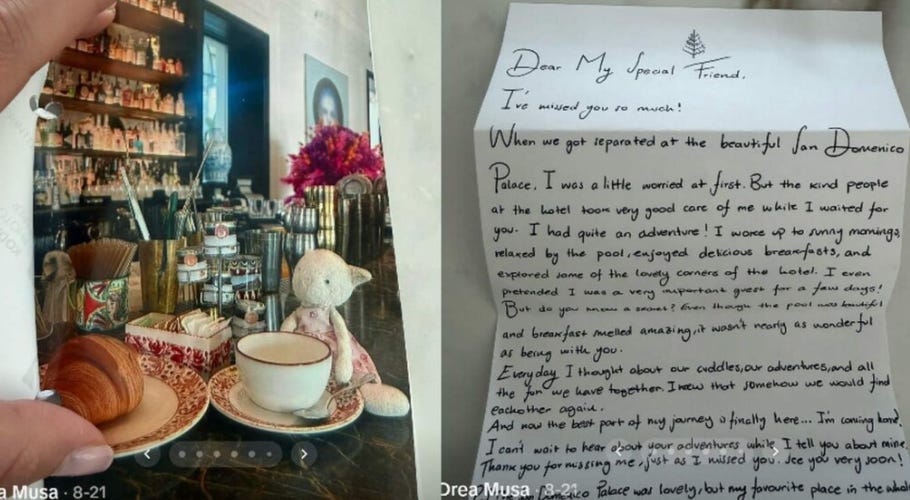
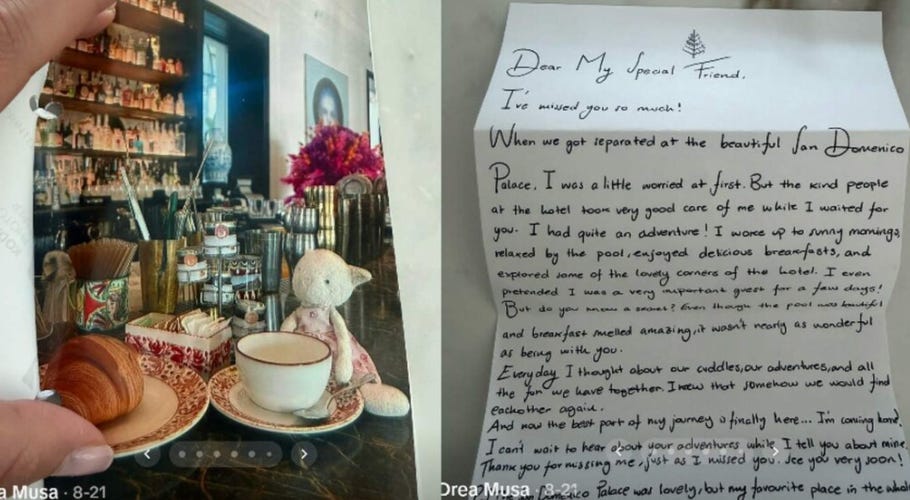
Hotel staff turn a lost stuffed animal’s return into a viral moment of kindness. When a young girl named Julia accidentally left her beloved stuffed bear Rosie behind at the Four Seasons in Taormina, Sicily, hotel staff tracked the plushie down and staged an elaborate scrapbook of photos showing Rosie enjoying a pretend vacation, lounging by the pool and at the bar. They mailed Rosie home along with a handwritten letter written from the bear’s perspective and covered the shipping costs themselves. The letter read, “Dear my special friend, when we got separated at the beautiful San Domenico Palace, I was a little worried at first, but the kind people at the hotel took very good care of me while I waited for you.” It closed with, “The San Domenica Palace was lovely, but my favorite place in the whole world is right beside you.” The story, shared on TikTok by Julia’s sister, has since been viewed by millions of people.
Archaeologists uncover a Roman emperor’s private bath complex in Serbia. Researchers at the Vrelo-Sarkamen site in eastern Serbia have discovered a previously unknown Roman bath complex, or balneum, built for Emperor Maximinus Daza, who briefly held power before dying in a civil war. Unlike typical Roman baths built in straight, lateral layouts, this circular structure featured a domed ceiling, high windows, three bathing pools, and a sauna, a design researchers say they had never seen before anywhere in the empire. The find was made in the lower levels of a stone tower that had been under excavation for decades, with archaeologists previously unaware the balneum existed beneath it. Daza, born in what is now Serbia, rose to power under the Tetrarchy system before losing a civil war to a rival named Licinius, and he holds the unusual historical distinction of being the last person in world history to hold the title of Pharaoh of Egypt.
Kenyan startup builds robotic hands that translate teachers’ voices into sign language. Twenty two year old entrepreneur Norah Kimathi founded ZeroBionic to help the roughly 300,000 deaf or hearing impaired children in Kenya, many of whom struggle in school because the country lacks a standardized sign language and most teachers do not know how to sign. Her company builds 3D printed robotic hands from recycled plastic that translate a teacher’s spoken words into sign language in real time, achieving what she says is 92 percent speech to sign accuracy, with 78 units already sold at $350 each. Since no unified Kenyan or African sign language dataset existed, her team had to build one from scratch, working with deaf teachers and experienced signers using a specialized bodysuit to record sign patterns. She told AFP, “No one else had built this on the continent. We had to start from scratch,” adding, “We know we’re going to put a smile on someone else’s face.” The company is now developing a full robotic torso called Africa One to expand its vocabulary and accuracy even further.
ESA’s BepiColombo mission successfully begins its arrival at Mercury. After a journey of more than eight years and six billion miles, the European Space Agency’s BepiColombo spacecraft completed the first phase of its arrival at Mercury, becoming just the third mission ever to visit the planet. The spacecraft relied on nine planetary flybys to slow itself down against the sun’s intense gravity before successfully separating its Mercury Transfer Module. ESA BepiColombo Spacecraft Operations Manager Emmanuela Bordoni said, “After all this waiting and preparation, we all looked at each other and hugged. It was a very powerful moment.” Lead Project Scientist Geraint Jones added, “Although we already have great science from the cruise phase and nine planet flybys, it’s fantastic that we’ve taken this first important step towards finally being able to use all the powerful instruments on both MPO and Mio to study Mercury.” The mission’s two science modules are set to enter their final orbits in early 2027 to study the planet’s surface, magnetic field, and mysterious iron rich core.
A hungry chambermaid accidentally solved a famous 1926 diamond heist by biting into an apple. In 1926, Paris chambermaid Suzanne Schiltz bit into an apple she had taken from a guest’s suitcase and nearly broke her teeth on something hard hidden inside, which turned out to be the Grand Conde diamond, stolen two months earlier in a daring heist at the Chateau de Chantilly. The thieves had used nothing more than a ladder to steal the diamond along with 74 other pieces of jewelry, but could never find buyers willing to touch something so recognizable. According to a newspaper account from the time, police asked one of the arrested thieves, “Do you like apples?” and when he answered “Why?” the officer replied, “You have one with queer seeds in your case.” Now, a century later, the Musee Conde and Chateau de Chantilly are putting the diamond on public display for the first time in years, alongside new scientific analysis designed to protect it from ever disappearing again. Curator Mathieu Deldicque said gemstones like this “are works of art, and works of nature,” noting that photos alone can never capture their true color and light.
See you soon.
— Aaron


