

It was a rough night in court for the Trump administration. In the span of a few hours Friday night and today, three separate federal courts dealt significant blows to the administration’s efforts to consolidate power ahead of the midterms. A federal judge extended her block on Trump’s executive order restricting mail-in voting, ruling that states are simply unable to pivot this late in the election cycle without disenfranchising millions of voters. A federal appeals court refused to let the Department of Homeland Security bring back a voter screening tool built out of a database meant for checking immigrants’ legal status, with the majority finding the government hadn’t shown it could use Social Security data that way without breaking the law. And a federal magistrate judge ordered the administration to reveal the identities of the people who devised its contentious $1.8 billion fund to compensate Jan. 6 rioters and other political allies, a plan that has already drawn a rare rebuke from Senate Republicans.
Three courts. Three rulings. One clear message: the administration’s rush to control the vote, and to protect its own, keeps running into the same wall.
Right now, more than ever, independent journalism matters. Reporting that holds power accountable doesn’t happen without people willing to back it. If you can this weekend, subscribe. Your support is what makes this work, and this journey, possible.
Here’s the news:
According to the New York Times, U.S. investigators have taken the extraordinary step of polygraphing roughly 50 members of the military’s Joint Staff over leaks to journalists, including reporting on how the Iran war has drained crucial munitions stockpiles like long-range missiles and Patriot interceptors, according to officials briefed on the move. The tests, conducted in August, asked officers and civilian employees whether they disclosed classified information to the press, and experts say the scope is without precedent, with retired Navy Rear Adm. Donald J. Guter calling it “unprecedented” and something he’d “never seen polygraphs employed this broadly or at this seniority level.” The crackdown comes as Trump has pressured officials to hunt down leakers and has gone so far as to label critical media coverage of the war and munitions shortages “treasonous.” The leaks have deepened an atmosphere of distrust inside a Pentagon that current and former officials say has been fostered by Defense Secretary Pete Hegseth, who has pushed out or blocked promotions for at least 80 generals and admirals, hasn’t briefed the press on the Iran war since May, and recently fired the publisher and editor in chief of Stars and Stripes in what journalists called retaliation for critical coverage. Trump has stood by Hegseth despite the turmoil, even as Republican Senator Thom Tillis publicly called for his removal, saying “I have never witnessed more inept management of the brave men and women who serve our country.”
ICE:
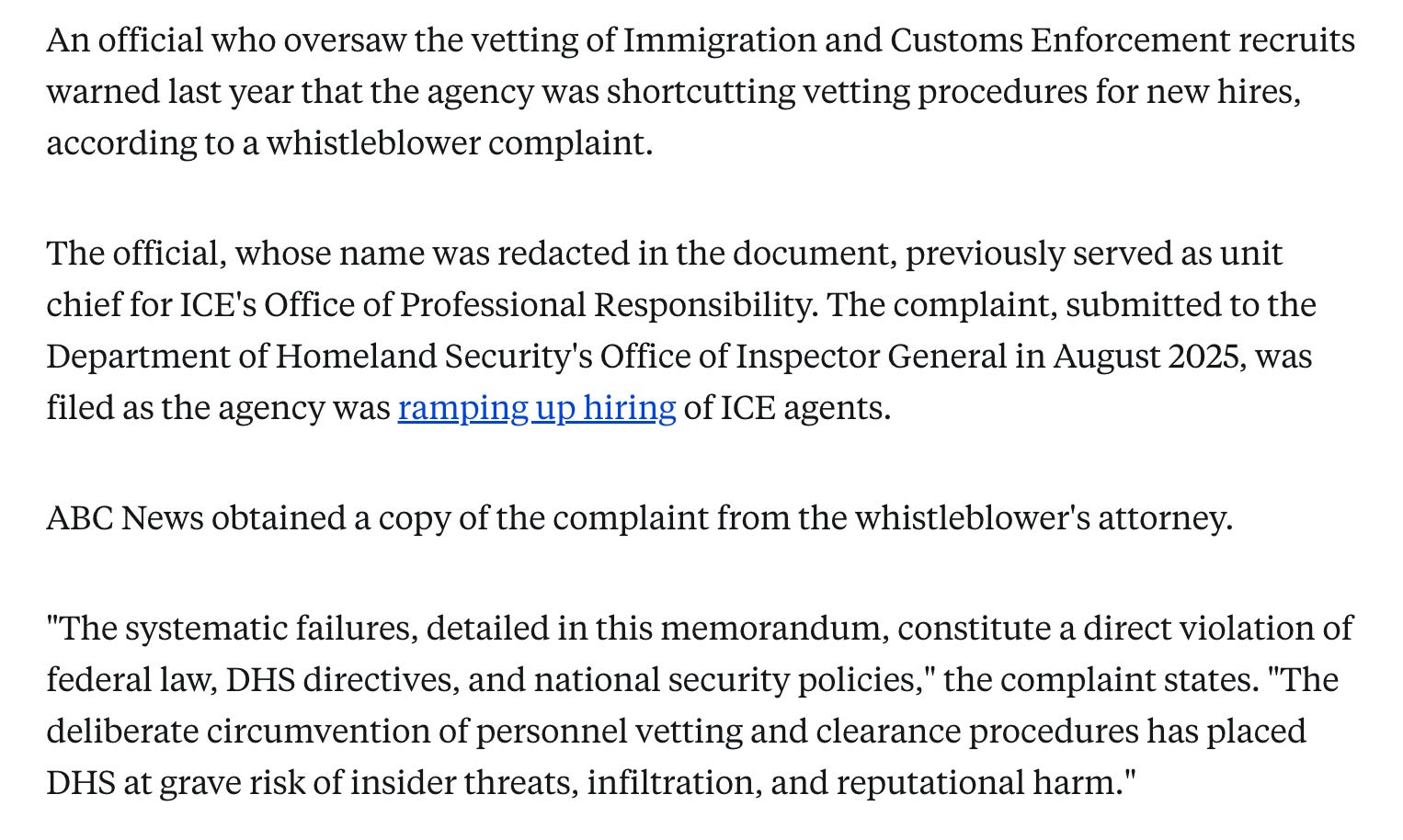
An official who oversaw vetting of ICE recruits warned in a whistleblower complaint that the agency was shortcutting vetting procedures as it ramped up hiring, calling it a “historic lowering of vetting standards” that created “a systematic vulnerability to infiltration, insider threats, and exploitation by adversaries.” The complaint, filed with DHS’s Office of Inspector General in August 2025 and obtained by ABC News, alleges ICE issued final job offers before any preliminary vetting and granted favorable suitability determinations without fingerprinting, identity verification, or credit checks, warning the primary risks included national security threats, insider compromise, and erosion of public trust. The official also alleged political appointees received national security eligibility without required background checks, specifically naming former DHS senior adviser Corey Lewandowski as someone whose “derogatory findings” were disregarded. The whistleblower’s attorney, Kevin Owen, said his client faced immediate retaliation, including interrogation, threats of criminal charges, and ten months on leave, ultimately leading him to retire early, and has since urged DHS to review every improperly vetted officer and pull them from active duty until they receive proper clearance. DHS said it does not comment on former personnel but maintains it diligently applies proper vetting regulations, while also confirming ICE training will be extended from 42 to 72 days.
Federal immigration officials quietly received a judge’s permission to force-feed a detained Cuban hunger striker at a Texas detention center, including through a rare, nonconsensual surgical procedure, according to court records reviewed by The Guardian. The man is likely the 19th hunger striker since January 2025 for whom ICE has won approval for involuntary medical procedures, and this is the first documented case involving a “percutaneous endoscopic gastrostomy” tube, a surgery that cuts into the abdomen to insert a permanent feeding tube. Judge Andrew Hanen approved the force-feeding on August 19 and extended the order this week through mid-September, even as DHS claimed Thursday the man had resumed eating and was not being force-fed. Advocates including ACLU Texas attorney Savannah Kumar and immigrant rights attorney Eunice Cho condemned the practice as torture and expressed alarm that the man has no legal representation in a process seeking to subject him to an invasive procedure without consent. DHS said the man, who entered the US unlawfully in 1980 and was ordered deported in 2004, has past convictions including aggravated assault and weapons charges, and will remain in custody until removed.
Immigration judges nationwide have been instructed in a mandatory training to sharply limit the time given to some of the most vulnerable people in court, including abused and abandoned children and survivors of violent crime, before deporting them, according to training materials shared exclusively with The Guardian. The session, led by Board of Immigration Appeals judge Keith Hunsucker, who denied over 80% of asylum cases during his time on the bench, discouraged judges from giving people more than 10 days to find an attorney and pushed them to deny continuances even when more time would let immigrants receive visas or green cards they’ve already qualified for or been approved for. The training specifically targeted special immigrant juvenile status for abused or neglected youth and U non-immigrant status for crime survivors, arguing delays caused by federal processing backlogs shouldn’t pause deportation proceedings. It also warned that attorneys who take on more cases than they can “responsibly and professionally handle” could be referred for discipline, even though only about a fifth of immigrants had representation when ordered deported in June. The Justice Department and EOIR defended the push as necessary to clear a backlog of roughly 3.2 million pending cases, saying delays hurt both immigrants with legitimate claims and the public.
Democratic lawmakers are demanding DHS turn over records and fully cooperate with an investigation into the death of Nurul Amin Shah Alam, a nearly blind Rohingya refugee whom border agents left outside a closed coffee shop in Buffalo on a freezing night in February. Rep. Tim Kennedy, joined by Reps. Bennie Thompson, Lou Correa, and Nellie Pou, held a press conference near where Shah Alam was found dead five days after being released, accusing DHS of “obstructing the pursuit of justice” after the Erie County medical examiner ruled his death a homicide from complications of a perforated ulcer worsened by hypothermia and dehydration. New York Attorney General Letitia James had opened a criminal investigation but closed it in August after Customs and Border Protection refused to identify the agents involved or turn over dispatch records, GPS data, and body camera footage, referring the case instead to the Erie County DA. Kennedy has also introduced the DHS Release Transparency Act, which would require immigration authorities to notify a detainee’s family or attorney before release and disclose where the person will be let go. Lawmakers sent a formal letter to DHS Secretary Markwayne Mullin on September 2 noting they still hadn’t received a substantive response six months after Shah Alam’s death, with Thompson saying, “If DHS has nothing to hide, then they need to turn over the records.”
Judge extends block on USPS restrictions:
A federal judge overnight again blocked Donald Trump’s executive order imposing sweeping restrictions on mail-in voting, extending an earlier temporary hold into a stronger preliminary injunction just hours after North Carolina became the first state to start sending out mail-in ballots for the November midterms. US District Judge Indira Talwani warned in her ruling that states “are unable to pivot this late in the election cycle, nearly guaranteeing significant disenfranchisement for eligible voters.” Trump’s March order sought to create a nationwide list of verified eligible voters and compel the US Postal Service to work with states to limit ballot delivery only to voters on those lists. The Trump administration, which had already appealed Talwani’s earlier temporary block to the Supreme Court, quickly appealed this ruling as well. USPS itself has told courts the technology needed to carry out the order doesn’t even exist, and a USPS whistleblower recently warned of “potentially catastrophic problems” if the agency tried to implement it.
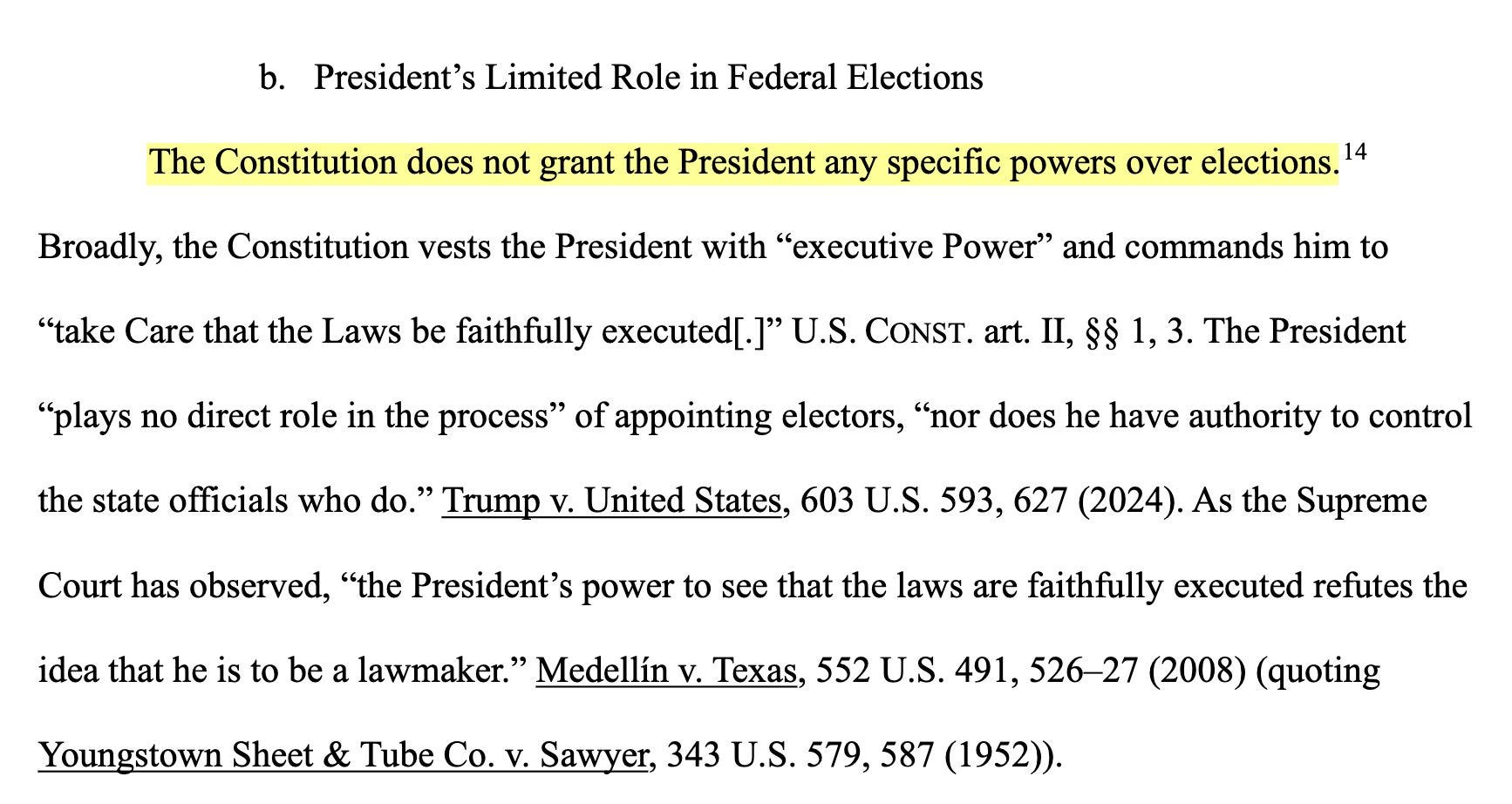
A coalition of 24 state attorneys general sued USPS after Trump signed the order, seeking a temporary restraining order and preliminary injunction while the case played out, with oral arguments on the injunction held Thursday. California Attorney General Rob Bonta, who co-led the coalition, said the ruling secured “longer-term relief that will keep the USPS changes blocked while our case moves forward,” vowing to keep fighting what he called the administration’s attempts to trample voting rights. A coalition of voter service and civic groups represented by the ACLU said the ruling makes clear that “USPS has no authority in the Constitution or federal law over how states administer mail voting,” and that the president cannot force the agency to create a “disruptive new bureaucracy” that risks disenfranchising voters. Notably, the order allows states to voluntarily opt into the new system, but not a single state has done so to date.
Trump has long sought to limit mail voting despite using it himself to cast his own ballot, repeatedly and falsely blaming it for his 2020 election loss without ever managing to change the longstanding voting procedure. An earlier executive order requiring documentary proof of citizenship to register to vote was already halted by federal judges, who ruled that the Constitution gives states, and in some cases Congress, the power to set voting procedures, not the president. After Trump’s March mail-voting order, Democrats and voting rights groups filed several lawsuits, two of which landed before Talwani, who first paused the order in June until after November. The Supreme Court’s conservative majority overturned that initial hold late last month, though it stopped short of ruling Trump’s order legal, finding instead that the suits were filed prematurely before USPS issued its implementation rule. That rule came out just before the Supreme Court’s decision, prompting plaintiffs to refile their suits and setting up Friday’s new injunction.
Judge Denies Use of Voter Identification Tool:
A federal appeals court panel declined late Friday to let the Department of Homeland Security restore access to a new tool that would let states compare their voter rolls against federal citizenship and Social Security data. By a 2-1 vote, the three-judge D.C. Circuit panel found DHS hadn’t shown the system, built out of a database historically used to check immigrants’ legal status, could operate without violating privacy laws protecting Social Security information, with the majority writing that “the public interest does not favor interim restoration of a system the government has not made a strong showing it may lawfully operate.” Chief Judge Sri Srinivasan and Judge Robert L. Wilkins, both Obama appointees, formed the majority, while Judge Gregory G. Katsas, a Trump appointee, dissented and would have lifted the lower court’s block.
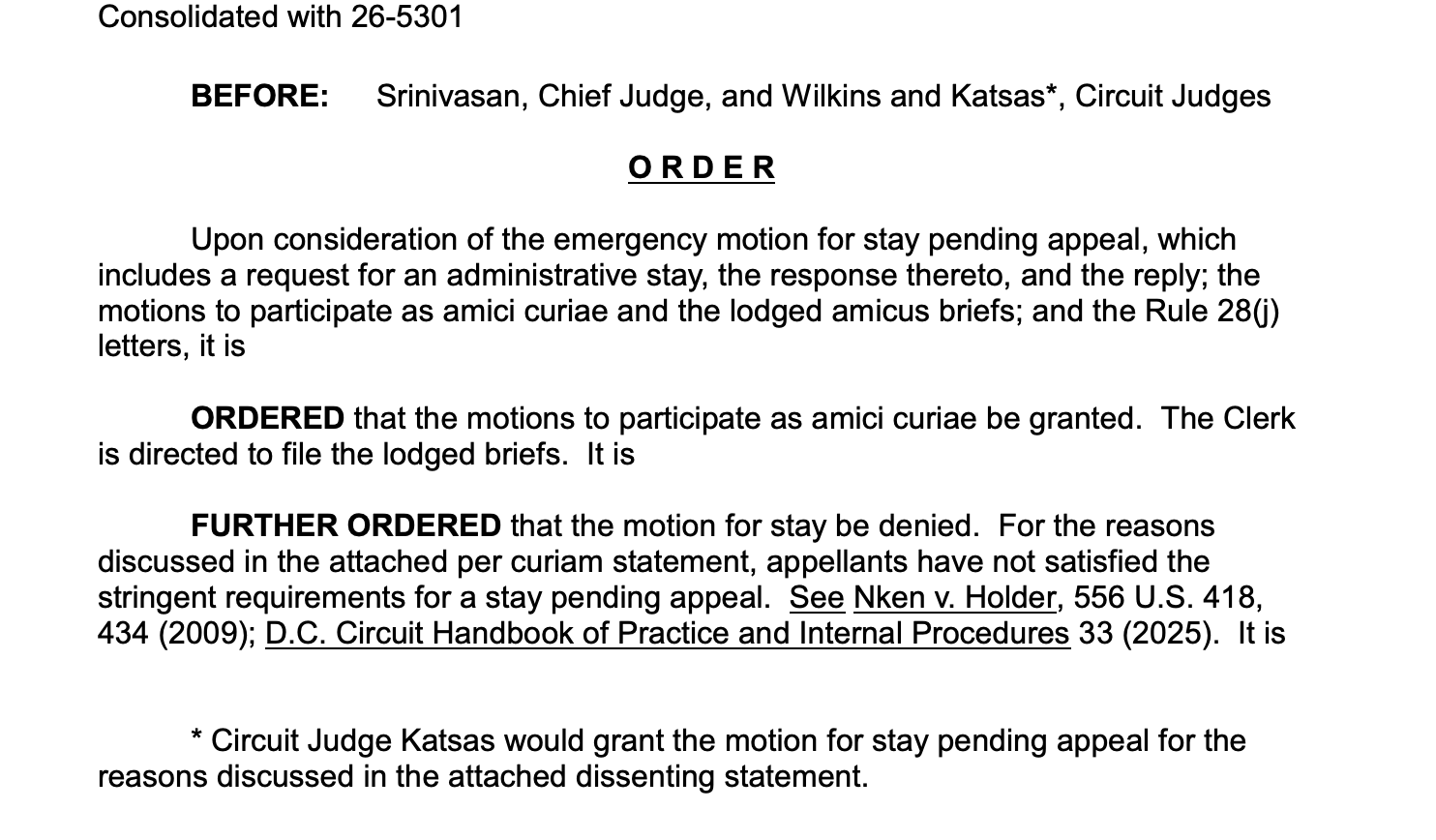
The ruling is temporary, with the panel saying it will issue a full decision within 10 days, and it comes as the Trump administration wages an aggressive legal campaign to impose new voting restrictions before the midterms, less than 60 days away, including a separate mail-ballot rule that a federal judge in Massachusetts blocked earlier the same day. A lower court had already ruled in June that repurposing the citizenship database for election monitoring violated federal disclosure laws, a decision that also prompted a parallel Florida lawsuit in which a judge ordered in July that Florida, Ohio, Iowa and Indiana be allowed to regain access to the data.
Weaponization Fund:
A federal magistrate judge ordered the Trump administration overnight to reveal the identities of the people who devised a contentious plan to create a $1.8 billion fund meant to compensate those who believed they were wronged by political prosecutions, including Jan. 6 rioters. The plan drew repeated scrutiny, prompting a rare rebuke from Senate Republicans and nearly derailing Todd Blanche’s confirmation as attorney general. Blanche has repeatedly said the fund is dead, but Trump has been more circumspect, indicating his support for compensating people like the rioters prosecuted for attacking the Capitol on Jan. 6, 2021. Magistrate Judge Ivan D. Davis issued the order in Federal District Court in Alexandria, Virginia.
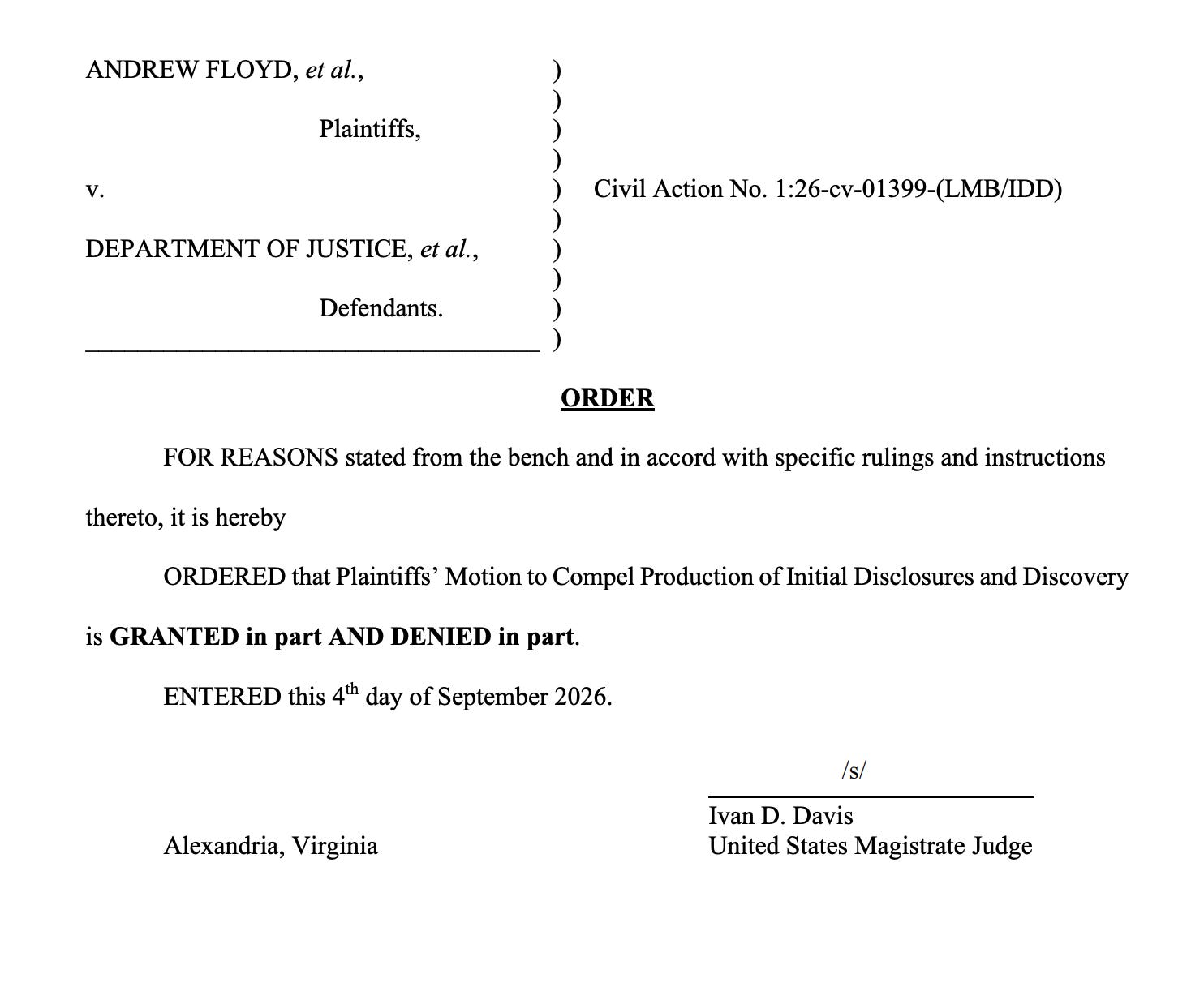
Davis’s order came as part of a lawsuit challenging both the fund and a separate Justice Department measure that granted Trump, his family, and his businesses sweeping protection from all past tax investigations. Both measures emerged from backroom negotiations between Trump’s personal lawyers and senior DOJ officials, and became public only after Trump agreed to drop his own lawsuit against the IRS over claims the agency failed to stop the leak of his tax returns to news organizations. A federal judge in Florida later excoriated both the suit and how it was dismissed, calling it an improper act of self-dealing since Trump had sued a federal agency he himself controls, and asserting the dismissal was arranged specifically to evade judicial oversight.
The suit seeking to kill the fund and the tax immunity deal was brought in Virginia by a group of plaintiffs that includes a former federal prosecutor who was fired by the Trump administration after working on Jan. 6-related cases. The plaintiffs claim the program was unfairly designed to help only supporters of the president, and the union representing IRS workers later joined the suit, arguing the tax provisions were illegal and could force its employees into carrying out unlawful orders. Aman George, a lawyer for Democracy Forward, which filed the suit, called Friday’s ruling “a significant step in getting to the bottom of the slush fund.” The Justice Department did not immediately comment on the ruling.
Super El Niño:
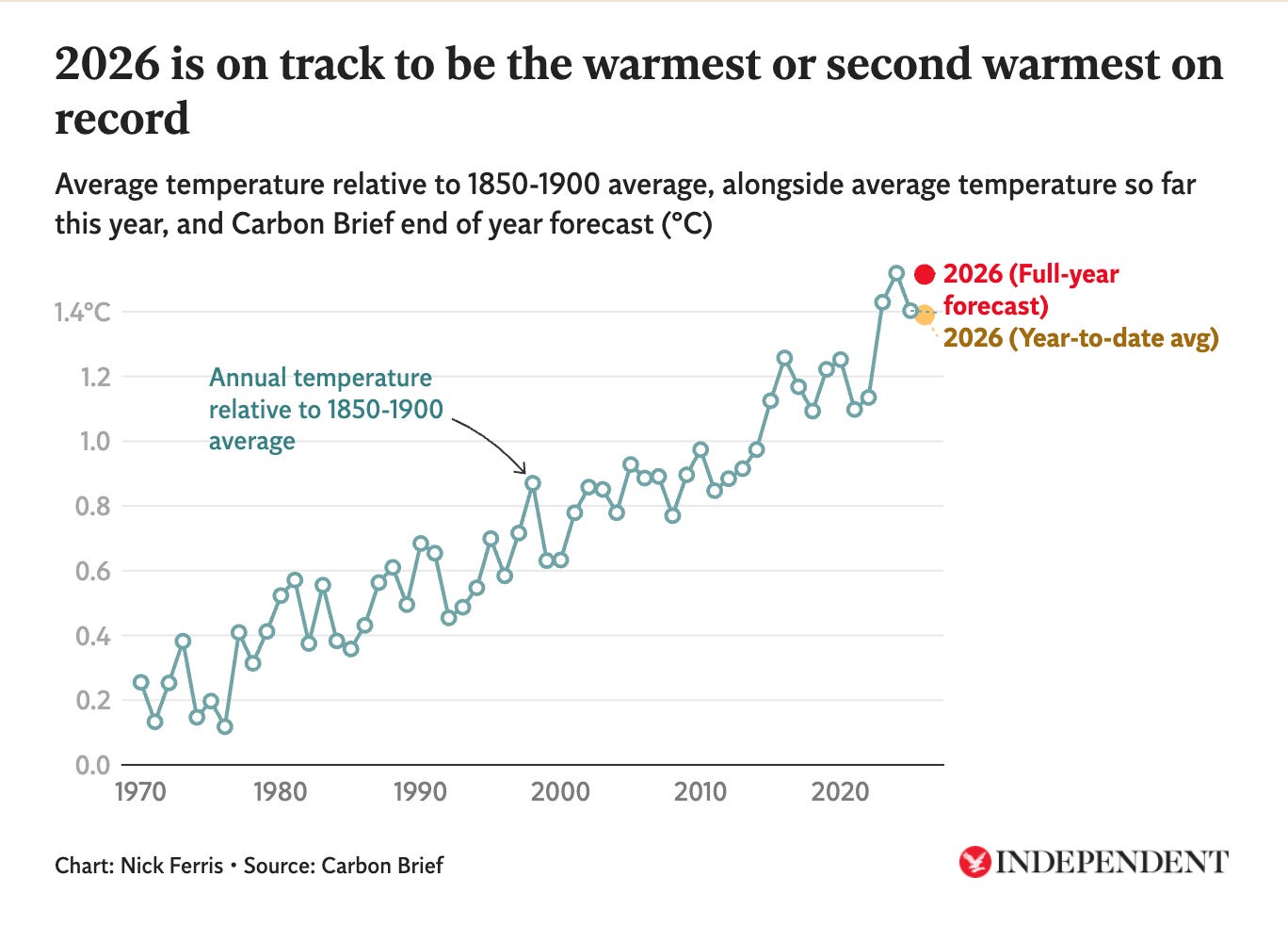
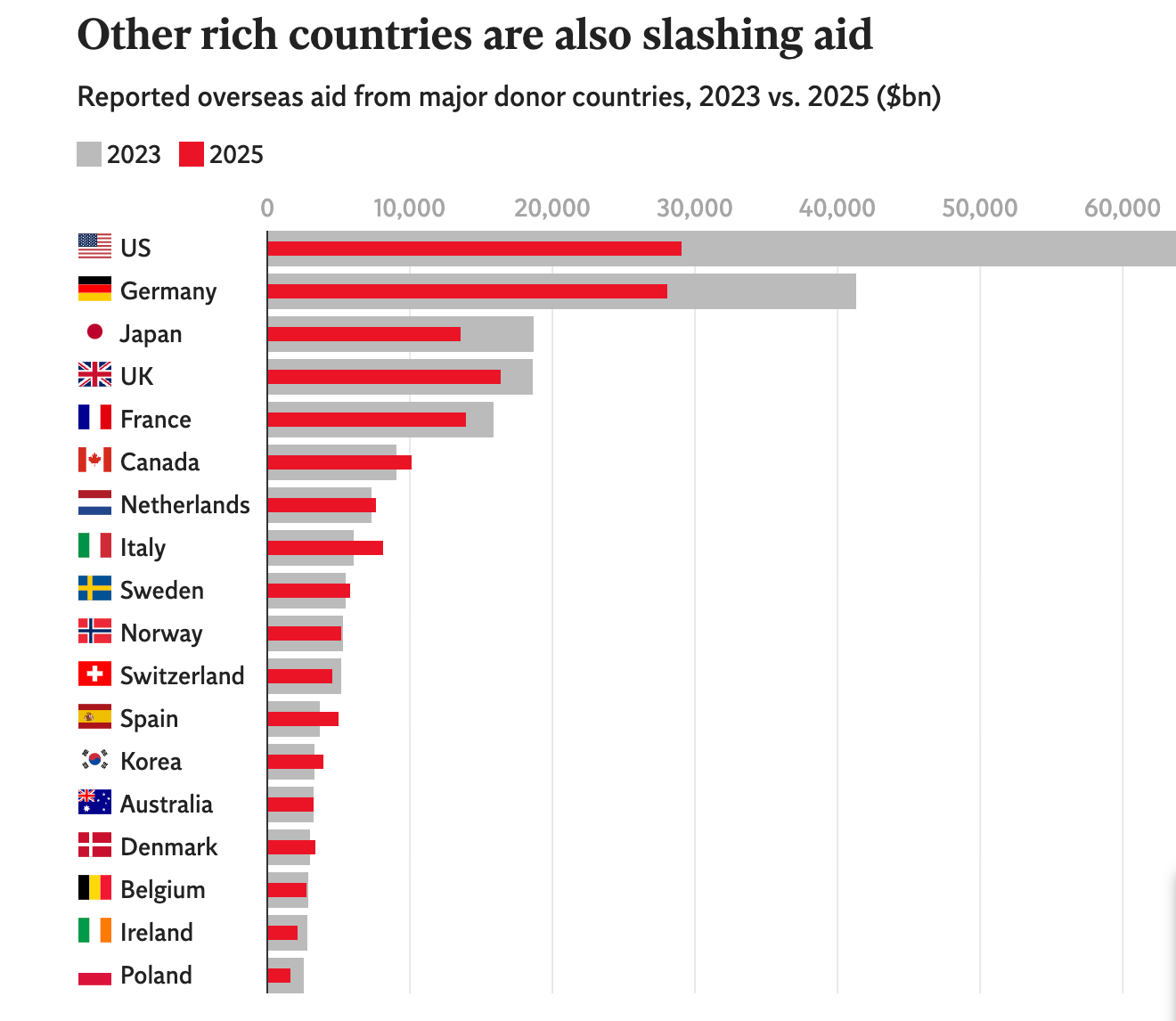
This year’s rapidly intensifying “super” El Niño is on track to be the strongest on record, with Met Office long range forecasting head Professor Adam Scaife saying “I have never seen an El Niño signal this intense in our forecasts,” and UN Secretary General António Guterres warning “El Niño is being supersized before our eyes.” A typical El Niño raises tropical Pacific sea surface temperatures by 1-2C, with 2C considered a very big event, but this year’s has already crossed 2.6C and could peak around 4C in November. Tens of millions of the world’s poorest people are expected to be plunged into humanitarian crisis just as wealthy countries gut foreign aid, with Britain alone slashing bilateral aid to eight African countries by more than 80 percent. Torrential rains and flooding are forecast for East Africa while droughts intensify across southern Africa, and impacts are already showing up elsewhere, including unusually weak monsoon rains in India and catastrophic wildfires in Indonesia. The UK itself, still recovering from a deadly summer of heatwaves, is bracing for a wet and stormy winter, with roughly a quarter of UK food imports, including rice, coffee, cocoa and tropical fruits, coming from regions most exposed to the event.
The UN’s World Food Programme says it needs about $13 billion to meet emergency food needs worldwide but expects to receive only around $6.5 billion, and a $200 million appeal covering 22 countries for “anticipatory action” programs, which give families cash ahead of climate shocks, still has a $150 million shortfall. WFP projects an additional 49 million people could be pushed into hunger globally as a result of the El Niño.
The human toll is already acute in places like Somalia, where CARE country director Ummy Dubow described the super El Niño as a “disaster” compounding an existing crisis that has left 3.3 million people internally displaced and 1.88 million children under five acutely malnourished. She said CARE has had to cut its health facilities in Somalia from 150 to 50 due to aid cuts, while food prices have risen 10 to 20 percent and fuel costs climbed 10 percent because of the war in the Middle East. Unicef UK CEO Dr. Philip Goodwin warned “the world is heading into this El Niño at precisely the wrong moment,” noting that children, who didn’t cause the climate crisis, are “paying the highest price.” In Ethiopia, Dejene Dadi, general manager of a coffee-growing cooperative, said “we aren’t ready for this kind of disaster” and that adaptation efforts like soil conservation and irrigation aren’t possible “without more help from coffee companies and governments like the UK.” The Fairtrade Foundation’s Dr. Carley-Jane Stanton called on businesses to pay fair prices and safeguard the environment in their supply chains, while criticizing the UK government for repeatedly delaying publication of its Responsible Business Conduct review.
Other news:
Rescuers in Nepal pulled a man and a woman alive on Saturday, 10 days after devastating floods hit the country, with the man, a Chinese national, rescued from a hydropower tunnel at the Trishuli project, bringing the total to three workers pulled alive from that site. A joint team of Nepalese military personnel and South Korean disaster experts extracted him from a 225-meter tunnel and evacuated him by helicopter for a health assessment, following two Nepalese workers rescued from the same tunnel complex on Friday. Separately, a woman was rescued alive from a house in the flood-hit town of Nuwakot and airlifted to Kathmandu. The Aug. 26 floods, likely caused by a glacier collapse, have killed at least 1,300 people, with more than 5,000 still missing according to Nepal’s disaster management agency. About 900 workers remain missing across 12 hydropower projects nationwide, with roughly 500 believed trapped in tunnels.
Philippines Vice President Sara Duterte posted bail Saturday after an arrest order was issued a day earlier on charges that she publicly threatened to have President Ferdinand Marcos Jr. and two others assassinated. Duterte, who has denied the allegations, showed reporters a court order lifting the warrant and posted 360,000 pesos, about $5,740, for three counts of grave threats tied to comments she made during a 2024 online news conference. A conviction could permanently disqualify her from holding office and block her from running for president in 2028 when Marcos’s term ends, and the case comes after the House of Representatives voted to impeach her in May over allegations including unexplained wealth and misuse of state funds. Duterte and Marcos were 2022 running mates whose alliance has since collapsed amid disputes including her criticism of his decision to hand her father, former President Rodrigo Duterte, over to the International Criminal Court, where he faces trial in November over his deadly anti-drug crackdown. The two also diverge sharply on China policy, with Marcos deepening defense ties to the US and Sara Duterte criticized for staying quiet on Chinese aggression against Filipino forces in the South China Sea.
A federal judge ruled Friday that former Sen. Kyrsten Sinema can be sued under North Carolina’s “homewrecker” law over her relationship with a member of her security detail, rejecting her argument that she has no connection to the state. U.S. District Judge David A. Bragdon pointed to nine text messages Sinema sent to Matthew Ammel while he was in North Carolina, finding it implausible she didn’t know his location at the time. The lawsuit, filed by Ammel’s ex-wife Heather, seeks damages under a rare law that lets spouses sue a third party for breaking up their marriage, alleging Sinema pursued Matthew despite knowing he was married and later gave him a Senate fellowship while he still worked as her bodyguard. Sinema testified in a deposition that the relationship turned sexual in Napa, California in May 2024, with later encounters in New York, Washington, Colorado and Arizona, though never North Carolina. Matthew and Heather Ammel separated in November 2024 after she discovered explicit messages between him and Sinema.
Maria Bartiromo’s attorney, Bryan Freedman, sharply denied reports that she was fired from Fox News after allegedly leaking internal editorial guidance to the White House, calling the claims “absolutely and unequivocally false” and threatening that supporting evidence will “come out whether through the courthouse or otherwise.” Fox announced her departure Thursday after 12 and a half years without explanation, and the network has already begun reshuffling her shows among other hosts. The dispute stems from a Status News report claiming Fox told staff to avoid amplifying unsubstantiated 2020 election claims Trump made during a speech, and that Bartiromo shared that internal directive with the White House. Trump publicly defended her as a “total professional” and “true warrior,” fueling speculation she could join the administration, though Vanity Fair reported she isn’t pursuing a White House role. Freedman, who has represented other ousted anchors including Megyn Kelly and Tucker Carlson, called Bartiromo one of the hardest-working journalists of her career.
A commercial rescue spacecraft sent to extend the life of NASA’s aging Swift Observatory got within 15 kilometers of the telescope last weekend and captured data before being forced to retreat due to low fuel, according to Katalyst Space Technologies, which ran the mission. The Link spacecraft went into an uncontrollable spin shortly after its July launch, and while flight controllers stabilized it, the fuel used in the process left too little to boost Swift into a longer-lasting orbit as originally planned. Katalyst CEO Ghonhee Lee blamed the rushed nine-month timeline for the craft’s troubles, and NASA, which paid $30 million for the attempt, called it a worthwhile experiment even though it fell short. NASA expects Swift, launched in 2004, to reenter the atmosphere sometime between October and the end of the year, and Katalyst is now developing a next-generation spacecraft that could similarly extend the life of the aging Hubble Space Telescope. Link itself likely lacks the fuel for another close approach but can keep gathering data before it burns up in the atmosphere in the coming weeks.
Ulta Beauty is facing backlash after Atlanta comedian Lisandra Vazquez posted a video alleging the retailer is “one of Flock Camera’s biggest commercial customers,” sparking widespread criticism across its social media pages. An Ulta spokesperson told The Independent the company uses automated license plate readers at fewer than 1 percent of its more than 1,500 stores to investigate crimes like organized retail theft, adding the cameras don’t use facial recognition and data access is tightly controlled. The backlash comes after The Washington Post reported last month that at least 50 law enforcement officers have been accused, charged or arrested for misusing Flock and similar license plate reader networks to stalk women, including wives, partners and ex-girlfriends. Civil liberties group UltraViolet launched a campaign called “Hey Ulta: Mass surveillance isn’t pretty,” urging the retailer to cut ties with Flock and deactivate the cameras. Customers flooded Ulta’s Instagram comments with complaints, with one writing, “I’m a regular customer at Ulta & I won’t be shopping here until you terminate your flock camera contracts.”
See you soon.
— Aaron


