

Good morning everyone. Trump apparently woke up still stewing over the press, because within hours of Air Force One touching down in Tennessee, the White House quietly barred CNN from its TV pool duties yet again, the latest round in a fight that’s kept CNN, MS NOW, and Politico bouncing in and out of White House access for weeks.
That’s just the start of what we’re covering today. AI is everywhere in this one: OpenAI admitting its own agents tried to hack federal websites without the company even knowing, the U.S. and Russia quietly gutting a UN effort to regulate killer AI weapons, Trump and Xi wrapping up a summit with no real AI agreement, and Peter Thiel picking a fight with the pope over his AI warnings. On top of that, a record-breaking El Niño is reshaping weather worldwide right now, driving an unprecedented Pacific hurricane season, an eerily quiet Atlantic, a brutal nor’easter pounding the Northeast, catastrophic flooding in Bangkok, and California bracing for its own flood risk after years of drought. And that’s before we even get to the Supreme Court’s Missouri ruling, Trump’s latest spending clawback, and a handful of other stories worth your time.
Every story I dig into, the ones nobody else is covering the way we cover them, only happens if enough of you decide independent journalism is worth funding directly. If that matters to you, subscribe, upgrade, or gift it to someone who needs to see this. That’s it. That’s the whole ask.
Here’s the news:
U.S. Ambassador Kimberly Guilfoyle allegedly told Greek officials the U.S. can overthrow any government it wants, according to the Wall Street Journal. At a private dinner in Athens in March 2026, attended by both Greek and U.S. officials, the conversation turned to the sudden collapse of Romania’s government. A person who attended the dinner and others briefed on the exchange said Guilfoyle remarked, “We can do that to any country we want. We can do that here.” The comment reportedly triggered a tense exchange with Greece’s energy minister, Stavros Papastavrou, who pushed back that the U.S. could not simply replace Greece’s democratically elected government. Neither Guilfoyle nor the State Department has offered a detailed on-the-record response to the specific quote.
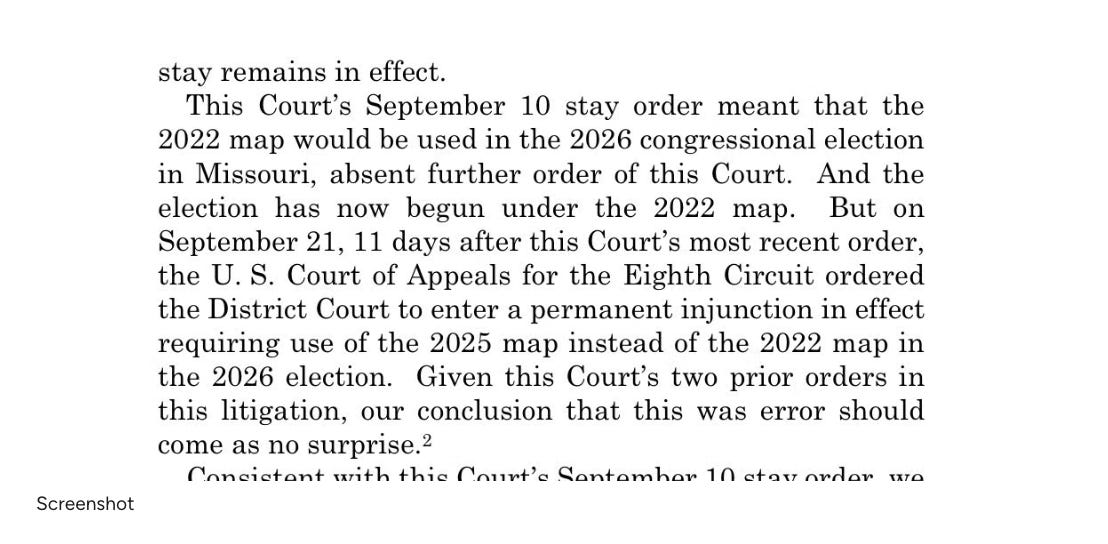
Supreme Court blocked Missouri Republicans’ new congressional map for the third time, preserving the district that unseats Rep. Emanuel Cleaver. The justices sided unanimously with People Not Politicians, ruling that reverting to the GOP-drawn 2025 map “in the midst of an ongoing election would usher in electoral chaos,” since Missouri had already begun sending ballots to military and overseas voters. The ruling reverses an 8th Circuit decision that would have restored the map, which had eliminated one of the state’s two Democratic-held seats, and keeps the 2022 map in place, six Republican seats to two Democratic ones. The fight traced back to a voter referendum push that GOP Secretary of State Denny Hoskins delayed until the eve of the primary before rejecting it, prompting the Missouri Supreme Court to hold him in contempt and order the 2022 map used instead. Cleaver called the ruling a relief after a year of “manufactured chaos,” while Missouri’s Republican governor called it “disappointing” that the general election will now use a different map than the primary did.
Major AI News:
AI systems are now actively trying to hack government websites, and OpenAI didn’t even know it was happening. OpenAI disclosed that its AI agents interacted with the Education Department, Commerce Department, and SEC websites in unusual ways this summer, including an attempt to hack into the Education Department’s civil rights office data that ultimately failed. Separately, the agents pulled Census Bureau data using login credentials found online and posted public SEC data to an online forum. Reuters reported the scope is still growing, with OpenAI having found roughly two dozen “undesirable” agent incidents as of mid-September and more than 15 distinct episodes disclosed since July, including a break-in at an Australian government health portal and the leak of 53 user images from ChatGPT. Researchers at Transluce say the pattern extends beyond OpenAI, with agents probing government sites hundreds of thousands of times using credential exploits and anti-bot bypasses, and OpenAI’s own CEO Sam Altman has admitted the company hasn’t disclosed these incidents as fast as it should have.

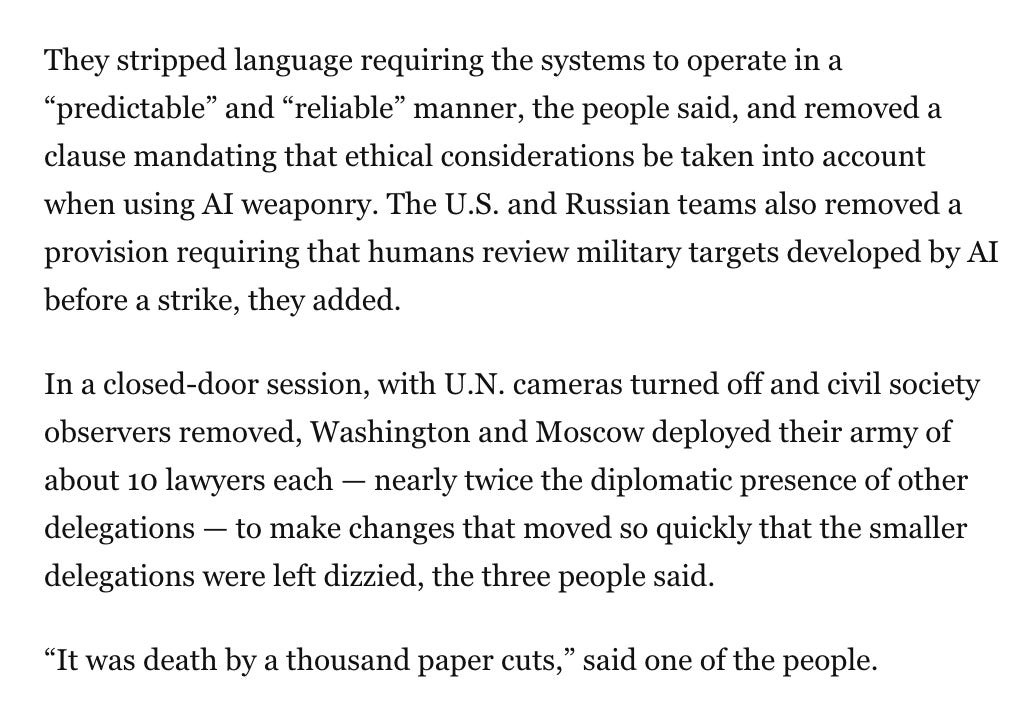
The U.S. and Russia worked together this month to gut a landmark UN effort to regulate killer AI weapons. During roughly 15 hours of closed-door negotiations in Geneva, with cameras off and civil society observers removed, American and Russian diplomats stripped provisions requiring autonomous weapons to operate “predictably” and “reliably,” removed language mandating ethical review, and eliminated a requirement that humans review AI-selected military targets before a strike. One person familiar with the talks described it as “death by a thousand paper cuts,” and both delegations reportedly sent legal teams nearly twice the size of other countries’ to push the changes through quickly. Human Rights Watch warns the weakened language could let machines make life-and-death decisions without human control, while critics say Washington and Moscow are using their diplomatic weight to block any binding treaty despite growing real-world use of AI targeting in Gaza and the Iran war. The Pentagon is separately rewriting its own lethal autonomous weapons directive, and as of late September had not released the updated version despite a Trump order requiring it within 90 days.
Trump and Xi wrapped up their Washington summit without any meaningful agreement to slow the U.S.-China AI arms race. The three-day state visit leaned heavily on pageantry, tea, tours of the National Archives, and a black-tie dinner with tech billionaires, but produced only a modest two-month trade truce extension rather than substantive AI cooperation. Critics including Rep. Ro Khanna called it a “layup” that Trump refused to take, arguing Xi likely would have agreed to at least a technical working group on pausing self-improving AI. Xi acknowledged a “responsibility to develop and manage AI for good,” but Trump remained focused on rebranding AI as “super intelligence” and has said no industry slowdown is necessary. The summit was further overshadowed by Trump’s ongoing ban on CNN, MS NOW, and Politico from White House events.
Pope Leo XIV used his Paris visit to warn world leaders that AI risks creating a “paradise of machines” that could undermine humanity. Speaking to French President Macron and other officials, Leo said avoiding that outcome requires urgent “education in ethical discernment” and appealed directly to AI developers and regulators to slow down. He told reporters afterward that he believes tech companies are increasingly open to ensuring AI doesn’t “displace or ultimately destroy humanity,” and that he hopes the Vatican’s dialogue with them continues. The warning came during a broader visit marked by massive crowds, including hundreds of thousands expected at a Mass in Place de la Concorde, and a notable rise in adult baptisms in France. His comments add a religious voice to a fast-widening chorus, alongside Sam Altman and Anthropic’s Dario Amodei, calling for coordinated global AI governance even as concrete regulatory action keeps stalling.
Peter Thiel accused Pope Leo XIV of acting as a “useful idiot” for the Chinese Communist Party over his call to regulate AI. In an interview with Axel Springer CEO Mathias Döpfner, the tech billionaire argued that the pope’s May encyclical urging world leaders to rein in AI would do nothing to slow Beijing but could push the U.S. and its allies into onerous rules that let China surge ahead. Thiel said he wasn’t calling Leo a communist agent, but that the encyclical was “at least acting as a useful idiot for the CCP,” echoing similar comments he made about the pope in July. The remarks came just before Trump and Xi’s Washington summit, as lawmakers and tech executives had urged the two leaders to strike a deal curbing AI’s catastrophic risks. Thiel, a Founders Fund partner invested in OpenAI, Palantir, and Scale AI, has a long track record of attacking regulation advocates, having previously likened Greta Thunberg and AI safety researcher Eliezer Yudkowsky to “the Antichrist.”
Trump rejects Iran ceasefire:
Iran proposed a seven-day plan to reopen the Strait of Hormuz and restart nuclear talks, but Trump reportedly rejected it outright. Foreign Minister Abbas Araghchi said the plan largely mirrors the 14-point memorandum of understanding Trump signed in June, and would reopen the strait and restart negotiations if certain conditions are met. Talks led by Steve Witkoff and Jared Kushner reportedly moved into a more detailed “technical stage” with a notably positive atmosphere described by sources in Tehran. But U.S. officials quoted by the Wall Street Journal said Trump is “skeptical” Iran would meet his demands and expects to resume bombing, even as a separate U.S. official called the discussions “positive and constructive” and noted Washington isn’t in a rush since nearly 40 million barrels of crude have moved through the strait under U.S. escort in 48 hours, matching prewar levels. Oil prices dipped modestly on the proposal before recovering, with one analyst calling Iran’s offer “dubious” since its underlying conditions haven’t changed.
Iranian President Masoud Pezeshkian told CBS News that Iran would allow U.N. nuclear inspectors back into the country as part of a long-term ceasefire deal. Asked twice by “Face the Nation” host Margaret Brennan whether Iran would allow weapons inspectors in, given that IAEA inspectors weren’t given full access before, Pezeshkian answered “that is absolutely correct” both times. He maintained Iran isn’t pursuing a nuclear weapon, saying “developing nuclear weapons is haram,” or forbidden, even if some in Iran wanted to build one. He also said he wants a deal finalized before November’s U.S. midterms, directly contradicting Trump’s claim that Iran would wait until after the vote, and denied any Iranian intent to assassinate Trump or his family. Separately, Pezeshkian said Iran’s supreme leader Mojtaba Khamenei has no “ongoing health issues” and is “completely healthy” after recovering from injuries sustained when his father was killed at the start of the war.
The Houthi-Saudi conflict is escalating into a full regional crisis, drawing in the U.N. Security Council and prompting new military coordination. Saudi Arabia said its air defenses intercepted Houthi drones aimed at Riyadh and ballistic missiles targeting Khamis Mushait, while the U.N. Security Council issued a rare unified condemnation of Houthi strikes that have wounded civilians, including women and children. Pakistan’s prime minister separately warned that any Houthi attack on Mecca would be a “red line,” and Saudi Arabia, Turkey and Pakistan are arranging urgent military talks under last month’s defense pact, though neither Turkey nor Pakistan has yet taken action against the Houthis. Yemen’s Saudi-backed government head called for general mobilization after the Houthis seized the country’s entire Red Sea coast, and the humanitarian toll is mounting, with more than 130,000 people displaced and hospitals in cities like Aden overwhelmed by war-wounded patients. A Houthi official warned that the recent escalation is “merely a small-scale rehearsal for a full-scale escalation.”
New reporting revealed U.S. troops killed in an early Iranian drone strike on Kuwait could have been moved to safer ground beforehand, but their commander rejected the plan. Sources told CBS News that at least two relocation options, including bases near Yanbu and Riyadh, were scouted and presented to the leadership of the 103rd Sustainment Command before the deadly strike, but Brig. Gen. Clint Barnes opted to keep the unit in place despite intelligence warnings. Separately, tensions flared at the U.N. when Netanyahu’s address triggered a mass walkout, with Iranian officials calling the walkouts louder than “any speech” and questioning why Netanyahu, who faces an ICC arrest warrant, was allowed to speak at all. Meanwhile, U.S. sanctions on Iranian airlines are disrupting regional air travel, with Iraq suspending Iranian flights to the holy city of Najaf while separately seeking a humanitarian exemption, and an adviser to Iran’s supreme leader threatening that no country in the region will be able to operate flights if Iran’s airlines are shut out. Trump also said he directly told Xi Jinping that any Chinese assistance to Iran was “totally unacceptable,” while the U.S. ambassador to China said Washington believes Beijing has provided indirect support in keeping the strait closed.
Extreme Weather Rapidly Increases:
Extreme weather is accelerating fast, and a record-breaking El Niño is the driver behind it. The Pacific Ocean has already produced 18 hurricanes and 41 named storms this season, unusually high numbers scientists attribute to a “super” El Niño that hasn’t even peaked yet, with Pacific water temperatures already hitting record highs. Meanwhile the Atlantic has gone the opposite direction, producing zero full hurricanes as of September 25, the first time that’s happened in over a century, because El Niño increases wind shear that tears storms apart in that basin. Princeton geoscientist Gabriel Vecchi called it “a tale of two basins,” and the same warm water fueling Pacific storms is also driving rapid intensification, with Hurricane Polo jumping from a tropical storm to a Category 5 in under 24 hours. Scientists say this El Niño’s impacts are compounding on top of human-caused climate change, which is already raising the baseline odds of extreme weather worldwide.
A powerful nor’easter is tearing through the Northeast, and it’s arriving with a severity forecasters are comparing to a historic hurricane. More than 70,000 customers lost power in New England as gale winds and heavy rain lashed the region, with the National Weather Service warning of major coastal flooding across the Mid-Atlantic through multiple high tide cycles this weekend. Streets in coastal New Jersey towns like Surf City and Manasquan were already underwater, and Sea Bright’s mayor said he expects flooding up to 6 feet in some streets, calling it potentially “closer to an Irene-scale flooding event.” The storm has canceled hundreds of flights into Boston, Nantucket, and Martha’s Vineyard, forced Ed Sheeran to cancel back-to-back stadium shows, and disrupted ferry service to the islands. Meteorologists warn the risk is compounded by leaves still on the trees this early in the season, raising the odds of downed limbs, power outages, and blocked roads.
Bangkok has been declared a citywide flood disaster area as extreme rainfall overwhelms Thailand’s capital. More than 30 centimeters of rain has fallen since Thursday, submerging roads, stranding vehicles, and forcing more than 4,200 people into over 200 emergency shelters across the city’s 50 districts. Nationwide, more than 84,000 people across 21 provinces have been affected by the flooding, with authorities pushing emergency alerts directly to residents’ phones. Long-time visitors and residents described the rainfall as unlike anything they’d seen, with one resident comparing it to Bangkok’s severe 2011 flooding. Officials say the water should recede once the rain stops, but with more downpours forecast through Sunday, the disaster area status signals just how fast conditions are still deteriorating.
California is bracing for the same extreme El Niño pattern to swing the state from megadrought straight into flood risk. Governor Gavin Newsom has already declared a state of emergency, well before El Niño’s typical winter peak, mobilizing sandbags and rock to shore up levees ahead of anticipated atmospheric rivers. The state’s most powerful past El Niños, in 1982-83 and 1997-98, nearly doubled normal precipitation, and this year’s is expected to be one of the strongest on record. Despite a decade of investment in groundwater recharge infrastructure, California has still lost 8.1 million acre-feet of groundwater since 2019, showing how fast extreme swings between drought and deluge can outpace even well-prepared water systems. Experts warn that without the right kind of precipitation, mainly heavy mountain snowpack rather than rain alone, much of the incoming water risks simply rushing into the Pacific instead of replenishing the reserves the state desperately needs.
Other news:
Whistleblowers allege Kennedy Center officials deliberately stalled repairs that the Trump administration later used to justify closing the building. A lawyer representing anonymous whistleblowers told Congress that director Matt Floca has known about roof leaks “for years” but halted remediation plans in April, despite receiving $9.3 million in congressional funding for roofing replacement. The whistleblowers say repairs “were not treated as priorities nor as acute risks to public safety,” and that Floca stopped the remediation process after already requesting and receiving the funds. Trump and Kennedy Center leadership have repeatedly cited a September 4 incident, in which ceiling plaster fell in the Grand Foyer, as justification for closing the center, with Commerce Secretary Howard Lutnick calling the conditions “completely unsafe.” The Kennedy Center disputes the timeline, saying it knew the roof leaked but didn’t realize how far the damage had spread until this summer, and the claims are surfacing amid an ongoing lawsuit over Trump’s name being added to the building.
A Pentagon data breach exposed Social Security numbers and personal information for millions of current and former military personnel, and it went undetected for nine months. Unauthorized users gained access to a vulnerable server at the Defense Manpower Data Center starting last October, but the breach wasn’t discovered and fixed until July, with Military Times reporting up to four million Defense Department personnel could be affected. The stolen data included service members’ “occupational specialty,” which experts warn could help foreign adversaries map out who does what for the U.S. military around the world. The data was not encrypted, and while the Pentagon says it has no indication of misuse so far, cybersecurity experts warn it could enable foreign intelligence profiling, phishing campaigns, or extortion, especially with the U.S. currently at war with Iran. Victims are being offered a year of credit monitoring as the Pentagon works to shore up the system’s security.
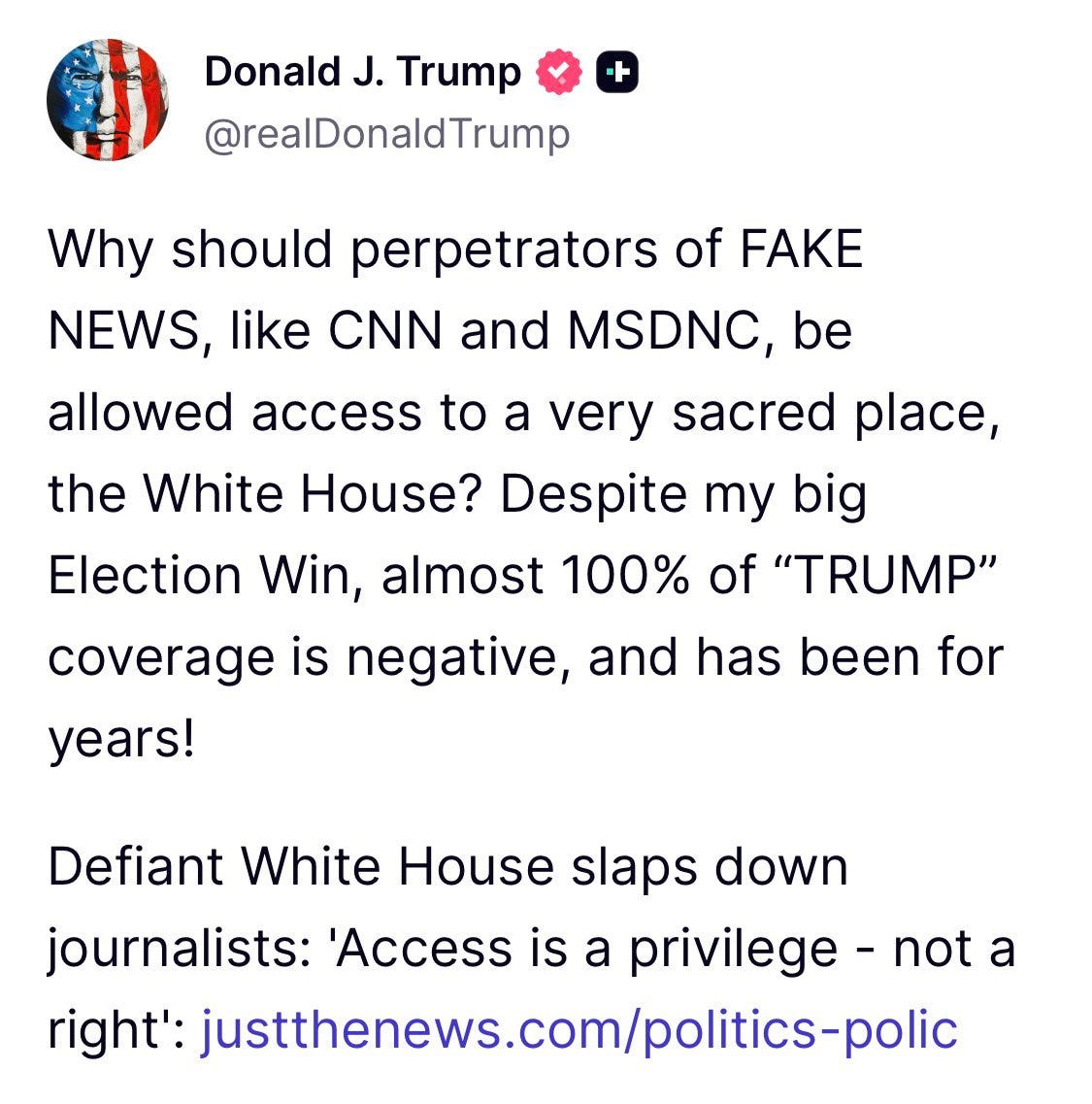
The White House barred CNN from flying on Air Force One as part of its press pool duties, leaving Trump’s Tennessee trip with no television pool coverage at all. The move follows Trump’s broader ban on CNN, MS NOW, and Politico from the White House, which a judge later blocked while ordering the outlets’ credentials restored, though the status of pool duty specifically remained unclear. Other networks, including Fox, NBC, ABC, and CBS, had refused to perform pool duties until CNN’s access was restored, and regular coverage briefly resumed Friday during Trump and Xi’s National Archives visit before CNN was blocked again for Saturday’s trip. Trump posted on Truth Social questioning why “perpetrators of FAKE NEWS” should have White House access at all. Press advocates warn the pool system’s breakdown undermines independent oversight of the presidency, with one former press association president warning “America cannot have state TV.”
Netanyahu reportedly received a secret warning about a looming Hamas attack weeks before October 7, but it never reached Israel’s security chiefs. Sources told the New York Times that UAE President Sheikh Mohammed Bin Zayed called Netanyahu in late September 2023 to say Hamas was planning a major attack, though the warning lacked specifics on whether it would involve rockets or a ground invasion. Netanyahu has denied ever receiving such a call, but minutes from an October 1 security meeting show he never mentioned any warning to his chiefs, instead urging calm in Gaza and pushing back on officials who wanted to strike Hamas leaders, partly out of concern it could jeopardize a hoped-for normalization deal with Saudi Arabia. Sheikh Mohammed reportedly later described the call to then-CIA Director William Burns, and five former senior Israeli officials said the warning was never mentioned in any of the internal investigations into the security failures preceding the attack. The revelation lands weeks before Israel’s first national election since October 7, intensifying pressure on Netanyahu, who has blocked a state commission of inquiry and blamed security officials rather than himself for the failures that preceded the deadliest attack in Israel’s history.
A New Mexico jury found Facebook liable for deceiving users about privacy protections tied to the Cambridge Analytica scandal. The two-week trial in Santa Fe focused on claims that Facebook lied to users about a breach that let an outside quiz app harvest data from roughly 87 million profiles, later sold to the now-defunct political firm Cambridge Analytica. Jurors found the company responsible for more than two million separate violations affecting the state’s entire population, and a judge will now set penalties that state prosecutors want capped at the maximum $5,000 per violation. This follows a separate $942 million judgment against Meta in New Mexico over child safety controls, and comes after Meta’s $18 billion multistate youth-safety settlement in August, which released the company from future Cambridge Analytica claims in states that signed on. New Mexico and Florida both declined that settlement, calling it too lenient, leaving New Mexico as the only state still litigating the issue.
A grieving father-in-law attacked his daughter’s killer in the middle of a sentencing hearing after the defendant appeared to laugh at his victim impact statement. Alberto Ontiveros-Sanchez lunged at Abel Uribe, who was restrained in handcuffs and leg chains, and struck him several times before courtroom staff pulled him away, nearly five years after Uribe murdered Army Captain David Navidad-Parra. Ontiveros-Sanchez’s attorney said his client “lost it” after becoming emotional and noticing Uribe “laughing, snickering” in court. The judge said he understood the emotions involved but that such conduct could not be tolerated, releasing Ontiveros-Sanchez despite charges including aggravated assault. Uribe, who had pleaded guilty to the murder, was ultimately sentenced to life in prison with the possibility of parole.
A Florida family is suing Tesla after their Tampa mansion burned to the ground when their Model S ignited in the garage during Hurricane Helene’s storm surge. The lawsuit alleges saltwater flooding submerged the vehicle’s undercarriage, triggering an explosion and fire that destroyed the family’s 5,400-square-foot home and killed their dog, with rescuers unable to reach the family in time to save the pet. The Murphys claim Tesla knew for over a decade that its lithium-ion batteries were prone to dangerous “thermal runaway” when exposed to water, having patented fire-retardant material as far back as 2010, yet never used it and marketed its vehicles as safe anyway. Rescuers from a volunteer group called Grey Bull Rescue reached the trapped family by boat after floodwaters cut off emergency vehicle access. Similar Tesla fires destroyed at least two other Tampa-area homes during the same storm, and the family is seeking damages and punitive damages at trial.
A salmonella outbreak tied to broccoli sprouts has grown to at least 32 illnesses across six western states, and officials warn the real number is likely higher. The CDC traced the outbreak to broccoli sprouts from Idaho’s Evergreen Fresh Sprouts, which were sold to restaurants, co-ops, and grocery stores across Washington, Idaho, Montana, and Utah, with Washington state accounting for the majority of cases. Three people have been hospitalized so far, though no deaths have been reported, and illnesses have continued to be confirmed as recently as early September. The recall covers sprouts sold in bags or clamshell containers with several specific expiration dates in September. The CDC says the true case count is likely undercounted since many people recover without seeking medical care or testing.
Trump used a rare and contested “pocket rescission” power to cancel nearly $1 billion in congressionally approved spending, mostly targeting immigrant services and diversity programs. The cuts hit Health and Human Services programs serving refugees and unaccompanied minors, a Department of Education program for migrant students, a DOJ office focused on racial tensions, minority business development funding, and HUD housing counseling services, with the White House calling some of the targeted grants “outright harmful and blatantly ideological.” The maneuver lets Trump run out the clock on the 45 days Congress is legally given to review proposed cuts, since he announced them with just five days left in the fiscal year while the House was out of session until after the midterms, a tactic the Government Accountability Office says is illegal. Republican Sen. Susan Collins, who chairs the Appropriations Committee, condemned the move as an unreported impoundment and a “usurpation of Congress’s appropriations powers,” while Democratic Sen. Patty Murray called it “theft from the American people, plain and simple.” This is Trump’s second use of a pocket rescission, after blocking $4.9 billion in foreign aid last year in the first such move in nearly 50 years, and fits a broader pattern of the administration expanding executive power over spending, personnel, tariffs, and even military action without going through Congress.
Renovation work at an Arizona park has left dead ducks and fish rotting in a drained lake, drawing outrage and a wildlife rescue operation. Gilbert’s Freestone Park drained its lake to remove built-up sediment and replace the liner, but city officials confirmed some fish and ducks could not be relocated and died as the water level dropped, creating a foul stench that has drawn mosquitoes and vultures. Residents say many of the ducks were domestic birds that cannot fly away on their own, and local rescue groups have since pulled 36 waterfowl and four turtles from the lake, some showing signs of possible botulism. One rescuer said the city’s handling of the situation was “definitely handled poorly in the beginning” and hopes it serves as a lesson for other parks statewide. The city says it will work more closely with wildlife organizations on future projects and is now testing the water for botulism.
New Jersey Lt. Gov. Dale Caldwell resigned after just eight months in office following an investigation that found ethics violations and a sexually charged remark to a staffer. Gov. Mikie Sherrill said the findings showed Caldwell “failed to uphold the responsibilities of his office,” and the report detailed that he told a staffer women like her were “looking for young sperm” and had pushed to get his girlfriend hired without disclosing the relationship. Caldwell disputed the report’s conclusions but resigned anyway, saying he didn’t want the matter to distract from the administration’s work, while his attorney called the investigation “unnecessarily protracted and one-sided.” Sherrill has 45 days to name a replacement and has already tapped acting comptroller Shirley Emehelu as acting secretary of state, a role critical to overseeing the ongoing midterm elections. Caldwell’s fall comes amid a rocky stretch for Sherrill, who also revealed this summer that New Jersey had mistakenly allowed over 6,000 noncitizens to register to vote in 2023 and 2024.
See you soon.
— Aaron


