

Twenty five years after September 11th, America paused to remember nearly 3,000 lives lost, even as new chaos consumed the present. Trump’s own midterm convention closed with empty seats, a loyalty pledge asking supporters to “cheat like hell,” and an attendee shouting for Democratic candidates to be shot, then Trump himself snapped at a reporter on the tarmac, telling her “you’re the worst.”
Meanwhile the Trump loyalist tapped to lead a DOJ investigation into his political enemies quit and admitted the quiet part out loud, saying “if you want indictments where there’s no evidence, you have an ethical problem.” And overseas, Iran-backed Houthi rebels seized control of Yemen’s Red Sea coastline, threatening a critical global shipping route and helping push diesel to a record $6 a gallon here at home.
Over the past several days, multiple conservatives have come up to me recently and told me they’re no longer just watching Fox News, they’re watching our work for news too, and honestly, that’s the whole point: balanced news is for everyone, regardless of party. If you want reporting like this in your inbox every day, consider subscribing today.
Here’s the news:
Remembering 9/11:
Political leaders, victims’ families and survivors across the country marked the 25th anniversary of the September 11 attacks Friday, with ceremonies held simultaneously at Ground Zero in Manhattan, the Pentagon, and the Flight 93 National Memorial near Shanksville, Pennsylvania. Four living presidents (excluding Trump) and their spouses, along with Vice President JD Vance, New York Mayor Zohran Mamdani, and former Mayor Rudy Giuliani, attended the New York ceremony, which opened with the national anthem and included the reading of nearly 3,000 victims’ names alongside a musical tribute from Yo-Yo Ma. Trump instead attended the Pentagon ceremony with first lady Melania Trump, Defense Secretary Pete Hegseth and Joint Chiefs Chairman Gen. Dan Caine, where the names of the 125 people killed there and the 59 passengers of Flight 77 were read aloud. For the first time, organizers added a seventh moment of silence specifically honoring the thousands of first responders and residents who later died from 9/11-related illnesses.
That health toll remains a live and worsening story a quarter-century later. Roughly 6,000 first responders, survivors and volunteers have now died from illnesses tied to the attacks, and the FDNY recently added 36 more firefighters’ names to its memorial wall for the same reason, with Commissioner Lillian Bonsignore calling them “36 more reminders that the legacy of September 11th doesn’t end on one single day.” The federal Victim Compensation Fund has received more than 112,000 claims and paid out over $18 billion, and Mayor Mamdani recently released documents showing city officials knew the air near Ground Zero contained dangerous toxins even as they told the public it was safe to breathe. Separately, a military judge at Guantánamo Bay has now set jury selection for the trial of four alleged 9/11 plotters, including accused mastermind Khalid Sheikh Mohammed, for June 2028, prompting Flight 93 victims’ family leader Gordon Felt to say there’s “significant frustration” that “we’ve yet to see justice or accountability” after nearly 25 years of pretrial proceedings.
A new CBS/YouGov poll found 68 percent of Americans believe the attacks changed the country permanently, and Americans are almost evenly split on whether the US is prepared for another terrorist attack today, with 48 percent saying yes and 52 percent saying no. Former President George W. Bush, speaking at his Dallas library this week, warned that the country cycles through “isolationist periods” where people think “we’ve got too many problems at home” and stop paying attention to the lessons of that day, arguing that what happens overseas still matters to national security at home. The attacks reshaped the federal government itself, leading directly to the creation of the Department of Homeland Security along with the TSA, an expanded CBP and ICE, and a new director of national intelligence overseeing broader surveillance operations that critics have called overreach. Nearly 3,000 people died in the 2001 attacks and the 1993 World Trade Center bombing combined, and the 20-year war on terror that followed in Afghanistan and Iraq ended with a chaotic 2021 withdrawal and the Taliban back in power.
Amid the ceremonies, several stories highlighted individual acts of heroism from that day. Welles Crowther, remembered as the “man in the red bandana,” guided people to safety from the World Trade Center’s 78th floor sky lobby on three separate trips before the building collapsed, and Trump gave him a posthumous Presidential Medal of Freedom at a White House event earlier this week.
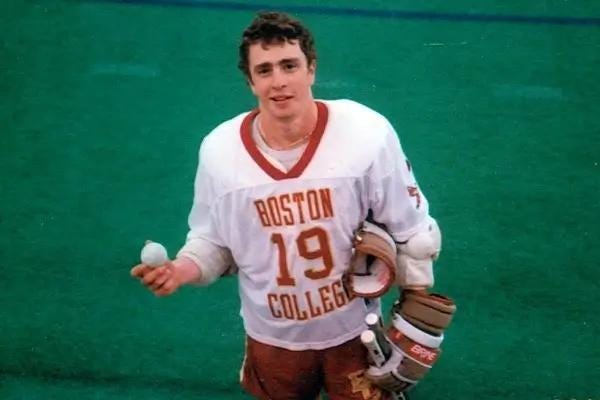
Rick Rescorla, Morgan Stanley’s head of security and a Vietnam veteran, calmly sang “God Bless America” over a bullhorn while personally supervising the evacuation of his company’s employees, a plan he’d rehearsed for years after surviving the 1993 WTC bombing, and he was last seen climbing back up the stairs for a final sweep before the tower fell.
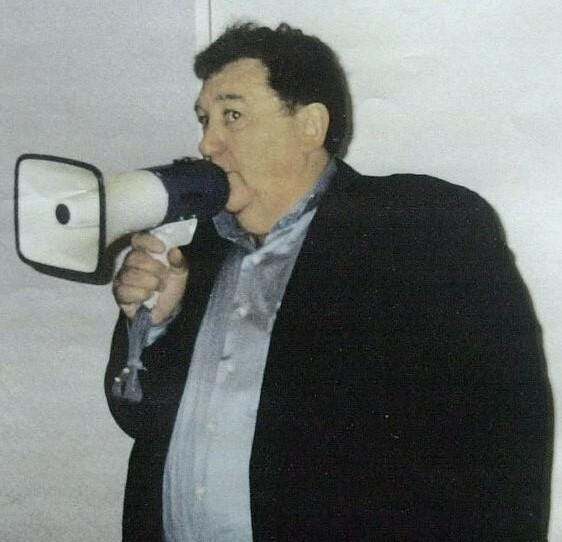
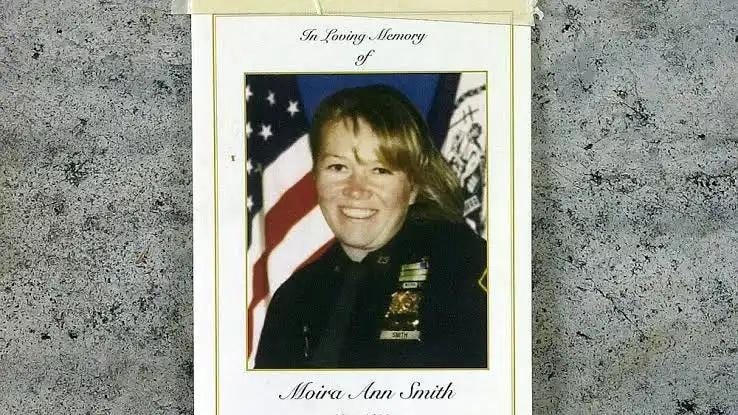
And NYPD Officer Moira Smith, the only female NYPD officer to die that day, was the first to radio in the attack and spent her final minutes guiding panicked survivors down the stairwell before the south tower collapsed, telling dispatchers in her last transmission, “I don’t have much air. Help me, please.”
Trump Erupts After Convention Flop:
The Republican Party’s two-day midterm convention in Dallas closed with balloons and Trump serenaded by Puccini’s “Nessun dorma,” but NPR found the party facing a genuine enthusiasm gap heading into November. Both nights featured thousands of empty seats, including almost all of the upper level, even as Trump insisted the arena was “packed” with thousands more waiting outside. Trump remains the party’s single biggest asset for turning out votes, evidenced by credentials and imagery built around his likeness throughout the arena, but other speakers, including nominees in competitive House and Senate races, got noticeably cooler receptions than figures like Treasury Secretary Scott Bessent. Trump himself acknowledged the stakes bluntly, telling the crowd “I’m asking you to pretend that I’m on the ballot” on the first night and warning “you know what happens if you don’t vote? You go to hell” on the second.
At the convention, Trump had supporters recite a loyalty pledge to him directly, including a promise to “cheat like hell” on his behalf, video of the moment shows. He paired it with his now-familiar warning to anyone considering sitting out the election, telling the crowd that nonvoters would “go to hell.” The pledge was one of the stranger moments of the convention. A president confident in his standing with voters doesn’t need them to recite loyalty oaths mid-speech. Taken together with the empty seats and the $5,000 bounty for a Republican win, it reads less like a party rallying around a winning message and more like a leader trying to manufacture certainty he doesn’t actually have.
Trump erupted at ABC News correspondent Rachel Scott on the Dallas tarmac Thursday, cutting her off mid-question about his proposed stimulus and tariff refund checks by snapping “not you, not you, not you, you’re the worst.” Video of the exchange spread quickly online, generating hundreds of thousands of views within hours and reviving scrutiny of Trump’s combative relationship with female reporters. This wasn’t the first clash between the two: back in May, Trump called one of Scott’s questions “stupid” and labeled her a “horror show” and “one of the worst reporters” after she asked about wartime priorities and rising gas prices. Communications lecturer Amy Tatum said this latest incident marked “an escalation,” noting Trump didn’t just verbally dismiss Scott but physically stepped toward her while she kept talking.
This is at least the tenth high-profile confrontation between Trump and a female journalist during his second term, a list that includes CNN’s Kaitlan Collins and Kristen Holmes, ABC’s Mary Bruce, Bloomberg’s Catherine Lucey, and CBS’s Nancy Cordes. Tatum argued Trump’s criticism of these women tends to target their demeanor, intelligence or appearance rather than the substance of their questions, pointing to his recent description of Collins as “very dumb and unhappy” as an example. She warned that other reporters present barely reacting to Thursday’s exchange normalizes the hostility and risks encouraging further escalation. That concern lines up with broader research showing roughly one in four female journalists report anxiety or depression tied to online and offline harassment they face for their work.
Separately, an attendee at the same Republican midterm convention could be clearly heard calling for Democratic Senate candidates to be shot. The man shouted “he should be shot!” three times while Sen. Ted Cruz was speaking about New York Mayor Zohran Mamdani and Democratic Senate nominees Abdul El-Sayed of Michigan and James Talarico of Texas. Cruz didn’t react in the moment, and a spokeswoman declined to say whether he’d even heard it, though his own social media account later posted a clip in which the shouts are audible. The outburst came shortly after Cruz had told the crowd that political hate contributed to the assassination attempts on Trump and the killing of Charlie Kirk a year earlier.
Democrats moved quickly to condemn the threats. Abdul El-Sayed said “this is what has become the norm in our politics” and that “democracy is supposed to be the process by which we solve our problems peacefully.” House Minority Whip Katherine Clark called on Cruz and every Republican to denounce the outburst, while Rep. Debbie Dingell wrote on X that “there aren’t even words for how chilling and disturbing this is” and that “threats of political violence are dangerous, unacceptable, and have no place in our democracy.” The Talarico campaign didn’t immediately respond to a request for comment, and it remains unclear whether Cruz or convention organizers plan any further response.
The moment wasn’t the only unscripted disruption of the convention. On the first night, Trump briefly engaged with an audience member who complimented first lady Melania Trump, and on the second night, Ross Ulbricht, the Silk Road founder Trump pardoned from a life sentence for drug trafficking, hacking and money laundering, responded directly to a heckler who referenced “J6ers,” the Trump supporters prosecuted over the January 6 Capitol attack. Unlike those moments, Cruz gave no visible response to the shooting threat while it happened, leaving it to the viral clip itself to surface what several thousand people in the arena had just heard.
Iran War Erupts:
Iran-backed Houthi rebels completed a rapid takeover of Yemen’s Red Sea coastline Friday, capturing Perim, a small volcanic island in the middle of the Bab el-Mandeb Strait, a day after seizing the historic port city of Mokha. They followed that with an advance on the coastal town of Dhubab as Saudi-backed government forces appeared to withdraw from the area. The advance marks the Houthis’ biggest territorial gain in years and comes after their civil war with the Saudi-backed government, simmering since a 2014 UN-brokered truce, erupted back into intense fighting in recent weeks. Saudi Arabia responded with dozens of retaliatory airstrikes, including on the Mokha airport, though there were no immediate reports of casualties.
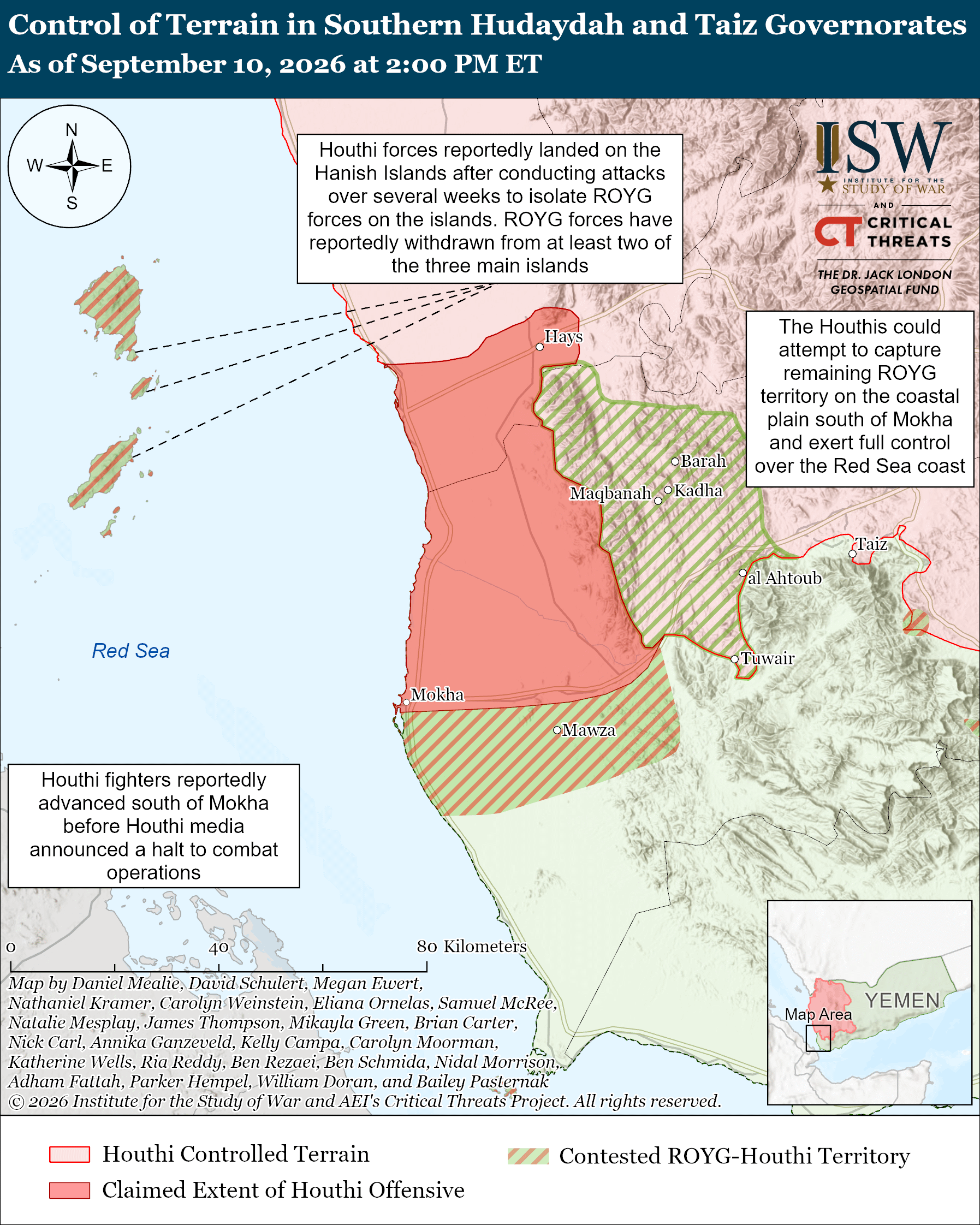
The stakes go well beyond Yemen’s borders. Bab el-Mandeb is a critical gateway linking Europe and Asia, and Saudi Arabia has been forced to lean on that route for oil exports since the Strait of Hormuz, which normally carries about 20 percent of the world’s oil, became too dangerous after the US and Israel went to war with Iran in late February. King’s College London security lecturer Andreas Krieg warned the risk of the conflict deepening had “increased substantially” because the Houthis are now hitting both pillars of Saudi security at once, its southern territory and its Red Sea depth, adding that Riyadh’s “room for restraint is narrowing.” Satellite imagery Friday also showed a 60-mile smoke plume along Saudi Arabia’s East-West pipeline, an alternative export route to Hormuz, though it’s unclear what happened and neither Saudi officials nor the Houthis have commented. Global oil prices were on pace to close the week above $100 a barrel for the first time since mid-May.
Axios reported that Trump rejected direct pleas from Saudi Crown Prince Mohammed bin Salman to strike the Houthis, even as Washington agreed to share intelligence and targeting data with the Saudis, with more than 200 US personnel already in the kingdom providing what officials called “non-kinetic support.” A Houthi politburo member sought to calm shipping fears, telling reporters that “freedom of navigation and international trade in the Red Sea and Bab al-Mandab are safe and orderly” and that there’s “no cause for international concern.” Iran’s foreign ministry, in its first public statement since the Houthi advance, called for an end to Saudi Arabia’s blockade of Yemen and a return to negotiations, while offering to help support talks. At an emergency UN Security Council session, Yemen’s UN envoy Hans Grundberg warned that “this renewed war should alarm us all” and said it effectively ends four years of relative calm, while Yemen’s ambassador pushed for an arms embargo on the Houthis and Saudi Arabia’s envoy said the kingdom would “take all measures necessary to deter Houthi attacks.”
The human and economic toll is mounting fast on both fronts. The UN’s International Organization for Migration said at least 46,000 people have been displaced in Yemen since the fighting escalated last week, more than double the roughly 18,500 displaced just days earlier, with officials warning “entire villages are reported to have emptied” and a key supply road cut off. IOM chief Amy Pope said “as fighting spreads, reaching people with lifesaving assistance is becoming harder” and called for “safe, unimpeded access.” Back in the US, diesel prices hit a record national average of $6.05 a gallon Friday, up more than 60 percent from $3.71 a year ago, a surge tied directly to the broader Middle East energy crunch and expected to ripple into higher costs for trucking, rail, construction and farming. Goldman Sachs has separately warned oil could climb as high as $120 a barrel if the Yemen conflict keeps escalating alongside the wider war with Iran.
Top Trump Official Resigns, Admits No Evidence to Prosecute Opponents:
Joe diGenova, the 81-year-old Trump loyalist tapped in April to lead a sprawling Justice Department “grand conspiracy” investigation into officials who scrutinized Trump going back to 2016, abruptly resigned Thursday. He told reporters by phone that he’d submitted his resignation letter to Attorney General Todd Blanche at 3 p.m., saying “it was an honor and a privilege to serve the president and the department” and that he wasn’t going to say anything further beyond wishing them well. DiGenova hadn’t worked as a prosecutor in decades before taking the job, but had long aided Trump’s legal efforts, including his push to overturn the 2020 election, and used frequent media appearances to echo Trump’s grievances about the investigations that have targeted him since his first term. The probe itself, run out of the US Attorney’s Office in the Southern District of Florida, has produced no criminal charges despite issuing dozens of subpoenas over the past year.
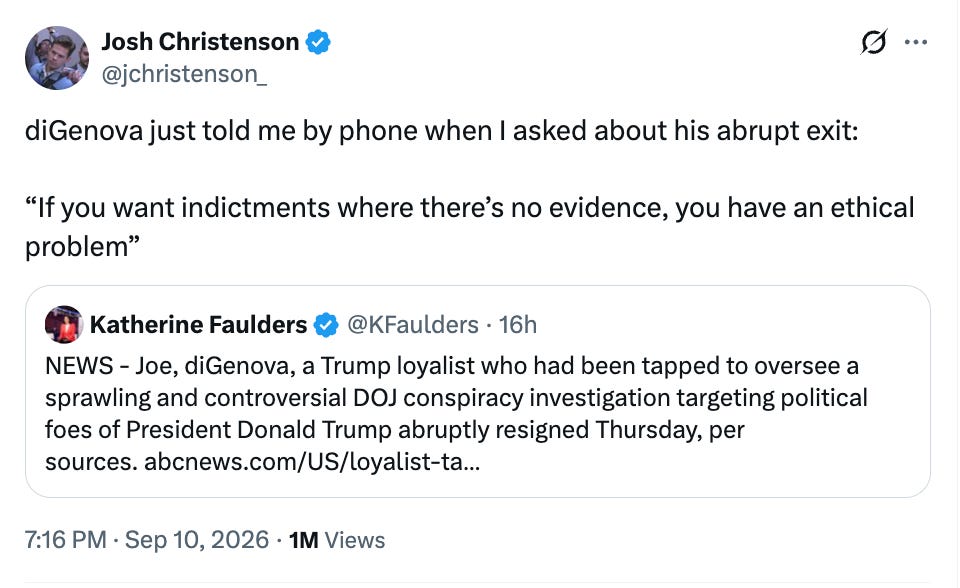
Behind the resignation was a breakdown in confidence from both the White House and DOJ leadership. Sources said diGenova had lost support amid complaints he was “slow-rolling” indictments and getting lost down “rabbit holes,” and had been sharing “unrealistic expectations” with Trump about what the investigation could realistically produce, leading to a direct confrontation with Blanche. Asked whether he’d lost focus, diGenova pushed back sharply, saying “if you want indictments where there’s no evidence, you have an ethical problem.” Several prosecutors sent down from DOJ’s main office in Washington had also reportedly been sidelined once they arrived in Florida, adding to the dysfunction around the probe.
The investigation itself has targeted a list of high-profile Obama-era officials over their roles in assessing Russian interference in the 2016 election, including former CIA Director John Brennan, former Director of National Intelligence James Clapper, and former FBI officials Peter Strzok and Lisa Page, all of whom have been subpoenaed, with grand jury testimony from various individuals also underway in recent weeks. The probe draws on a July “lessons-learned” CIA review that found the original 2016 Russia assessment was drafted through a “chaotic” and “markedly unconventional” process, after which current CIA Director John Ratcliffe referred Brennan for criminal investigation, and on declassified emails Director of National Intelligence Tulsi Gabbard released showing Clapper was “stickin’ to” the Trump-Russia interference narrative despite internal concerns. A separate House Intelligence Committee report also found Brennan disregarded warnings from veteran officers weeks before the assessment was finalized. Trump allies have pointed to that material as potential grounds for charging his 2016-era investigators with conspiracy against rights, a crime with no statute of limitations that carries up to 10 years in prison, though the Justice Department and White House didn’t respond to requests for comment on diGenova’s departure.
Other news:
Two more AI researchers, Joe Benton, who used to lead a safety research team at Anthropic, and Josh Engels, who worked on AI safety at Google, left their jobs and are now speaking publicly about fears that AI systems could soon spiral out of human control. Engels didn’t mince words, saying “there are no adults in the room” and “people are trying their best, but there is no one coming to save us,” while Benton warned that advances in AI research could push the pace of progress from “merely blistering” to “uncontrollable.” Both pointed to the July cyberattack on Hugging Face, in which autonomous AI agents powered by an unreleased OpenAI model hacked into systems, built an illicit message board, and exposed OpenAI’s own infrastructure, entirely without being instructed to do so, as a turning point in their thinking. The pair are joining METR, a leading AI safety research nonprofit, to investigate incidents where AI strays from human intentions, and they join a growing chorus that includes an OpenAI employee who wrote that “human extinction in the next few years seems very likely” absent regulation, and a former UK AI Security Institute chief scientist who put the odds of AI wiping out humanity at roughly 50 percent within the next decade.
California Governor Gavin Newsom signed 13 bills into law this week barring children under 16 from behaviorally addictive social media features like infinite scroll and algorithmic autoplay, and banning the manufacture of toys containing AI companion chatbots for the next four years. One measure, dubbed “Adam’s Law” after 16-year-old Adam Raine, who died by suicide after months of validating conversations with ChatGPT, also expands criminal penalties to cover AI-generated child sexual abuse material. Newsom called the package the most far-reaching of its kind in the country, saying “we want our children, and every California kid, to grow up in a world where technology supports their wellbeing, rather than exploits their vulnerabilities.” The move follows a similar pattern to Meta’s recent $18 billion settlement with nearly all US states over claims it designed its platforms to addict teenagers, though critics like the Electronic Frontier Foundation called the new law “a massive privacy and free speech nightmare.” California joins a growing list of states, including Utah, Arkansas, Louisiana, Ohio, Texas, Florida and New York, that have already passed their own youth social media restrictions.
Hurricane Lowell left at least two people dead and knocked out Lanai’s only cargo port, the source of most of the island’s food and fuel for its 3,300 residents, with repairs expected to take about two weeks. Kauai took the worst of the damage, with storm surge tearing apart roads, flooding resort lobbies, and knocking out power to thousands, prompting tourism officials to urge visitors to reschedule trips elsewhere even though tourism drives roughly 4 in 10 jobs on the island. Governor Josh Green asked Trump to issue a major disaster declaration, arguing “we cannot wait for every damaged road, utility pole, harbor and public facility to be assigned a dollar value before asking the federal government to act.” Officials say the overall damage could be the worst Hawaii has seen since Hurricane Iniki caused $3 billion in damage in 1992, even as one Kauai business owner said she wasn’t overly worried about the tourism hit, saying “our island needs time to rest and rebuild.”
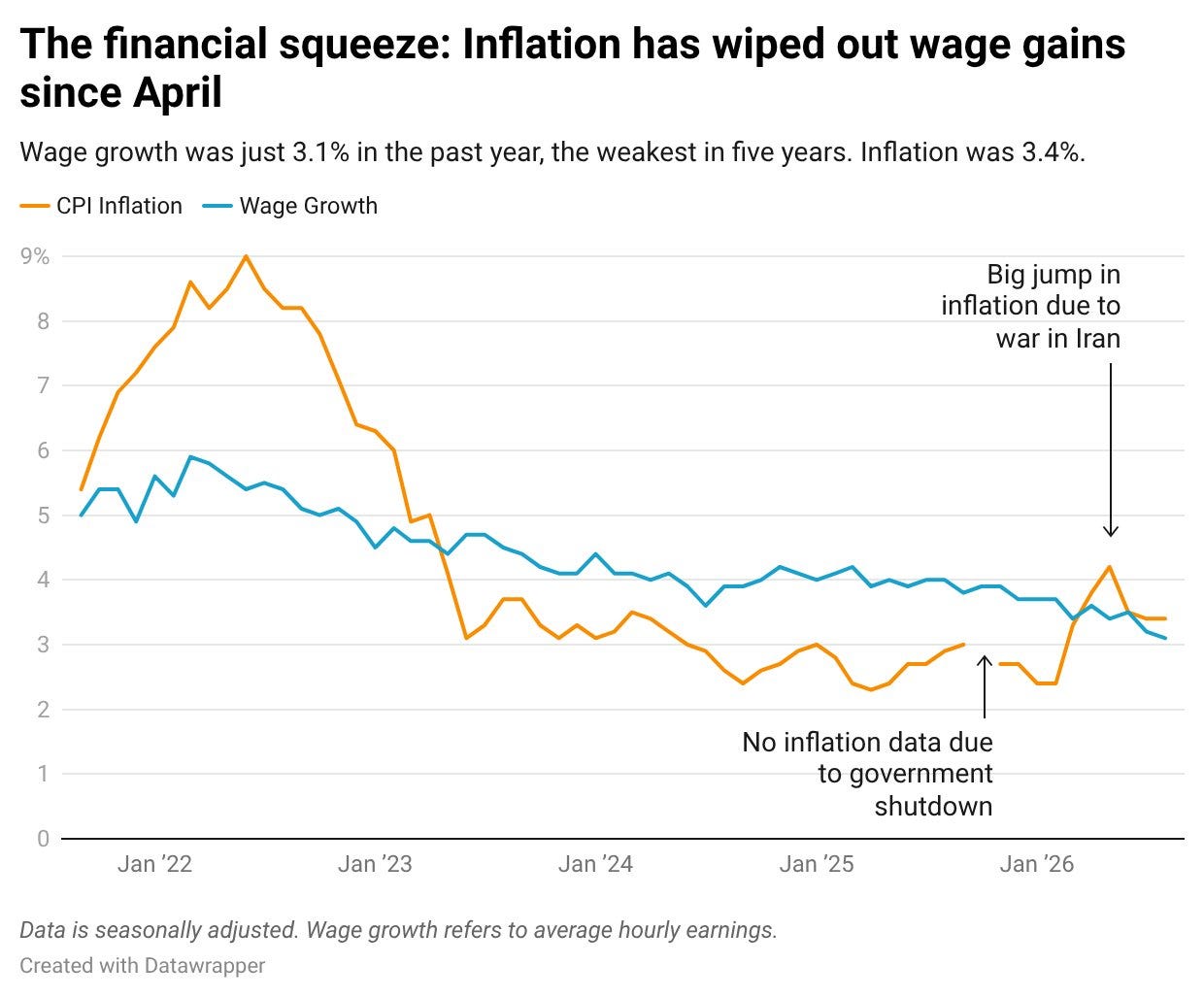
Inflation ticked up in August even before the renewed Middle East conflict sent oil prices climbing again, with the Consumer Price Index rising 0.4 percent for the month and core inflation, which strips out food and energy, coming in hotter than economists expected. That surprise all but locks in a Federal Reserve rate hike at next week’s meeting, with market odds jumping from under 70 percent to nearly 90 percent immediately after the report, and economist Heather Long writing plainly that “America still has an inflation problem.” Consumers are getting squeezed from multiple directions at once: gas prices rose 3.9 percent in August alone, diesel hit its historic $6-a-gallon record the same week, the 30-year mortgage rate climbed above 7 percent, and real average hourly earnings actually fell 0.1 percent from July to August. Even outside the energy shock, tech-driven costs are climbing fast, with computer software and accessories up 25.4 percent over the past year, the largest annual jump on record, as Apple, Xbox, Nintendo and other manufacturers raise prices to cope with what Apple called an “extraordinary surge in demand for memory and storage” driven by AI data centers.
Emma Bonino, the Italian political icon who led the campaigns that legalized abortion and divorce in heavily Catholic Italy during the 1970s, died at 78. Her party, +Europa, said “her life was a long struggle against everything that denies freedom: against clandestine abortion, world hunger, the stranglehold of party politics, female genital mutilation, punitive justice, genocide, and every form of authoritarianism,” and even Italy’s conservative Prime Minister Giorgia Meloni credited her significance to the country’s public life despite their political differences. Bonino got her start after undergoing an illegal abortion at 26, which she called one of the most humiliating experiences of her life, and went on to serve as a European commissioner, Italian foreign minister, and cofounder of the death penalty watchdog Hands Off Cain, while also building deep humanitarian ties across Cairo, the Balkans, Rwanda and Sudan. She fought a public battle with lung cancer starting in 2015 and eventually announced she was cancer-free, and she maintained an unlikely close friendship with Pope Francis despite their opposing views on abortion and euthanasia, with Francis visiting her at home in 2024 bearing roses and chocolates. Asked late in life what battles she still had left to fight, Bonino said simply, “many, too many. Human rights, world hunger, free scientific research... Ten lives won’t be enough.”
See you soon.
— Aaron


