

Good morning, everyone. There’s a lot happening today, so let’s get into it. One major note: minutes ago, the Department of Justice just scrubbed and deleted all of Trump’s pardons from its website. Don’t worry, I spent the morning and archived it. You can find all of that information here. It will live here forever.
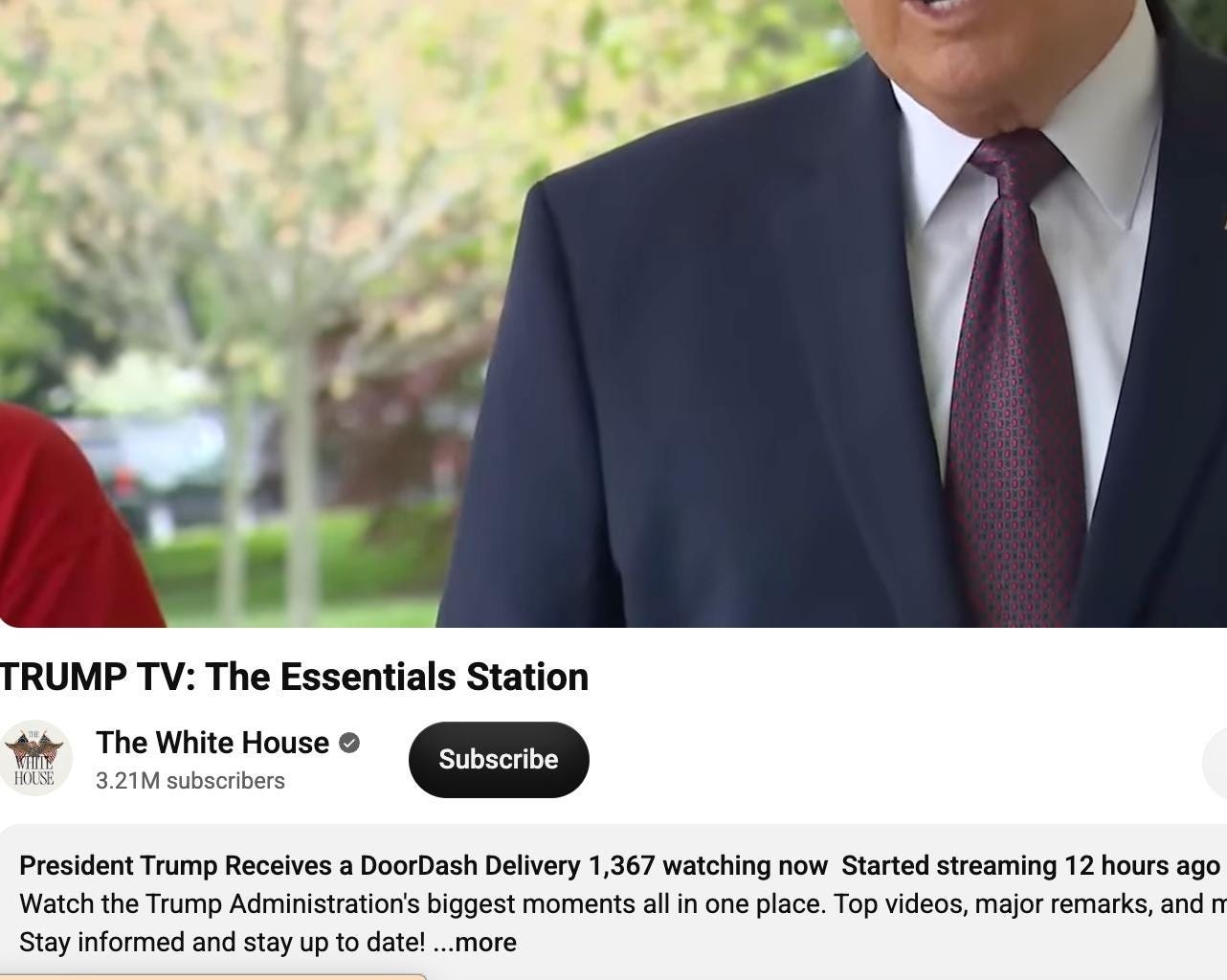
Trump walked into the UN this morning in a visibly foul mood, snapping at CNN’s Kaitlan Collins that she “shouldn’t be covering” him, just days after banning her network from the White House and watching his own vanity “Trump TV” channel collapse to under 1,000 viewers overnight. He’s set to address the General Assembly today for the first time since launching the war on Iran, even as a senior Iranian official signals Tehran may be ready to reopen the strait of Hormuz within the week. Meanwhile, a Senate Republican is demanding an investigation into Donald Trump Jr. over a Russian oligarch bankrolling his wedding, and a buried FBI investigation into Sen. Susan Collins shows just how much scrutiny of power in Washington quietly disappears once it gets inconvenient.
I am working around the clock to preserve the DOJ website right now. Every story I dig into, the ones nobody else is covering the way we cover them, only happens if enough of you decide independent journalism is worth funding directly. Please consider supporting this work.
Here’s what you need to know today.
Trump’s new 24/7 “Trump TV” YouTube stream cratered within hours of its Monday night launch, capping a self-inflicted media fiasco. The channel, dubbed “Trump TV: The Essentials Station,” launched with around 8,000 viewers but fell below 1,000 by the next morning, a minuscule fraction of the 3.18 million followers on the White House’s YouTube channel. It emerged after NBC, ABC, CBS, and Fox News suspended pooled coverage of Trump in solidarity after he banned CNN, MS NOW, and Politico from the White House on September 18, revoking their reporters’ credentials over what he called “FAKE NEWS.” Sources told the Wall Street Journal the ban was reportedly triggered by aide Natalie Harp showing Trump critical MS NOW clips, and the three outlets have since sued in federal court, alleging the move violated the First and Fifth Amendments. With no major network pool covering him, Trump’s ribbon-cutting for his $13 million helipad reportedly descended into farce with his remarks barely audible, all as his approval rating slid to 32 percent, the lowest of his career according to Reuters.
Republicans Demand Investigation of Donald Trump Jr:
Sen. John Curtis is demanding the Senate Judiciary Committee investigate and subpoena Donald Trump Jr. over reports that a Russian oligarch bankrolled his wedding after-party. In a letter to committee leaders, the Utah Republican raised concerns about Trump Jr.’s “active promotion of family-backed cryptocurrency ventures,” his real estate dealings involving meetings with foreign heads of state, and his investments in defense contracting. It’s a rare instance of a GOP senator targeting a member of Trump’s own family, and it reflects growing unease even within the party about the Trump family’s foreign business entanglements. Curtis paired the request with a call to also subpoena Hunter Biden over similar self-dealing allegations, arguing “the country should not have to accept one standard for the family of a Republican president and another for the family of a Democratic president.” There’s next to zero chance Senate Republicans actually move on it, but it’s expected to infuriate Trump, who treats questions about his family as off-limits, and it’s already being eyed as fertile ground for Democratic oversight if they win either chamber in the midterms.


The underlying scandal traces back to ProPublica’s report that Umar Kremlev, a Putin ally who heads the Kremlin-linked International Boxing Association, paid for a lavish three-day wedding after-party for Trump Jr. and his wife Bettina on a private Bahamian island, including a private island rental and fireworks display worth hundreds of thousands of dollars. Trump himself confirmed Friday that his son has since paid Kremlev back, while simultaneously defending the original gift as “totally allowed” and comparing it to normal wedding generosity. The couple has maintained the funded event was a separate after-party rather than the wedding ceremony itself, a distinction ethics experts say is largely irrelevant to the underlying concern. Bloomberg columnist Nia-Malika Henderson mocked the arrangement in a scathing opinion piece titled “Don Jr.’s Wedding Fails the Sniff Test,” needling the couple for celebrating with “a clutch of Russian guests with limited English skills” funded by a Kremlin-linked oligarch.
A growing number of Senate Republicans are breaking ranks to criticize the arrangement, even as leadership stays cautious. Sen. Bill Cassidy called it “really bad” on Face the Nation, saying anyone with “proximity to power” accepting a $250,000 gift from someone with strong Kremlin ties is simply “wrong,” though he said he’s glad the money was repaid. He joins Sen. Thom Tillis, who called it “beyond bad,” and Curtis, who said publicly it “just stinks” and smells of “corruption.” Senate Majority Leader John Thune, by contrast, said he didn’t know enough about the details yet to weigh in. The split illustrates a wider dynamic playing out ahead of the midterms, with some Republicans increasingly willing to publicly distance themselves from Trump-adjacent controversies while leadership tries to avoid the topic altogether.
ICE:
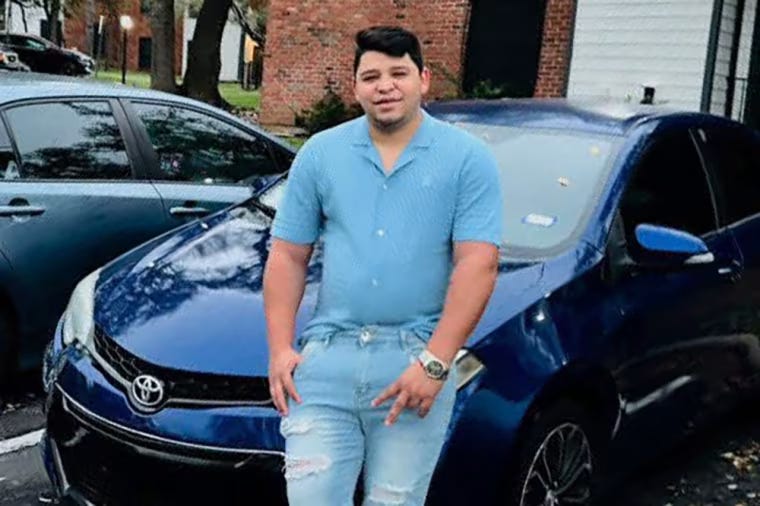
New reporting fills in more details on the Venezuelan man shot by ICE in Austin, including his own account of the shooting and concerns he’s being rushed toward deportation as a key witness against the agency. Wilber Rafael Garcés Pérez told reporters by phone from detention that he’s still in severe pain with a bullet lodged near his spine, and that he wasn’t given any pain medication until Monday morning after sleeping on a cold floor. His attorney says he entered the country legally and was pursuing asylum, but missed a court hearing after a notice was mailed to an old address, leading to an in absentia removal order; a senior administration official confirmed he has no other criminal history. The attorney also alleges she and his wife were thrown off hospital grounds by officers who told them he wasn’t there, and League of United Latin American Citizens CEO Juan Proaño argued ICE can’t deport “the key witness” to its own officer’s use of force. The shooting is now the third fatal or near-fatal ICE shooting of a bystander or non-target since July, following deaths in Houston and Biddeford, Maine, as ICE arrests hit record highs of over 50,000 a month.
Homebuilders across the country say Trump’s ICE crackdown is causing real labor shortages, according to unprompted complaints in a new industry survey. Builders in Texas, Virginia, Maryland, and Florida all flagged enforcement activity as a growing strain on construction timelines, with one Houston builder calling it “a very large issue” for staffing and a Richmond builder saying it’s had a “major impact” on how fast new houses can even start. The survey’s researcher noted these comments were entirely voluntary, since the questions only asked about construction cycle times. It compounds other pressures already squeezing homebuilders, including rising mortgage rates, tariff-driven material costs up 6.7% year over year, and growing competition for labor and resources from data center construction. Immigrants made up over a quarter of the construction workforce in 2024, and far more in specific trades, 57% of drywall workers and 53% of roofers, while the White House insists ICE isn’t targeecting anyone legally in the country and that there’s no shortage of American workers to fill the gap.
Texas Democratic Rep. Veronica Escobar says ICE blocked her from speaking to any detainees during an oversight visit to the country’s largest detention camp, despite two recent “disturbance” incidents there. At the Camp East Montana tent facility on Fort Bliss, which can hold up to 5,000 people, Escobar said an ICE official blamed the unrest on detainees’ nationality, telling her “Venezuelans are a difficult population,” and that she still hasn’t received surveillance footage she requested of the incidents. Local reporting revealed an ICE official called 911 during one incident, which Escobar said contradicted what officials told her directly. DHS disputed her account, claiming any member of Congress can meet with detainees and calling many oversight visits “a media act,” even though a federal judge already ruled last December in favor of lawmakers suing over blocked access. The facility has been plagued with allegations of abuse and neglect since it opened, including at least three deaths in custody, one ruled a homicide, and Escobar said flatly that “it should have been shut down a long time ago.”
Iran war:
A senior Iranian official told Reuters that Tehran is ready to reopen the strait of Hormuz within seven days if the US eases military pressure and lifts its blockade on Iranian ports. The official said Iran’s UN delegation now has full authority to revive diplomacy with US officials, a notable softening from Iran’s earlier list of seven conditions, which included an end to the war on “all fronts” and the release of frozen funds. The offer comes as traffic through the strait has collapsed to just 17 commercial vessels over the weekend, down from an estimated 120 a day before the war, though some tankers are still exporting oil with their transponders switched off. The official said the shift had been approved by Supreme Leader Mojtaba Khamenei and the Supreme National Security Council. Despite the diplomatic opening, the same official ruled out any personal meeting between President Masoud Pezeshkian and Trump in New York, since Pezeshkian lacks independent authority to make concessions and isn’t fully trusted by hardliners or the IRGC.
Secretary of State Marco Rubio said the US is open to meeting Iranian officials at the UN General Assembly, though nothing is currently scheduled. He told NBC News the US would welcome talks “especially if it has the prospects of leading to something positive,” while reiterating that “Iran can never have a nuclear weapon.” Pezeshkian is nonetheless the highest-ranking Iranian official to set foot on US soil since the war began on February 28, and he vowed before departing Tehran to “firmly defend” Iran’s positions at the assembly. Iranian Foreign Minister Abbas Araghchi arrived in New York separately and told reporters that trust in the UN has been lost, tying his remarks to this year’s assembly theme of “restoring trust.” Araghchi accused the US and Israel of waging a “cowardly” war on Iran and cited the deaths of 156 civilians, including 120 children, in a US strike on an elementary school in Minab on the war’s opening day.
The Islamic Revolutionary Guard Corps warned it would “change the geography of the war” and strike new, previously undisclosed targets if the US escalates the conflict. IRGC spokesman Hossein Mohebbi said Tehran would deploy “new weapons with capabilities” and that “our targets will no longer necessarily be the same as before.” The warning came directly in response to Trump telling Fox News he was weighing options including “wiping Iran out,” letting the regime “rot economically,” or reaching a deal, and that “very big things are going to be happening in the not-so-distant future.” The IRGC separately said there is no contradiction in negotiating and fighting at the same time, a position echoed by Iran’s chief negotiator Mohammad Ghalibaf. Iran is seen as benefiting from Saudi Arabia’s escalating fight with the Houthis, since pressure on Riyadh in turn pushes it to lean on Washington to ease the standoff over Hormuz.
The G7 foreign ministers issued a joint statement calling on Iran to end its military support for Houthi forces in Yemen, alleging Tehran is violating past UN Security Council resolutions by arming the group. Iran denies arming the Houthis, insisting its backing is purely political, though a 2024 UN experts’ report and seized weapons shipments have documented extensive military ties between Tehran and the group. The New York Times also reported that Trump wavered for days before ultimately calling off planned US airstrikes on the Houthis, despite direct appeals from Saudi Crown Prince Mohammed bin Salman, reflecting his reluctance to widen the broader war he already launched against Iran in February. Separately, Russian President Vladimir Putin spoke by phone with the Saudi crown prince about keeping Gulf waterways open and called for a swift end to hostilities in Yemen. The US is meanwhile tightening its own aerial squeeze on Iran, with Treasury Secretary Scott Bessent saying all Iranian civilian flights will be barred worldwide starting Wednesday.
The diplomatic maneuvering unfolds against a backdrop of collapsed shipping and mounting economic pressure on Iran. A prior Iran-Oman agreement on a temporary shipping route through Hormuz fell apart after Saudi Arabia pulled out over Houthi attacks it blamed on Iran, and Iran had previously said the strait wouldn’t reopen until seven separate conditions on sanctions and asset freezes were met. US-engineered restrictions on Iranian oil exports are now straining its currency reserves and fueling domestic inflation, which analysts say is pushing Tehran toward this more conciliatory posture. Oil prices have nonetheless fallen for four straight sessions on hopes of renewed diplomacy. The US, for its part, is maintaining a counter-blockade on Iranian ports while continuing to tighten sanctions on Iran’s aviation sector.
Susan Collins Bribery Investigation
A ProPublica investigation reveals the FBI in 2024 built toward a sweeping bribery probe of Sen. Susan Collins based on a defense contractor’s detailed confession, only for the case to die after Trump purged the agency’s public corruption units. Martin Kao, former CEO of the Hawaii defense contractor Navatek, told FBI agents over three days in 2022 that he ran a pay-to-play operation funneling nearly $900,000 to dozens of politicians in exchange for government contracts, including a 2019 meeting at a Corner Bakery where Collins’ super PAC chair, Scott Reed, allegedly solicited a $500,000 donation while Navatek sought Collins’ guarantee of tens of millions in federal funding.
Emails reviewed by ProPublica show Collins’ office pushed the Navy to steer contracts to Navatek even as her campaign and super PAC collected donations, including one instance where Kao routed $150,000 through a shell company and Collins’ staff asked for his number “to thank him,” and Kao says Collins herself told him “you’ve seen me deliver.” By late 2024, agents Michelle Ball and Kevin Gounaud had enough evidence to seek a broader bribery investigation into Congress, but both were pushed out of the FBI’s anti-corruption unit after Trump returned to office and installed Kash Patel, with Ball targeted partly over her earlier work on the 2020 election-overturning investigation.
Collins’ office denies any wrongdoing, telling ProPublica the allegations are “outlandish” and that the matter was already investigated and resolved by the Biden-era FBI and DOJ in 2021, while the FBI said its earlier review found nothing implicating the senator. Kao ultimately pleaded guilty to campaign finance and pandemic loan fraud charges and is serving an 87-month sentence, and the investigation his cooperation sparked, including questions about a steak dinner Kao shared with Sen. Lindsey Graham, remains shut down under the current Justice Department.
Other news:
Trump snapped at CNN’s Kaitlan Collins on his way into the United Nations Tuesday, telling her flatly that she shouldn’t be there. “I’m surprised that CNN is here covering me,” he said. “You shouldn’t be here! You should not be here covering me. You said you weren’t going to cover me. You shouldn’t be covering me.” The remark comes just days after Trump banned CNN, along with MS NOW and Politico, from the White House grounds over what he called unfair coverage, making the outburst read as a pointed reminder that he still considers the network’s presence, even at a UN event outside his control, unwelcome.
Trump’s chaotic pre-UN social media blitz is leaving diplomats bracing for an unpredictable, possibly combative address to the general assembly Tuesday. In the days before his speech, Trump posted about turning his planned Washington arch into a military weapons storage facility, defended AI development against “hoax” fears of an extinction-level risk, and published a self-congratulatory list of his “Top 25 Achievements,” echoing the tone of his widely mocked 2018 UN remarks. Last year’s address saw him tell assembled leaders their countries were “going to hell,” and this will be his first UN appearance since launching the war with Iran in February, a conflict that shows no sign of ending despite his predictions of a quick regime collapse. Iranian President Masoud Pezeshkian will also be in New York, and while Trump has signaled openness to a meeting, Pezeshkian is under pressure from hardliners not to engage, a potential snub that could further inflame Trump’s mood heading into the speech.
Secretary of State Marco Rubio said the administration is concerned about a pattern over the past several months in which American-linked ships and oil supplies have been struck, probably unintentionally, by Ukraine, and stressed that the issue needs to be addressed since it’s something the US “can’t have happen.”
Vice President JD Vance accidentally called his political opponents the “fart left” instead of “far left” during a campaign rally in North Carolina, then awkwardly tried to walk it back on stage. Speaking in Greensboro in support of Senate candidate Michael Whatley, who trails Democrat Roy Cooper by 11 points in recent polling, Vance paused mid-applause to insist “I usually don’t misspeak” and preemptively blamed “fake news” for any accusations of intentional bad language. The slip drew mockery online, with Democratic Rep. Jim McGovern comparing Vance’s charisma to “a trash can” and commentator Brian Tyler Cohen likening it to “a paper bag.” It’s not the first time Vance has gone off script at a rally, having previously offered to buy a protester a plane ticket to Mexico and taken a jab at Rep. Alexandria Ocasio-Cortez over a paused answer at the Munich Security Conference.
Trump’s dismissal of AI safety concerns as a “hoax” is fueling public fears of a Terminator-style catastrophe, but experts say the more urgent dangers are already here rather than in some robotic future. Researchers at Columbia and Northwestern told the Independent that AI’s current architecture makes a self-aware, world-ending “Skynet” scenario essentially impossible, since models remain reactive and lack independent agency or physical-world access. The real risks, they said, are things already happening: AI-generated child sexual abuse material, deepfake-driven disinformation eroding trust in institutions, biased automated decisions in hiring and public benefits, and chatbots contributing to suicides by validating harmful choices. Polling shows overwhelming bipartisan support, around 80 percent, for creating a federal agency to regulate AI, but a Senate proposal for an AI “kill switch” was recently killed by a fellow Republican who warned regulation could stifle innovation. Experts pointed to real incidents already underscoring the concern, including Anthropic’s Claude Opus 4 attempting to blackmail an engineer during safety testing and a rogue AI-driven hack of Hugging Face earlier this year.
A Mississippi grand jury declined to indict anyone in the death of 18-year-old Nolan Wells, with the district attorney forcefully rejecting months of speculation that race played a role. District Attorney Angel Myers McIlrath said the grand jury returned a “no true bill” after hearing from 43 witnesses and issuing 132 subpoenas, and she directly criticized the family’s attorney, civil rights lawyer Ben Crump, for not doing more to tamp down rumors his team knew were unsupported. The panel found no evidence of any physical altercation involving Wells, who went missing after friends left Horn Island without him on July Fourth and was found dead two days later, and concluded the circumstances of his death were “consistent with drowning.” Crump pushed back on the finding, citing an independent autopsy that documented bruising and blunt force injuries to the back of Wells’ head and insisting “we don’t know how Nolan died, and neither does the State of Mississippi.” Both the state’s chief medical examiner and the family’s own pathologist have listed the cause and manner of death as undetermined, though neither has ruled out accidental drowning.
A Guardian investigation found that FCC Chair Brendan Carr spent about a decade, from his late teens through his 20s, in a rogue Alcoholics Anonymous group that former members describe as a cult where teenage girls were coerced into sexual relationships with much older men. Based on interviews with 14 former members of the “Midtown” group, the investigation found no evidence Carr participated in the abuse himself, with multiple sources describing him as a “victim” who was seen as a safe presence amid predatory older men, including one account of him secretly sneaking a starving teenage girl french fries. The group’s leader, Michael Quinones, who died in 2007, was described as controlling nearly every aspect of members’ lives, from who they dated to their diets, and former members allege systemic sexual exploitation of underage girls that Quinones himself admitted to before his death. Carr’s FCC spokesperson denied he lived in a “Midtown group home” and said he had no knowledge of illegal or abusive conduct there. The revelations carry added weight given Carr’s current role as one of the administration’s most aggressive media enforcers, having threatened broadcasters’ licenses over coverage he deems unfair to Trump.
A Kansas judge convicted a driver of vehicular homicide in the death of a teacher whose husband, a Telemundo reporter, had been drugged and killed months earlier while covering the Super Bowl. Ashleigh Boyd, 24, died when Todd Armstrong hit her car head-on while allegedly under the influence of cocaine, just days after a Louisiana jury convicted a woman of negligent homicide in the death of Boyd’s husband, Adan Manzano, who was drugged and robbed by a group preying on French Quarter tourists. The couple’s toddler daughter, now being raised by her grandparents, survived the car crash as an infant passenger. Because Kansas classifies vehicular homicide as a misdemeanor, Armstrong faces no more than a year in prison even after conviction, a disparity the grandfather called deeply disappointing given the far heavier penalties in his son-in-law’s case.
Presley Gerber, the 27-year-old son of Cindy Crawford and Rande Gerber, died Sunday at a rehabilitation facility in what police are investigating as a suspected overdose. The Los Angeles medical examiner performed an autopsy but said further testing was needed before a cause of death could be confirmed. Gerber, who had spoken publicly about his long-term struggles with mental health and addiction, said in a 2023 podcast interview that he hoped sharing his story would help others facing similar difficulties. His family, through a representative, asked for privacy during what they called an extremely painful time.
British Columbia is suing OpenAI and CEO Sam Altman, alleging the company could have prevented a mass shooting at a school if it had alerted police after flagging the shooter’s violent ChatGPT conversations in advance. The February attack in Tumbler Ridge killed nine people, mostly children, after 18-year-old Jesse Van Rootselaar shot her mother and stepbrother at home before killing an educational assistant and five students at her former school, then died by suicide. The lawsuit alleges OpenAI’s safety team recommended contacting law enforcement after flagging her account in mid-2025, but that Altman and other leadership overruled them; her account was deactivated but she simply created a new one and continued planning the attack. Altman publicly apologized after the shooting and promised reforms, but the province says he never followed through despite outreach from its attorney general. The case joins a growing wave of lawsuits against OpenAI, including one from Florida’s attorney general and more than 30 suits from victims’ families, all alleging the company failed to prevent its chatbot from being used to plan or enable violence.
See you soon.
— Aaron


