

Happy Saturday. More than 1.2 million Texas voters just found out, or haven’t yet, that they’re sitting on the state’s suspense list ahead of a genuinely competitive midterm cycle, and we’ll walk you through exactly what that means and how to check your own status. Pete Hegseth had one of his busier weeks yet, denying a report that he’s eyeing a 2028 run while simultaneously blocking military promotions and weighing a return trip to Quantico. And in Florida, a sheriff’s deputy who was named Deputy of the Year in 2025 resigned after an investigation uncovered a stalking, racism and abuse case ugly enough to make your stomach turn.
Beyond that, the FBI quietly loosened its hiring standards on some deeply uncomfortable disqualifiers, Trump announced a sweeping new oil deal with Venezuela, and new data shows ICE is arresting more non-criminal immigrants than at any point in this administration. We’ve also got updates on the Stars and Stripes firings, a tough new California bill aimed at social media giants, and an indictment in the World War II Memorial vandalism case.
Here’s the news:
Texas Suspends 1.2 Million Voters:
More than 1.2 million Texas voters, about 6 percent of the state’s registered voters, are currently sitting on the state’s voter suspense list because election officials have been unable to confirm their current address. That can happen when election mail comes back undeliverable or when officials receive information suggesting a voter may have moved. Being on the list does not cancel a voter’s registration or their right to vote, and many people on it may not even realize their status until they show up to cast a ballot. Voters who are on the list but still live in the same county can still cast a regular ballot, they just need to complete an additional form called a Statement of Residence at the polls. Voters who have moved to a different county may instead have to vote in their old county or cast a provisional ballot instead. The deadline to register or update a Texas voter registration ahead of this election is October 5. Early voting begins October 19, with Election Day falling on Tuesday, November 3.
Texas voters don’t have to wait until they show up to vote to find out if they’re affected. They can check their status anytime through the Texas Secretary of State’s voter registration lookup tool online, and if they discover they’re on the suspense list, they can contact their county elections office directly to update or confirm their information. The recommended steps are straightforward: verify your address is current, update your registration before the October 5 deadline if you’ve moved, contact your county registrar if you haven’t moved but landed on the list anyway, and if you’re still on the list on Election Day, don’t assume you can’t vote, just be ready to fill out that Statement of Residence.
This suspense list issue lands in the middle of a genuinely competitive Texas election cycle. Statewide, voters will choose a governor from a field including Republican Greg Abbott, Democrat Gina Hinojosa and Libertarian Pat Dixon, along with a U.S. Senate race between Republican Ken Paxton, Democrat James Talarico and Libertarian Ted Brown. All 38 of Texas’s U.S. House seats are on the ballot too, along with state lawmakers, district judges and a range of local offices. Because Texas lawmakers redrew the state’s congressional maps in 2025, some voters will find themselves voting in a different U.S. House district than they did previously, so checking your specific ballot by address is worth doing regardless of suspense list status.
Pete Hegseth:
Defense Secretary Pete Hegseth has denied a report claiming he’s weighing a 2028 presidential run, calling the story “100 percent false” in a post on X and adding that his only job is making the Pentagon “great again.” NBC News had reported that Hegseth told close friends and associates he saw himself as the natural heir to Trump’s MAGA legacy and would campaign on defense and social issues, a claim that would set him up in direct competition with JD Vance and Marco Rubio. Early polling suggests Hegseth would be a long shot regardless, with a CPAC poll earlier this year showing Vance at 53 percent support and Rubio at 35 percent, compared to just 1 percent for Hegseth. Hegseth capped his denial with a line aimed squarely at his base, telling followers to “carry on, Patriots, and enjoy your Friday night.” The dueling reports leave open whether this is a genuine trial balloon or simply speculation Hegseth wants shut down before it grows legs.
The denial comes as Hegseth faces fresh scrutiny over his handling of military promotions, after it was revealed Friday that he blocked four Army officers from one-star rank over their past ties to generals he had already ousted, including former Army Chief of Staff Randy George and Gen. Christopher Donahue. Critics argue the move fits a broader pattern of politically motivated personnel decisions, noting Hegseth removed several minority and female officers from a promotion list back in March, though the Pentagon insists race and gender play no role and that “military promotions are given to those who have earned them.” The New York Times has reported that Hegseth’s broader purge of senior Army leadership has left the service without a Senate-confirmed chief of staff and “rudderless,” with Democratic Rep. Pat Ryan warning it makes troops “less safe.” Retired Lt. Gen. Richard Newton called the blocked promotions “unnecessary, unwarranted and certainly unprecedented,” saying they undermine good order and discipline in the ranks. Hegseth’s interventions have reportedly spread beyond the Army to affect promotion lists in the Navy and Air Force as well.
Hegseth’s combative approach toward senior military leadership shows no sign of slowing, with the Wall Street Journal reporting he’s considering summoning hundreds of generals and admirals back to Quantico for a second address, following last year’s event where he criticized officers for “getting fat” and declared “the era of unprofessional appearance is over.” No date has been set for the potential meeting, but Hegseth is expected to use it to roll out new military directives similar to how he used the first Quantico gathering to emphasize “warfighting” over what he calls “woke” policies. That first Quantico summons last September caught senior officers off guard, since they were ordered to gather on short notice without being told why. Between the promotion blocks, the ongoing leadership purge, and the newly denied 2028 speculation, Hegseth finds himself fielding questions on multiple fronts heading into the weekend. Taken together, the three storylines paint a picture of a defense secretary consolidating control over the military’s top ranks while simultaneously managing his own political ambitions, whether he admits to them or not.
Florida ‘Deputy of the Year’:
A Brevard County, Florida sheriff’s deputy named Michael Fultz resigned after an internal investigation uncovered allegations of stalking, racism, and sexual misconduct so severe that investigators recommended termination before he stepped down instead. The probe found he used the Flock license plate camera network to track his ex-girlfriend’s movements, then told investigators he only entered “investigation” as his justification and denied doing it out of spite, even though he had separately admitted to her that he was watching her. Just months earlier, Brevard County had named him its 2025 Deputy of the Year, and the investigation only began after his ex sent the sheriff’s office a formal complaint the same day of the award ceremony.
The 43-page investigation went well beyond the Flock misuse, documenting that Fultz posed in photos mimicking Adolf Hitler and giving a Nazi salute, used racial slurs in text messages, and was photographed holding his service weapon to his ex-girlfriend’s head and mouth during a sexual encounter that occurred after he had fatally shot a knife-wielding suspect while on duty. He also admitted to using his phone to stalk her while off duty, and investigators separately found he repeatedly sped on his motorcycle, including once at 111 mph, and covered his license plate to build a following on his motorcycle-themed social media accounts, escaping consequences each time by identifying himself as law enforcement. He told investigators some of the content on those accounts was AI-generated.
The case fits a broader pattern documented by 404 Media of police officers being fired, arrested, or otherwise disciplined for abusing Flock’s surveillance capabilities to spy on ex-partners, including incidents in South Carolina where officers were arrested, a department that suspended its entire Flock contract, and another officer fired after logging 166 unauthorized searches on an ex. Fultz stands out because he directly told his ex-girlfriend that he was using the cameras to track her, whereas most victims in these cases don’t discover the surveillance until it has gone on for months or years. The Brevard County Sheriff’s Office gave 404 Media a copy of the investigation but did not respond to a request for comment on the case.
FBI Hiring Standards:
The FBI quietly lowered its hiring standards this past June, and background checks no longer automatically disqualify applicants who admit to hiring sex workers, stealing from a former employer, or engaging in bestiality before turning 18. Under the new rules, prostitution only becomes an automatic disqualifier if someone hired sex workers three or more times or did so within the last 10 years, while theft from an employer is no longer disqualifying if it happened more than three years ago. People in designated “positions of trust,” such as public safety, education, health, finance or law, still face automatic disqualification for soliciting sex, though it’s unclear whether military service counts toward that category.
The changes were communicated internally in a June 16 memo and mark a departure from the FBI’s own archived hiring documents, which as recently as 2023 listed prostitution and bestiality as automatic disqualifiers, language that has since been quietly scrubbed from the bureau’s current eligibility guidance. An FBI spokesperson confirmed some changes but framed them narrowly, saying they mainly account for rare cases such as applicants who were themselves sexually abused with animals as children, and stressed the bureau still maintains high suitability standards. Former officials and outside critics, including former agent James Davidson and attorney Mark Zaid, argue the changes reflect a shrinking applicant pool and raise concerns about hiring people vulnerable to blackmail or compromise, especially since the new rules reportedly don’t distinguish between candidates who were coerced into such acts and those who participated willingly.
The policy shift comes as the bureau has hemorrhaged staff under the Trump administration, losing 1,139 special agents in 2025 alone, and follows other recent rollbacks such as dropping the bachelor’s degree requirement and cutting Quantico training from 18 weeks to eight. FBI Director Kash Patel has publicly defended loosening hiring rules more broadly, including reducing the required prior law enforcement experience from two years to one, insisting the bureau is receiving record numbers of applications and that recruits still face rigorous screening at Quantico. The bureau has also faced past prostitution-related scandals, including a 2021 inspector general report on agents soliciting sex while stationed overseas and a more recent substantiated case involving a supervisory agent who used an FBI-issued device to solicit prostitutes on an overseas assignment.
Other news:
The Trump administration is staking out increasingly aggressive legal positions on executive secrecy ahead of the midterms, arguing in a Justice Department memo and court filings that the president can shield not just internal White House deliberations but also his dealings with outside advisers like business figures, non-government attorneys, and old friends who have played an outsized role in shaping his second-term agenda. The White House has gone even further in an American Bar Association lawsuit over its pressure campaign on law firms, arguing it can keep secret the very identities of outside advisers who helped craft policy, and separately claiming it can ignore the Presidential Records Act, a Watergate-era law requiring preservation of White House documents, after an April Office of Legal Counsel memo declared the law unconstitutional.
Legal experts across party lines say the DOJ has grossly overstated the case law supporting these claims, and a federal appeals court is currently reviewing a district judge’s ruling that rejected the administration’s constitutional challenge, with oral arguments set for October. Democrats, led by Senate Judiciary members including Adam Schiff, are already pushing back, demanding the White House disclose which outside advisers it believes are covered by privilege and warning in court filings that “harm to the public occurs the instant the White House destroys an official record, regardless of when the injury is actually felt.” Congressional aides say that even if courts ultimately reject the broadest privilege claims, Democrats are preparing other pressure tactics, including public pressure campaigns and reputational consequences, to compel compliance from private companies and individuals who get caught up in any future subpoena fights.
A federal appeals court judge ruled Tuesday that the First Amendment protects an individual’s right to privately possess AI-generated child sexual abuse images in their own home, as long as the material doesn’t depict a real person, while also urging the Supreme Court to revisit decades-old legal precedents that predate modern AI. Judge John Z. Lee, writing for the 7th Circuit, upheld a lower court’s dismissal of a possession charge against Steven Anderegg, who was accused of using an AI image generator to create thousands of explicit images of children and was separately charged with sending similar images to a 15-year-old boy via Instagram; the production and distribution charges against him remain pending. Lee based his ruling on a 1969 precedent protecting private possession of obscenity in the home and a 2002 ruling that virtual child sexual abuse material not depicting a real person isn’t legally child pornography, while acknowledging that “the relentless advancement in artificial intelligence models” has created legal lines the court isn’t free to redraw itself.
Legal experts say the ruling won’t meaningfully slow prosecutions since it doesn’t protect how someone obtains such material in the first place, but it does formally reinforce that virtual and real abuse imagery may warrant different legal treatment, a distinction that comes as the nonprofit clearinghouse NCMEC says it’s being overwhelmed by a growing flood of AI-generated abuse reports from tech companies. A Boston College law professor said there’s a decent chance the Supreme Court takes up the case given its recent willingness to revisit early-internet-era speech precedents affecting children.
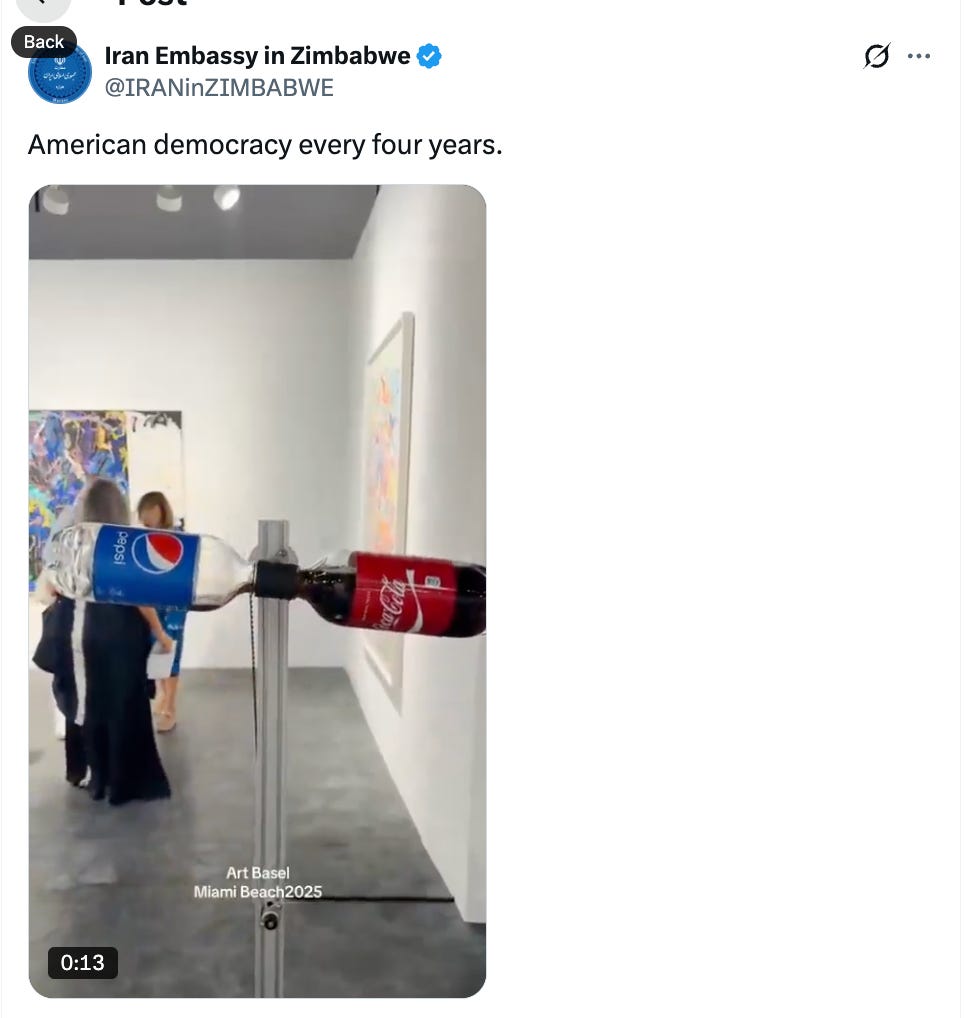
Iran continues to troll the United States as negotiations remain stalled:
President Trump announced Friday night that the United States has reached an oil agreement with Venezuela, claiming it will secure majority U.S. control over more than 65 billion barrels of the country’s proven oil reserves at no cost to American taxpayers, a deal he says will more than double American oil reserves and lower gas prices. The announcement comes as national average gas prices sit above $4 a gallon and the ongoing Iran war has disrupted roughly a fifth of the world’s oil supply for six months, draining commercial stockpiles and shrinking U.S. emergency reserves to their smallest levels since the early 1980s. A White House official said the arrangement grants the U.S. 55 percent effective output of a new private joint venture with Venezuela, which under 100-year concessions negotiated with interim leader Delcy Rodriguez will become the second-largest private oil company by reserves in the world, with proceeds going toward filling the strategic petroleum reserve and supplying the U.S. military.
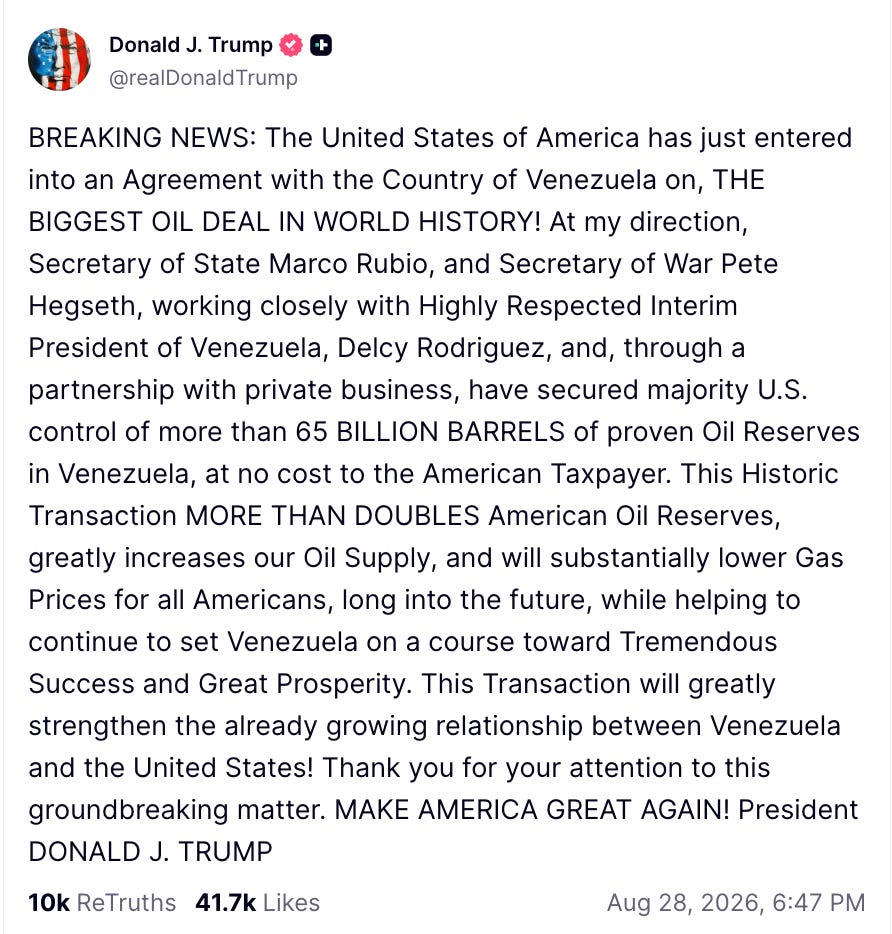
Secretary of State Marco Rubio called it “a huge win for both the American and Venezuelan people,” saying it will bring nearly $100 billion in private investment and thousands of jobs to Venezuela, while Rodriguez framed it as a step toward consolidating Venezuela’s position as an energy power. The deal follows the U.S. military’s capture of Nicolás Maduro at the start of the year and a subsequent Venezuelan law change making it easier for foreign companies to enter the country’s oil industry, which holds more proven reserves than any nation on earth.
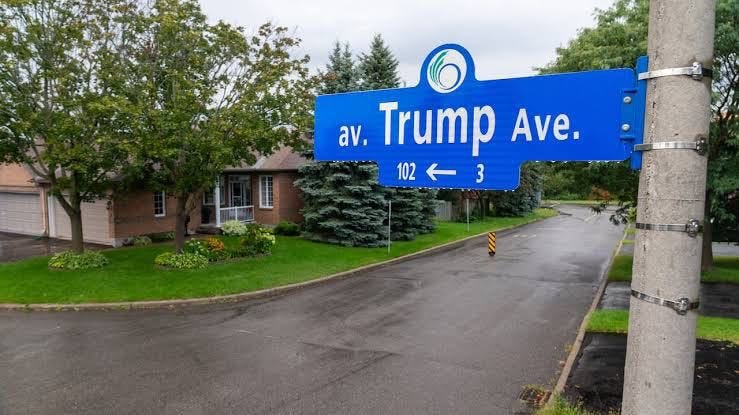
Ottawa City Council voted unanimously Wednesday to take the first step toward renaming Trump Avenue, a residential street in the Central Park neighborhood that has carried the president’s name for about 25 years, with suggested replacements including Obama Avenue, Ontario Avenue, Canada Avenue, Pelosi Avenue, Rosie O’Donnell Avenue and Taco Avenue, a reference to the “Trump Always Chickens Out” acronym. The vote came just a day before Trump signed an executive order directing the U.S. government to rename Lake Ontario “Lake America,” a move Councilor Tim Tierney said pushed the renaming issue back to the “front burner” after a 2021 attempt ended in a tied resident vote. Any change still faces a long road, requiring support from more than half the street’s residents and a separate public engagement process, with nothing expected to move until after Ottawa’s municipal elections in late October. Tierney noted Trump Avenue is the only place in Canada actually named after Trump himself, unlike other Trump-adjacent sites like Trump Lake, but he cautioned against letting the naming fight distract from the bigger picture, saying “our focus has to remain on trade and tariffs” and calling Trump’s renaming moves a “lame name game.”
New government data shows ICE detained more than 49,000 migrants in July, the highest monthly total of Trump’s second term, with more than half of those arrested having no criminal record, the largest share since January 2025, even though administration officials have repeatedly claimed enforcement is focused on “the worst of the worst.” Analysts say the shift reflects mounting pressure on ICE to hit arrest quotas, pushing agents to target whoever is easiest to find rather than serious criminals, a trend fueled by the administration’s cancellation of temporary protected status for hundreds of thousands of immigrants and expanded arrests of people with pending asylum claims or green-card applications. A DHS spokesperson disputed the analysis, claiming without providing comparable data that nearly 70 percent of those arrested have criminal convictions or pending charges, though many detained immigrants actually entered the country legally on visas that have since expired and face only civil, not criminal, violations. Arrests have climbed steadily since dropping below 30,000 in February following public backlash over the killings of two American citizens by immigration officers in Minneapolis, and ICE has since arrested more than half a million people total under Trump, with nearly 40 percent lacking any criminal record and this year’s noncriminal arrests already exceeding all of 2025, fueled by a $170 billion funding boost, new local law enforcement partnerships, and a White House push for at least 2,000 daily arrests.
The Pentagon agreed Friday to a one-week reprieve for three Stars and Stripes staffers, reporter Lara Korte, editor-in-chief Erik Slavin, and publisher Max Lederer, who had been facing imminent firing, after a federal judge pushed back on being asked to rule quickly on their First Amendment lawsuit. The journalists say they were targeted for speaking out on CBS about fears of eroding editorial independence at the military-funded newspaper, though they argue the real trigger was a Stars and Stripes story on deteriorating sailor mental health aboard the USS Abraham Lincoln during its Iran war deployment. U.S. District Judge Trevor McFadden, a Trump appointee, sounded skeptical of both sides, questioning whether the journalists’ CBS comments counted as protected speech since they got official sign-off beforehand, while also doubting the government’s claim that threatening their jobs didn’t chill their First Amendment rights. The Pentagon agreed not to proceed with the firings before September 4, when McFadden will hold a more thorough hearing on whether to issue an injunction keeping the journalists employed while the case continues.
California lawmakers passed a bipartisan bill Friday, AB 2, that would let courts impose fines of up to $1 million per child harmed in cases where tech companies are found liable for negligent product design, with penalties potentially climbing to triple damages in cases involving significant harm to a child or family. The measure, authored by Democratic Assemblymember Josh Lowenthal, is technology-neutral and could apply to harms tied to social media, AI chatbots or other platforms, and it now heads to Governor Gavin Newsom’s desk, where he has until September 30 to sign or veto it. It arrives just days after Meta agreed to pay states up to $18 billion to settle claims its platforms addicted and harmed kids, following other recent rulings including a $6 million Los Angeles jury verdict against Google and Meta in March and a nearly $1 billion judgment against Meta in New Mexico this month. The tech industry has fought the bill, arguing it infringes on free speech and unfairly increases liability, with Meta having helped kill a similar 2024 measure and having failed this summer to add safe harbor protections, and industry groups have signaled they may challenge the law on First Amendment grounds if Newsom signs it.
A Washington, D.C. grand jury indicted 41-year-old Kentucky native Melissa Farris on two counts, destruction of a veterans’ memorial and destruction of government property, after prosecutors say she spray-painted orange graffiti on the World War II Memorial’s Atlantic Theatre Pavilion on August 13, causing more than $1,000 in damage. In an interview with the Washington Post, Farris defended her actions, saying she “decided I was going to scream loudly enough that a nation will hear me” and that she made “a big mess to get the nation’s attention,” arguing veterans fought for people rather than monuments. A judge previously rejected prosecutors’ push to keep Farris jailed pending trial, ruling that her decision to turn herself in undercut the argument that she posed a flight risk. The case comes amid President Trump’s monthslong pressure campaign against National Mall vandalism, during which he publicly clashed with D.C. U.S. Attorney Jeanine Pirro over her decision to drop charges against former Olympian David Hearn in a separate Lincoln Memorial Reflecting Pool damage case, with Trump writing on Truth Social that he disagreed “100%” with her handling of it.
See you soon.
— Aaron


