

Good morning, everyone. As promised, our Sunday tradition continues: another weekly good news update. Share one piece of good news from your week in the comments, and pass this along so someone else can join in too. I just got off air on MS Now, you can catch my segment here.
My good news of the week happened at the National Geographic museum, where multiple young people came up to me and told me they exclusively get their news from us and would not be informed without us. That means everything to me, and moments like that, meeting you all in person, remind me exactly why this work matters.
We are not in competition with anyone. My goal has never changed. Share accurate news with as many people as possible. And we have done it. Not with billionaire backing. Not by softening the truth to please those in power. Just with you.
None of this happens without you. If this community matters to you, if a media landscape that answers to people instead of billionaires matters to you, this is the moment to back it. Subscribe. Gift a subscription to someone who needs to see this. Upgrade your membership.
Here’s the good news:
Fergus Farrell, an Irishman who was told in 2018 he had just a 5 percent chance of ever walking again after a workplace injury left him paralyzed from the rib cage down, has begun a 3,000 mile trek across the United States entirely on foot, starting at the Brooklyn Bridge on August 22 and aiming to reach the Santa Monica Pier around November 5. The 46 year old father of three, who ruptured two discs in his back and nearly severed his spinal cord while lifting a metal bench, spent weeks unable to move before a tiny toe twitch on day 21 marked the start of a grueling recovery that included morphine addiction, a suicide attempt, and a stay in a psychiatric ward that he now credits with helping him find himself. Since then he has walked across Ireland, rowed seven marathons, run four ultramarathons, and attempted to paddle across the Atlantic, and he now plans to cross 11 states and log roughly 80,000 steps a day over 75 days to raise awareness and money for spinal cord injury organizations including the Christopher & Dana Reeve Foundation and Spinal Injuries Ireland. Farrell, who still lives with 24/7 nerve pain, poor balance, and no reaction skills, says the journey is meant both to raise awareness for people with spinal cord injuries and to show his children that hard work can accomplish anything, and he hopes Americans along his route will join him for stretches of the walk.
A rescue cat named Meemers, who has short spine syndrome and bears a striking resemblance to viral internet star Jimothy the Raccoon, has gone viral herself, with one video of her posted August 18 drawing more than 41 million views within days. The two and a half year old cat, who lives in Bloomington, Illinois with owner Katie Dahlen, measures only about seven and a half inches from shoulders to tail base and also has a slight tail deformity. Dahlen, who previously worked at the shelter where Meemers was found abandoned in a box with matted fur and an abscess, adopted her after treating her with antibiotics and has cared for her since July 2025, adjusting for the fact that Meemers can’t climb or jump, overheats easily, and needs regular brushing since her lack of a neck prevents her from grooming her own back. Despite her physical limitations, Dahlen describes Meemers as social and affectionate, often taking her out in public on a leash, and hopes her viral fame encourages more people to consider adopting cats with special needs.
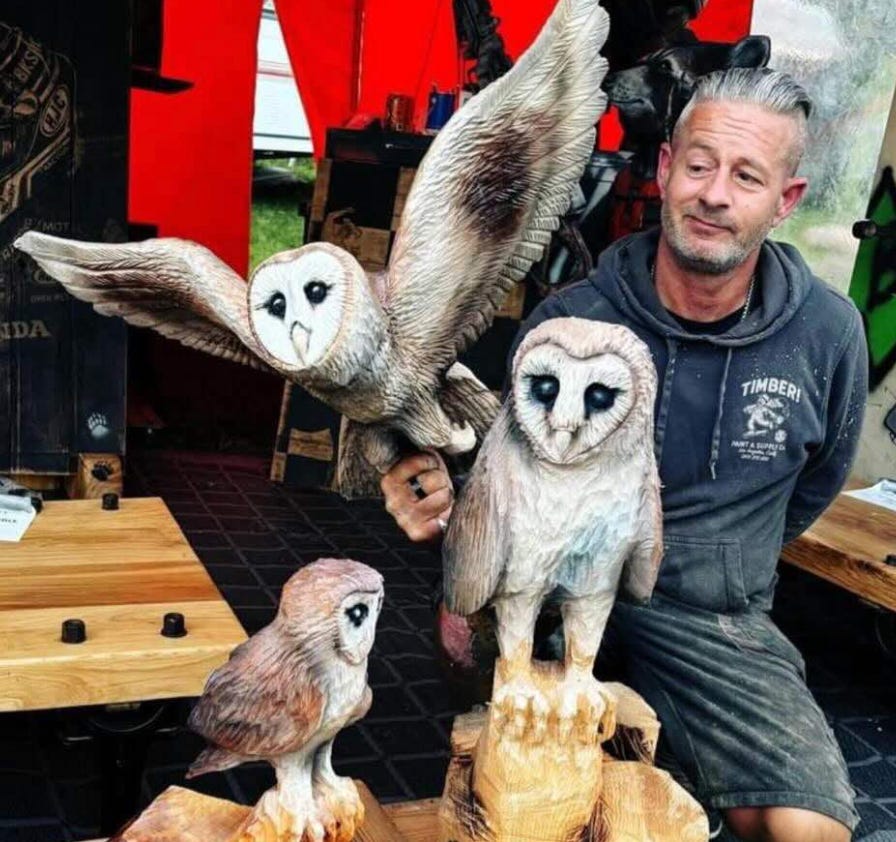
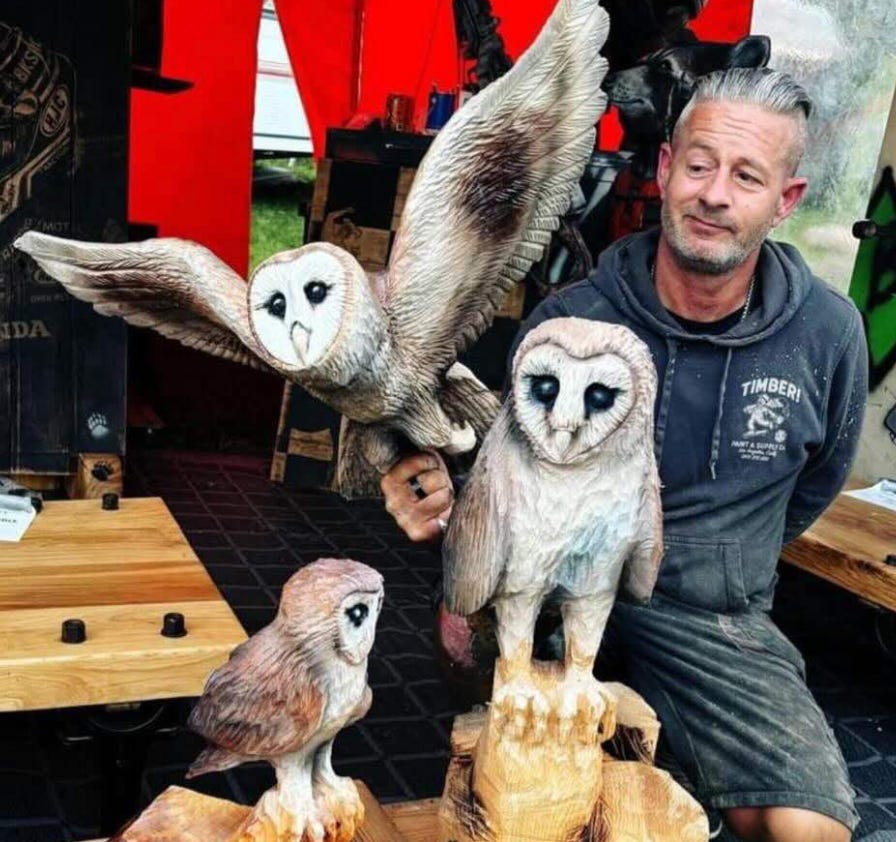
Self-taught artist Simon Bogg has spent nearly 30 years carving realistic wooden sculptures with a chainsaw, starting after his mother asked him to make a mushroom and quickly landing five orders. The 53-year-old from Louth, Lincolnshire now works up to eight hour shifts over several days to create pieces like horses, birds, rhinos, badgers and elephants, using imported Cedar Wood or local timber. His biggest carving stands 22 feet tall, and some of his most detailed pieces sell for between 6,800 and 9,500 dollars, while his popular carved owls start around 150 dollars. Despite the physical toll of hoisting a chainsaw for hours, including sore backs, aching wrists and the risk of hearing damage, Bogg says he loves the work and is especially drawn to sculpting large pieces that people once said were impossible.
A new Concordia University led study found that certain deep sleep brain waves may protect against the harmful effects of orexin, a brain chemical tied to wakefulness and sleep regulation that has been linked to worsening Alzheimer’s symptoms. Researchers tracked 60 adults with mild to moderate Alzheimer’s over three years and found those with higher orexin levels showed more cognitive decline and higher biological markers of neurodegeneration and inflammation. However, participants who produced stronger sleep spindles and slow oscillations, brain wave patterns tied to memory preservation, during deep sleep showed less cognitive decline even with elevated orexin levels. Researchers say the findings, published in the journal Neurology, suggest monitoring these sleep patterns could help track disease progression and identify patients who might benefit from orexin blocking treatments already used for insomnia and narcolepsy.
ABC News correspondent Will Reeve profiled a father-daughter duo who work together to make sure Miami Dolphins players eat well enough to perform on gameday.
London’s Waterloo station has become the first major train hub in Britain to deploy dogs on regular security patrols, with three retiring canines named Riley, Buster and Flo taking part in a three month trial. The two cocker spaniels and one Labrador, all between 9 and 11 years old, were brought in by South Western Railway and NR Wessex in partnership with Alpha Canine Specialists for what will be their final assignment before retirement. Officials say the dogs are meant to serve as a visual deterrent and offer passengers extra reassurance, and stressed the move isn’t linked to any specific increased threat. The initiative joins other recent safety measures at the station, including an upgraded CCTV system, a new outreach worker for vulnerable young people, and high visibility tabards for staff.

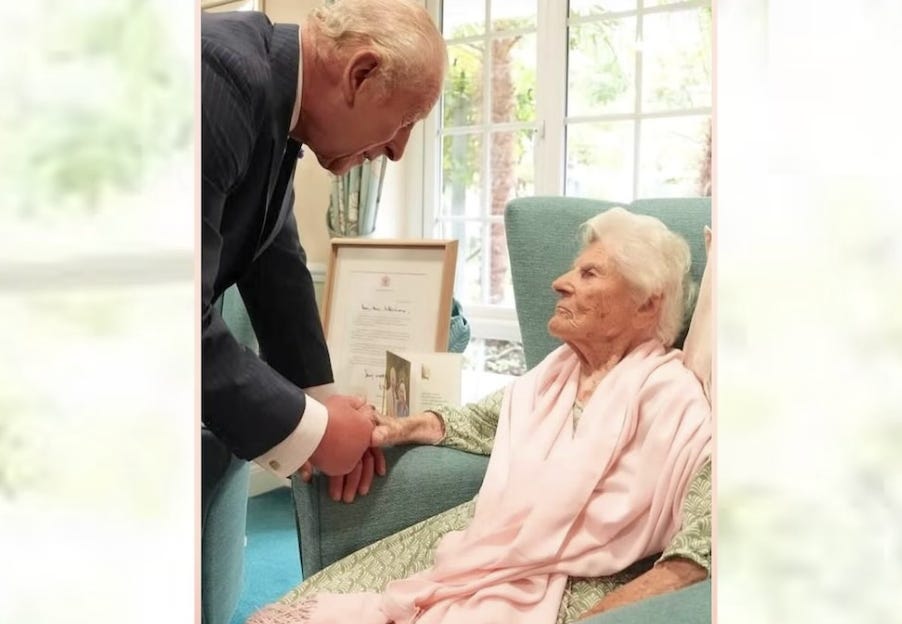
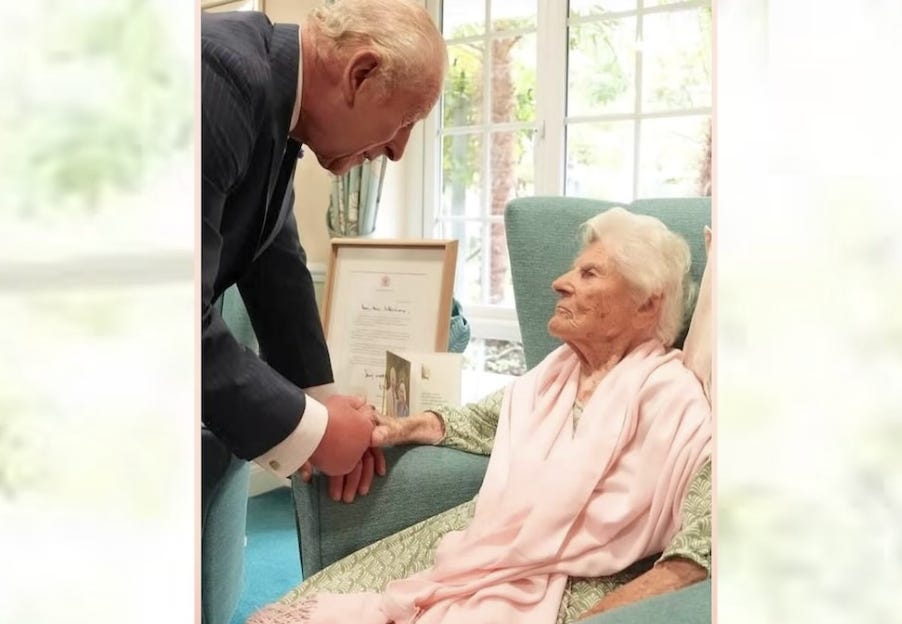
Ethel Caterham, recognized by Guinness World Records as the world’s oldest living person, celebrated her 117th birthday, having been born in the United Kingdom in 1909. The seventh of eight children, she credits her longevity to a nonconfrontational approach to life, saying she avoids arguing while rarely compromising, and told ABC News she enjoyed several firsts this year, including stroking a llama and holding hands with King Charles III. In her youth she worked as a nanny in India for three years, where she met her husband Norman, a major in the British Army, whom she has now outlived by fifty years along with both of her daughters. She is survived by three grandchildren and five great grandchildren, and became the world’s oldest person after Brazilian nun Inah Canabarro Lucas died at 116.
Scientists at UC San Francisco have discovered that a protein found naturally in bullfrogs called saxiphilin can neutralize saxitoxin, a deadly shellfish toxin that causes paralytic shellfish poisoning and currently has no approved antidote. In a study published in Nature Communications, researchers led by Daniel Minor found the protein acts like a molecular sponge, binding tightly to the toxin in the bloodstream before it can reach nerve and muscle cells, and it both prevented and reversed lethal poisoning in mice even when given after exposure. Saxitoxin, produced by harmful algal blooms known as red tide, affects roughly 2,000 people worldwide each year by official counts, with far more cases believed to go unreported, and disproportionately threatens coastal Indigenous communities that rely on subsistence shellfish harvesting far from emergency care. Researchers found saxiphilin spreads throughout the body, reaching the brain, heart and muscles, and can bind many of the more than 50 known toxin variants, and Minor’s team is now exploring whether engineered versions of the protein could offer even stronger protection and a model for developing antidotes to other natural toxins.
A viral clip shows an entire town in Spain coming together to celebrate a local woman named Maria's 100th birthday, with neighbors gathering outside her window to sing and dance in her honor.

A retired logger and fisherman named Gordon Mellish rescued three baby otters tangled in a fishing net in Alert Bay, British Columbia, and when one wasn’t moving he performed mouth to mouth CPR, reviving it after giving it a breath of life. Local resident Robin Quirk then cared for the otter overnight in her car, building it a makeshift shelter and driving it to a wildlife rescue center the next day, where it spent a week in rehabilitation. Both Mellish and Quirk were later invited to watch as the otter was released back into the water, where it rejoined its mother and siblings and has since been seen recognizing Quirk when she whistles the lullaby she made up during the drive. Mellish, who has performed CPR on 10 humans over the years but never before on an otter, summed it up simply, saying “a life’s a life no matter what it is.”
An Oregon based robotics company has developed a sidewalk surveying robot named Dax that is now being used in five US cities, including Bangor, Maine, Hoboken, New Jersey, Hollister, California, Tyler, Texas, and Hilton Head, South Carolina. The robot moves at walking pace measuring gradients, width, and vertical changes along sidewalks, packaging the data for city planners to more easily identify which sidewalks most urgently need repair. Officials say well maintained sidewalks are key to reducing pedestrian traffic deaths, since damaged sidewalks often push pedestrians, cyclists, and scooter riders into the road, and Hoboken’s mayor credited the technology with helping the city become a model for street safety. The robots have also become an unexpected source of joy for children, with several cities encouraging residents to snap photos of Dax and share them on social media.
A Melbourne landlord named John Perrett left his rental unit to longtime tenant Jane Sayner after she rented the two bedroom property from him for over 20 years, calling her one day to tell his solicitor he wanted to give her the home. Perrett, a self made millionaire, pharmacist, and community figure, died in 2020 in his mid eighties from complications related to Parkinson’s disease. Beyond the gift of the house, he donated his roughly 19.6 million dollar fortune to the Royal Melbourne Hospital, where he had received a kidney transplant decades earlier that lasted him 30 years. Sayner, who has since retired at 74, still lives in the home and says she thinks of her former landlord’s generosity every few days.
Abu Dhabi entrepreneur Amira Al Dosari has spent years developing date based soft serve ice cream after growing concerned about the amount of sugar, artificial colorants, and pre-made mixes used in typical ice cream. At age 53 she began experimenting with the kholas date, one of the softest and sweetest varieties, eventually finding a way to render it into a base that could replace added sugar while still giving soft serve its signature creamy texture. She now runs a shop called Ice Station near Abu Dhabi’s Zayed Port, where she is developing her 448th flavor, using different parts of the date palm to create flavors such as a coffee like roasted pit topping resembling affogato and a bitter, antioxidant rich version from the palm fronds resembling matcha. Her daughter, sustainability consultant Ghalia Al Mazrouei, has helped find new ways to use the whole plant, noting that every part of the date palm is safe to eat and simply needed a way to make it appealing.
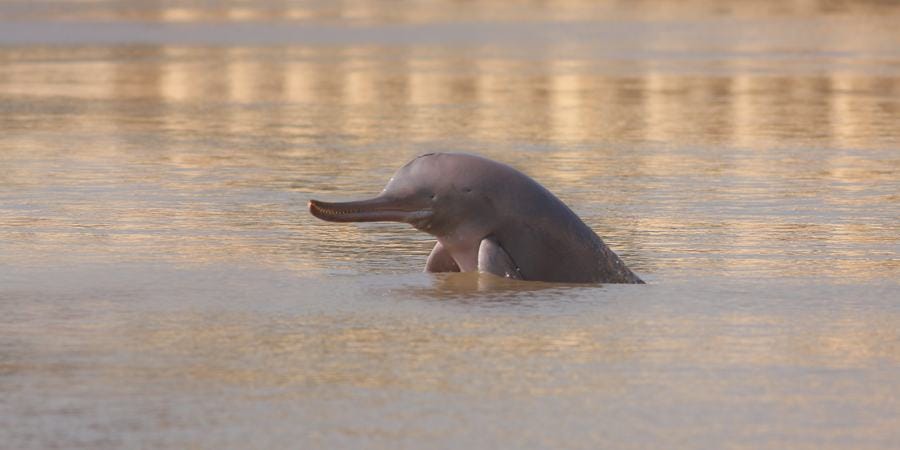
Pakistan has created a new wildlife sanctuary spanning 123 miles of the Indus River to protect the endangered Indus River dolphin, connecting it with an existing protected area in neighboring Sindh Province to form roughly 249 miles of continuous protected habitat. Around 2,000 Indus River dolphins are believed to remain, split across three separated stretches of the river, and the species has suffered major habitat loss from dams and irrigation projects tied to Pakistan’s economic development. The World Wildlife Fund, which has worked on the dolphin’s conservation since the 1990s, will help develop a management plan for the new sanctuary alongside the Punjab and national governments. Because the dolphin is an apex predator in the river system, conservationists say protecting it should help preserve the health of the broader riverine ecosystem as well.
A University of British Columbia spinoff company called DicinFoam has developed a plastic substitute called wood foam made from low value logging waste like sawdust, wood fibers, and forestry residue, with a pilot plant in East Vancouver already producing about 400 pounds of it daily. The material is intended to replace polystyrene foam, which scientists estimate can take around 1,000 years to break down and often shreds into microplastics, while also putting to use wood waste that otherwise piles up in forests as wildfire fuel or must be cleared from sawmill floors. Led by CEO Richard Chen and CTO Zhu Yale, the company plans to scale up to a 1,000 ton per year operation on the territory of the Wet’suwet’en First Nation, who own the business, with hopes of eventually reaching a 15,000 ton per year plant on Vancouver Island. Chen noted that roughly 30 percent of every harvested tree currently goes unused, and believes even a fraction of that waste could replace a meaningful share of everyday plastic products.
Scientists and volunteers at the Royal Botanic Gardens Victoria in Australia have taken a major step toward saving the rare rosella spider orchid, a flower found in just four locations that together cover an area not much larger than a Melbourne suburb. The gardens’ nursery now holds more than 500 orchids in propagation, twice as many as were estimated to exist in the wild when the effort began, achieved by hand pairing orchid seeds with the specific fungal spores the plant needs to germinate. After three years of lab based horticulture, volunteers were finally able to plant young orchids grown this way into a protected private site in July, using cages to shield them while they establish. Wild populations had grown from just 120 recorded in 2000 to about five times that by 2023, but researchers say a single wildfire could still wipe out the species, making the new plantings an important hedge against extinction.
Researchers at the UK’s National Institute for Health and Care Research have developed a fridge free, powder based vaccine inspired by resurrection plants, which can appear lifeless for months before reviving when exposed to water. The powder uses a stabilizing sugar called trehalose, the same compound resurrection plants use to survive drought, and remained viable for a year at room temperature as well as after being cycled between extreme temperatures similar to real world shipping conditions. In a trial of 60 people using a powdered tetanus diphtheria vaccine, the formulation proved safe and produced immune responses comparable to standard refrigerated vaccines. Researchers say the innovation could sharply cut the vaccine waste caused by broken cold chains, particularly in low and middle income countries with limited refrigeration, and a larger 160 person trial is set to begin soon, though the method would not work for newer mRNA vaccines.
Asiatic lion populations in western India’s Greater Gir Landscape have grown 70 percent over the past decade, rising from 523 lions in 2015 to 891 today, according to the 16th Asiatic Lion Population Estimation presented by Union Environment Minister Bhupender Yadav for World Lion Day. The lions, a smaller subspecies found only in India today despite once ranging across the Old World, owe much of their recovery to conservation efforts focused on rebuilding prey populations like nilgai, sambar and spotted deer, and wild pigs. Their range has also expanded from about 30,000 square kilometers in 2020 to nearly 35,000 across 11 districts, a dramatic turnaround from the mere 60 to 80 lions that existed in the 1980s. Among the notable wins is the natural recolonization of Barda Wildlife Sanctuary, where lions had vanished in the 19th century but returned in 2023 and now number 17 living there year round.
Surgeons in Turin performed a world first operation transplanting a complete human macula along with the cornea, sclera and connective tissue from one of a patient’s eyes into the other, restoring enough vision for a woman blind for years to recognize her son and her dog. The six hour procedure was led by ocular surgeon Professor Michele Reibaldi on 67 year old patient Elena, who had lost her left eye’s function when a road accident severed its optic nerve while leaving other tissue intact, while the crash destroyed her right eye’s retina, cornea and stem cell region but left its optic nerve undamaged. Reibaldi and his team salvaged the intact tissue from her left eye, including the macula, a tiny light sensitive region responsible for high definition vision that had never been successfully transplanted before, and transferred it into her right eye where the nerve pathway remained functional. Follow up exams have confirmed the tissue reattached properly and that Elena is regaining sight in that eye, with Reibaldi calling it a new frontier in ocular surgery and praising the team for the moment Elena opened her eyes and recognized her son and her dog, Joe.

The FDA has approved Orzeyful, developed by Takeda, as the first drug to target the underlying biology of narcolepsy type 1 rather than just its symptoms, a condition affecting about 120,000 people in the US. Unlike traditional treatments that rely on stimulants or nervous system depressants, the twice daily pill mimics the body’s production of orexin, a compound that regulates wakefulness and is disrupted in narcolepsy type 1 patients. In final stage trials involving 273 patients, those who took the drug for 12 weeks stayed awake longer during the day and slept better at night compared to placebo, though some experienced side effects including increased urinary frequency and, notably, insomnia. FDA officials and Takeda executives celebrated the approval as opening a new class of medicine, with one trial participant, Tyler Chapman, calling it the best thing that has ever happened to him, and researchers say the orexin pathway could eventually be explored for other neurological conditions like ADHD and Parkinson’s.
The San Diego Zoo Wildlife Alliance released about 3,000 endangered mountain yellow legged frogs and tadpoles into the San Bernardino and San Jacinto mountains, part of a decades long breeding and reintroduction program. The species has declined more than 98 percent from historic levels due to threats including disease, introduced predators, wildfire and drought, with this year’s release at Bluff Lake in the Big Bear area being one of several reintroduction sites. The frogs were bred at the zoo alliance’s Beckman Center for Conservation Research as part of a 20 year program run with partners including the US Fish and Wildlife Service, US Geological Survey and California Department of Fish and Wildlife, who have worked to conserve the species since 2006. To date, the organization has reintroduced more than 10,000 of these frogs and tadpoles into high elevation habitats, and conservation teams continue monitoring released frogs to track their survival and health in the wild.
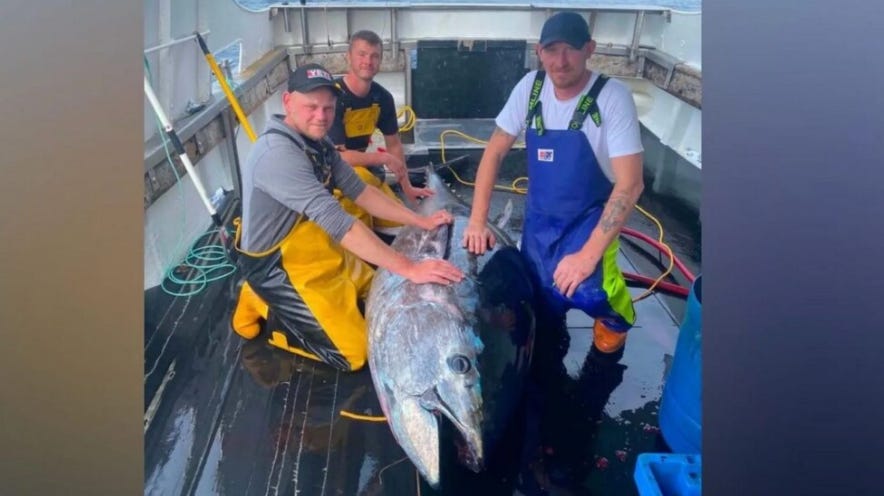
Fisherman Jack Gardner caught a 745 pound Atlantic bluefin tuna off Whitby on Britain’s northeast coast, marking the first bluefin tuna caught in the North Sea in 60 years and coming within about 112 pounds of a fishery record. The catch is being treated as strong evidence that careful fisheries management has revived a fish stock that collapsed decades ago due to overfishing of both tuna and their herring prey. University of Exeter researcher Dr. Lucy Hawkes said the tuna’s size signals an exceptionally healthy underlying ecosystem, since bluefin tuna are top predators that can only thrive where the food web beneath them is intact. She credited the recovery to strict catch limits kept small relative to overall fish populations, noting that a separate tuna population her team tags and monitors off England’s southwest coast may have entirely different origins from the one caught near Whitby.

See you soon.
— Aaron


