

Good morning, everyone! As promised, our Sunday tradition continues with another weekly good news update. Share one piece of good news from your week in the comments, and pass this along so someone else can join in too.
I have a few pieces of good news of my own. First, my family in Ukraine is okay despite the horrific attacks we’ve seen from Russia. More on that in this evening’s update. Second, for the second month in a row, we’ve surpassed every major media company, including Fox News, in engagement. And third, our work is getting people to the polls. This week alone, people told me they registered and are voting for the first time because of what we do here.
Every time I hear stories like that, I’m reminded how proud I am of what we’re building together: a community built on truthful, accurate news. At a time when my work is being suppressed on platforms like TikTok, and so much of the media keeps drifting closer to power instead of holding it accountable, I’m proud to remain fully independent. No advertiser dictates my coverage. No political office shapes my reporting. I answer only to you.
But independence isn’t free. Every investigation, every international report, every update from the ground is funded by readers, not corporations or billionaires. When platforms bury our reach, paid subscribers are what keep this work alive and growing.
With the midterms just over two weeks away, this is the moment that matters most. If you believe in independent journalism that reaches millions with clarity and honesty, become a paid subscriber today. It’s the single most powerful way to make sure this work keeps reaching the people who need it.
The momentum is real. Let’s keep building it together.
A small dog lost in Yellowstone National Park for a month has been found alive and well. Luna, a white Jack Russell and Chihuahua mix, escaped from her family’s cabin at Canyon Village on September 10 after housekeeping reportedly ignored a “do not disturb” sign while the family visited a geyser area where dogs aren’t allowed. Volunteers spent weeks searching the park and posting flyers, led in part by Katie Boucher of the Norris Ark Training and Recovery Center in Montana. A construction crew working on a new road spotted Luna repeatedly, so rescuers set a trap there with some of her family’s belongings to draw her in with familiar scents. After she spent a full day comfortably lounging near the trap, she was finally captured, and her owner flew in from California for the reunion. Boucher urged people to leave their dogs at home when visiting Yellowstone and to call a professional rather than chase a pet that gets loose.
A 17-year-old ran the Chicago Marathon less than a year after a spinal cord injury left him paralyzed from the neck down. Wyatt Anderson was hurt last November when he tripped going for a rebound in a basketball game and crashed headfirst into a wall, leaving him unable to move any of his limbs. After spinal fusion surgery and months of rehabilitation, he was inspired by his therapist’s story of a wheelchair user who completed 50 marathons in 50 states, and set a goal to walk or run a marathon within a year. On Sunday, with his brother Jack by his side, he finished the race in 3 hours, 56 minutes, and 28 seconds. The brothers also raised money for the Christopher and Dana Reeve Foundation, which funds spinal cord injury research and supports people living with paralysis. Anderson’s advice to others is to take it day by day, stay positive, and smile, even through pain, because nothing is impossible.
Firefighters in Georgia helped deliver 15 puppies just one shift after earning their pet care certification. The crew at Cobb County Fire Station 21 had recently completed animal care training through VEG ER for Pets. On their very next shift, they were called to a veterinary clinic to assist with a pregnant dog experiencing labor complications that required an emergency C-section. Firefighters helped clear the placental sacs, suction the puppies’ airways and noses, give medications, and place the newborns into incubators. Crew members said the process felt a lot like delivering human babies. As firefighter Damien Whitehead joked, no one told them that getting certified in pet care would have them delivering puppies a shift later.
A Los Angeles widow who lost her home in the Palisades fire is rebuilding in honor of her late husband, with help from Habitat for Humanity. Layla Hawkins had less than 10 minutes to flee the January 2025 blaze, escaping with her husband’s ashes and her dog Shiloh before the fire destroyed her home of four decades. Almost nothing survived, except a blue starfish bank where the couple used to leave each other love notes and the basketball hoop belonging to her husband, Tommy Hawkins, a former Los Angeles Lakers player and Dodgers executive. She says she hugged the hoop tightly because it felt like hugging both her home and Tommy, and promised him she would rebuild. Habitat for Humanity’s ReBUILD LA initiative reached out to help with everything from paperwork to permits, and hundreds of volunteers framed walls and landscaped during a four-day community build in September. Hawkins says it feels like an army of relatives surrounding her with hope and love, and her new home is expected to be finished by June 2027.
A neighbor stepped in to help a 95-year-old Ohio gardener who has raised about $200,000 for his church after someone stole his produce scale. John Nicholson of Waterville has spent decades selling vegetables from a roadside stand outside his home, donating the proceeds to Waterville United Methodist Church and giving extra sweet corn to a local food bank. When someone stole his scale and the clamp holding it to the stand on October 10, his daughter posted about the theft on Facebook. Rob Woody, a fellow gardener who lives about a mile away and had never really known Nicholson, saw the post and brought over a baby scale his family no longer needed. Nicholson holds no grudge against the thief, saying simply that he forgives them but feels sorry for them. Beyond his garden, the former Ohio State marching band member still plays in three community bands, including one that welcomes veterans home from Honor Flights.
A new scholarship in Cornwall, England, is giving disabled people the chance to pilot a plane, and a 66-year-old visually impaired man says it gave him a “forever experience.” Michael, who has permanent double vision and delayed sensory response, took the controls of a light aircraft over the coast from Padstow to Port Isaac during an event at Cornwall Airport Newquay. He says he struggles to cross a road, but can now tell people he has flown a plane, and that he felt completely at ease in the cockpit. The Cornwall Flying Scholarship, run by Flynqy Pilot Training with the charity Aerobility and funded by a generous donation from a local pilot, offers either a 50-minute trial flight or three hours of fully funded flight training. Nathan Doidge, who was born with cerebral palsy and told he would never do anything, earned his pilot’s license in 2012 and is now encouraging others to experience the freedom of flight. About 30 people have applied since the program launched in September, and organizers hope to run it again next year.
A British expat in Washington, D.C. turned a “Great British Bake Off” watch party into a weekly gathering for hundreds of fans. Joanna Mutch, a Brit who moved to D.C. from Hawaii in February without knowing anyone, saw a social media post wishing pubs showed “Bake Off” the way they show soccer. She pitched the idea to a man at a meetup who turned out to be a managing partner of Duke’s Grocery, the pub that served as the area’s British Embassy watch-party hub for the World Cup. Now every Tuesday, crowds gather to watch the show, sip a pint, and sample homemade bakes laid out on a table lined with Union Jacks. The events have been so popular that the pub has added British biscuits and hand pies to its menu. Mutch says she loves the show because the contestants want to see each other win, and many attendees have thanked her for creating a cozy place to make friends.
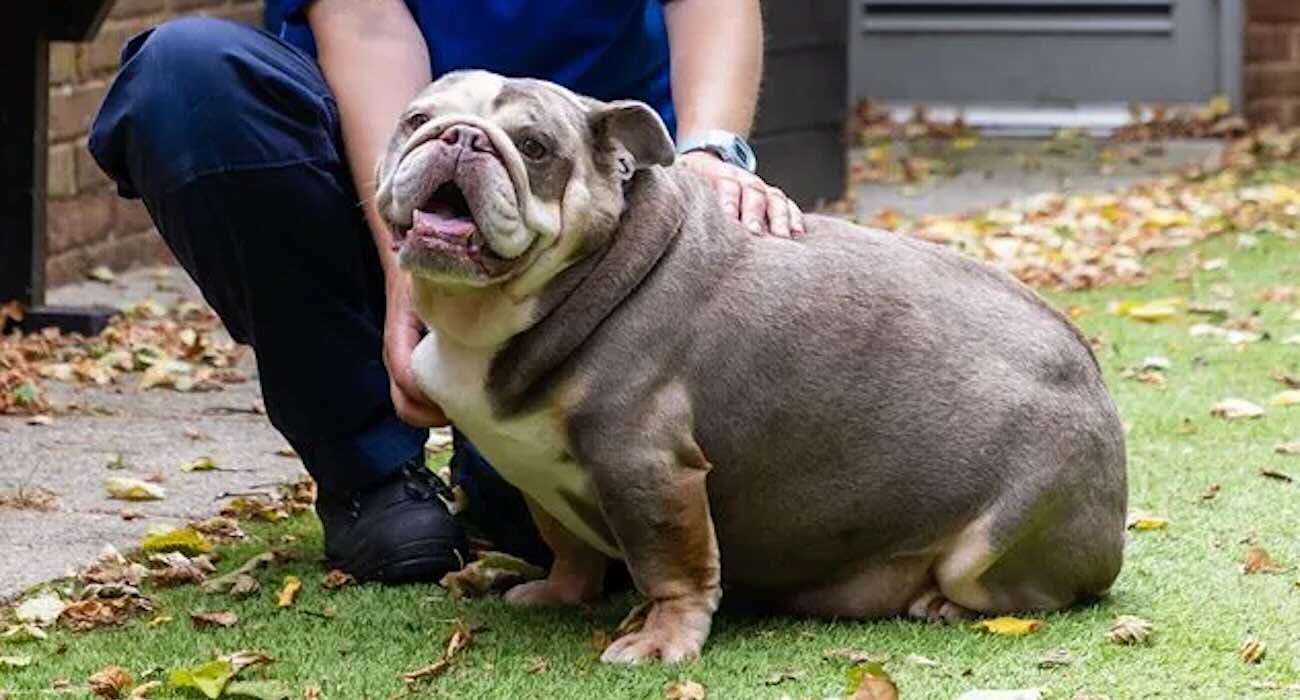
A shelter bulldog who weighed as much as a baby hippo has slimmed down and found a forever home. Peggy Sue arrived at the RSPCA’s West Hatch Animal Centre in England in July weighing about 70 pounds, so heavy she struggled with infections, overheating, and collapsing after just a few steps. Staff had to carry her from the van to her kennel in a crate. A dedicated foster caretaker gradually increased her exercise and kept her on a strict diet, and she now weighs a much healthier 23.5 kilograms, roughly 20 pounds lighter. She was adopted during the charity’s “Adoptober” drive by Emmie and Andy of Taunton, who say she loves rock pools and streams. She is their sixth rescue, and she has already become best buddies with their Jack Russell mix, who recently lost his 16-year-old brother.
North America’s largest wildlife overpass has cut animal collisions on Colorado’s I-25 by 91%. The bridge near Larkspur opened in December and covers 41,800 square feet, along with five underpass tunnels for smaller or more timid animals. Officials predicted a 90% drop in crashes, and after 10 months the results have slightly beaten that goal. Bears, elk, frogs, and rabbits are all crossing safely, and a pronghorn was recorded crossing the highway for the first time in 30 years. Collisions on that corridor used to average about one per day, and traffic delays have fallen 9% as a result. Colorado is now scouting six more sites for crossings, including the first overpass designed specifically for Rocky Mountain bighorn sheep.
A woman who lost her sister in a deadly pileup invented a car seat sticker that turns into a hospital bracelet. Julie Roth was killed in a 47-car crash on the Ohio Turnpike during a winter storm in December 2022, but her two young children, Ayla and Rory, survived in their car seats. With their mother unresponsive, first responders and hospital staff could not identify the children for hours, leaving them without critical medical information or a familiar face. Julie’s sister created the Roth ID Tag, an adhesive that sticks to a car seat and holds a child’s emergency contacts and medical details on the back. In an emergency, it tears off and becomes a wristband, with a QR code linking to more information. The design is approved by child passenger safety technicians, endorsed by police and fire departments across several states, and sold at Target, Walmart, and Amazon.
A 99-year-old former nurse has become the world’s oldest wing-walker. Helga Duffy was strapped to the top of a small plane at Rendcomb Airfield in England and spent more than five minutes in the air, earning the Guinness World Records title. She broke the record set just three months earlier by 97-year-old Betty Bromage, after her niece saw the news and realized Helga could do it too. Despite arthritis and a bad knee, Helga said the experience felt so good she wondered if it was like taking drugs. She raised more than £1,600 for her regional Air Ambulance charity, and her certificate now hangs in her assisted-living facility. Her motto is simple: never say you can’t do something until you’ve tried, and Betty has already joked she plans to reclaim the title at 100.
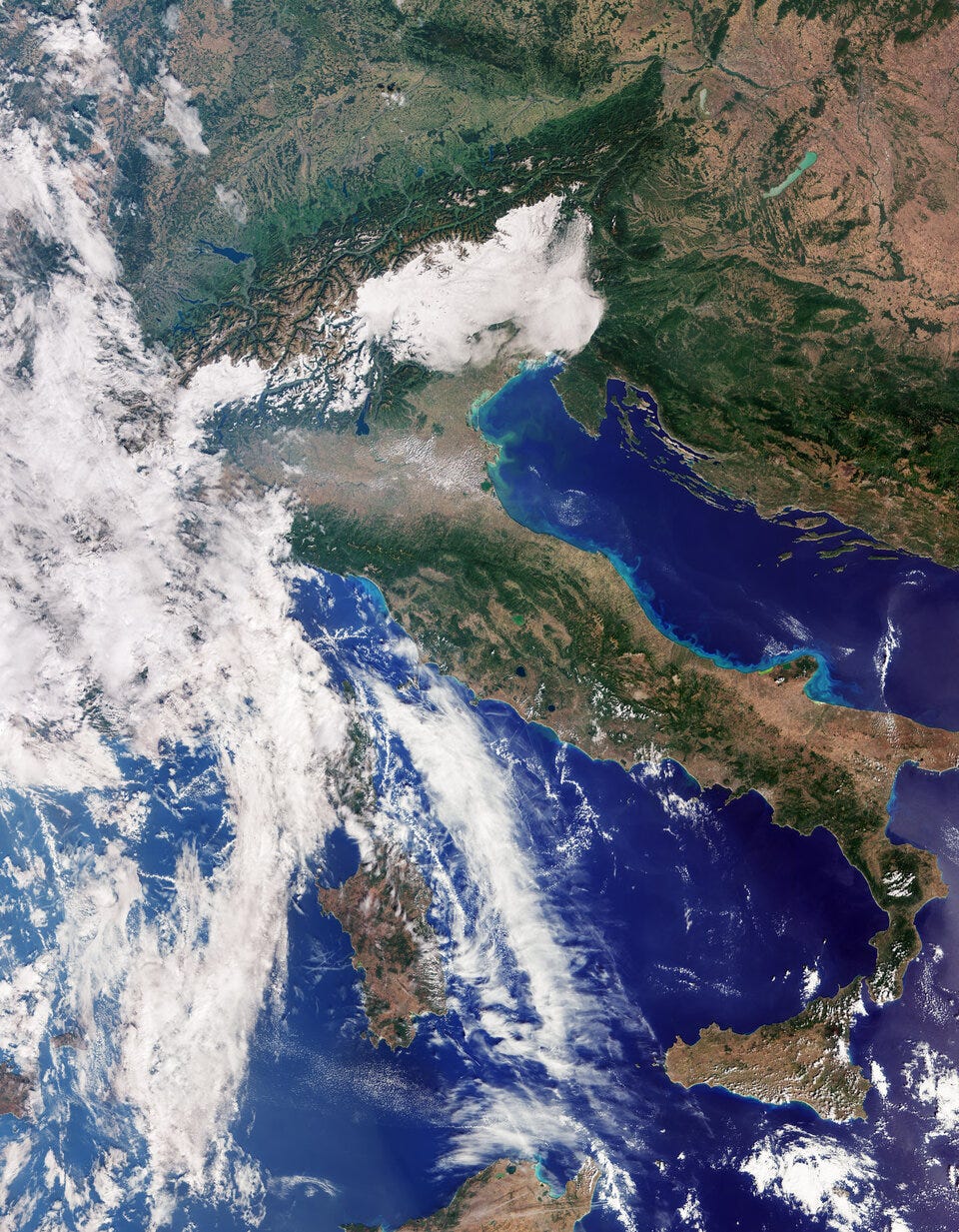
Europe’s newest environmental satellite has sent back its first stunning images of Earth. Just two weeks after launch, the European Space Agency’s Copernicus Sentinel-3C captured a vivid natural-color view of Italy stretching from southern Germany to Sicily. It also photographed snow-covered islands, deep fjords, and drifting sea ice in the Canadian Arctic west of Greenland. The satellite measures sea surface temperature, color, and height, along with sea ice thickness, to help track marine pollution and heatwaves. Over land, it monitors drought, wildfires, vegetation health, and the height of rivers, lakes, and polar ice sheets. ESA still has about five months of commissioning ahead, but the early results show the satellite is off to an excellent start.
A 21-year-old moviegoer raised $146,000 to help an elderly theater worker in Tennessee. Brooklyn Green was at her local AMC in Maryville when she noticed a woman with a bent back hauling a trash cart and was struck by her work ethic. She filmed a TikTok clip and started a GoFundMe, hoping to raise maybe a month’s rent from friends and family. Instead, the video went viral and brought in more than $100,000 on the first day alone, climbing to $146,000 soon after. The woman, Mary, has worked in movie theaters for more than 45 years, and her manager said she loves the job and worries that stopping might make things go downhill for her. When Green finally surprised her, Mary thanked all the wonderful people who donated.
A new biomethane plant in southern Italy is turning farm waste into renewable gas for thousands of homes. Energy group Axpo switched on the Grottole plant in July, and once fully ramped up it will produce 45 gigawatt-hours of energy a year, enough to cover the gas use of about 3,200 Italian households. Using agricultural byproducts from regional farms, it will avoid around 9,000 tons of carbon emissions annually while also producing fertilizer. Italy relies on natural gas for 46% of its electricity but produces very little of its own, so it is using existing gas infrastructure to build a homegrown biogas industry. The country’s biomethane output has jumped from 0.25 billion cubic meters in 2022 to roughly 1.6 billion this year. The timing matters, as Europe heads into winter with gas stockpiles at historic lows following the Iran war and the closure of the Strait of Hormuz.
Scientists in China have discovered “D-rex,” a giant fungus whose family dates back to just after the dinosaurs died out. Researchers found the species, Dianjunus rex or “King of Dian,” growing on the roots of Chinese cork oak trees in the forests of Yunnan province. Its fruiting bodies reach up to 20 inches tall and weigh as much as 5 pounds, roughly double the size of the previous record holders in its group. The discovery is so distinct that it represents an entirely new family of fungi, which genetic analysis suggests arose about 65 million years ago, just a million years after the mass extinction that wiped out the dinosaurs. Scientists believe the disaster may have created a flood of dead wood that gave decomposing fungi like D-rex a new opportunity to thrive. The team says the find shows how much fungal diversity remains undiscovered in East Asia’s forests.
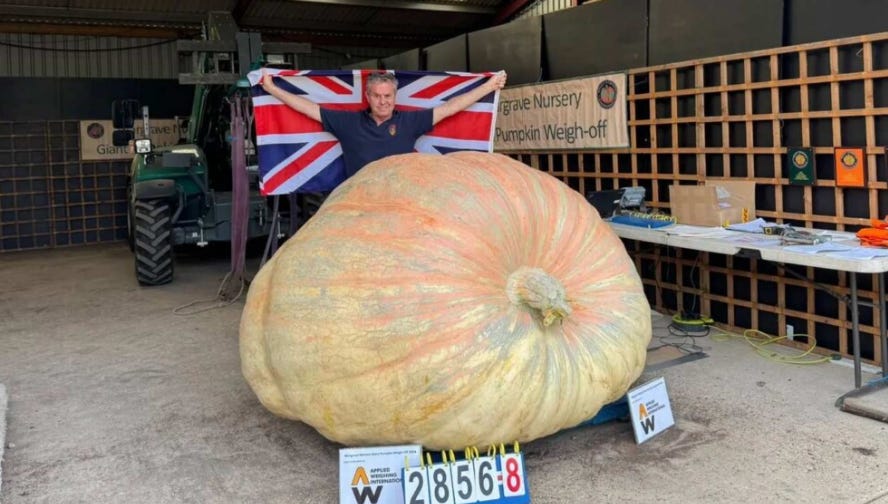
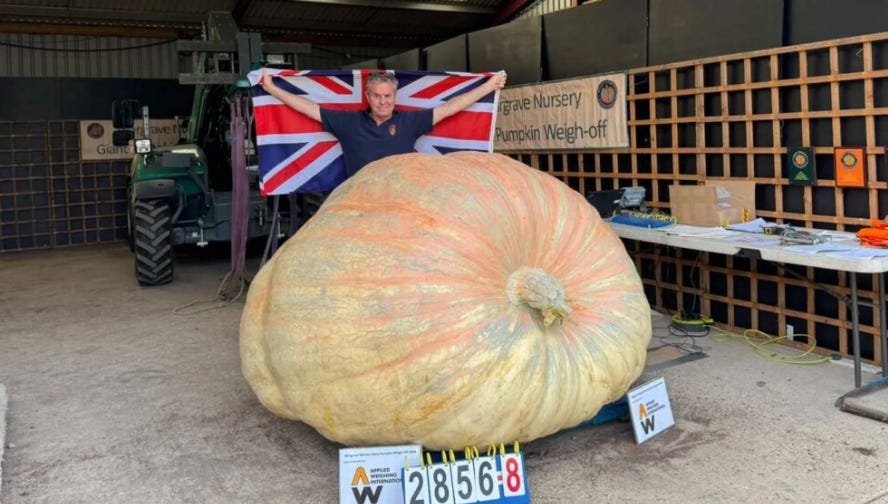
A British gardener has grown the heaviest pumpkin in history, weighing a staggering 2,856 pounds. Ian Paton, 65, of Hampshire, England, unveiled the giant gourd at the Wargrave Giant Pumpkin Weigh-Off, where it outweighed a white rhino and a Volkswagen Beetle. He spent six hours a day tending it, and at its peak the pumpkin needed 130 gallons of water daily. Paton named it Bagheera, after the black panther from The Jungle Book. The record is especially impressive because it was his first solo attempt after breaking the world record with his brother Stuart last year, and it came despite an unprecedented summer heatwave in the UK. A certified judge called it the most massive fruit ever to exist, and once its time is up, Bagheera will be used as cow feed.
Scientists have identified a new extinct crocodile species whose fossil came from the same rock used to build the Sphinx. The fossils were pulled from Egypt’s 45-million-year-old Mokattam Formation in the 1920s and were long misclassified as a relative of a gavial now living in Indonesia and Malaysia. New CT scans revealed major differences, and researchers have renamed it Herugavialis cairensis, roughly “Heru’s gavial of Cairo.” In a fun twist, the skull is missing the tip of its snout, just like the Great Sphinx is missing its nose. The team named it after the Egyptian god Heru, who may have inspired the monument. The study, published in Royal Society Open Science by scientists from the UK, Sweden, Germany, and Egypt, sheds light on the rich diversity of crocodiles that once filled the Mediterranean region.
A 17-year-old in Turkey built a free disaster app that keeps people connected when cell networks fail. Emirhan Duman started working on Crisis Connect after the devastating 2023 earthquakes in Turkey and Syria knocked out communications when people needed them most. The app lets phones send messages and calls over Bluetooth, hopping from device to device until they reach the intended recipient. Users connect with family and neighbors ahead of time by scanning a QR code, so the network is ready when disaster strikes. It also includes an SOS beacon, compass, digital whistle, live location sharing, and an offline mode that works without a central server. Duman is candid that it won’t replace satellite links or emergency radio, but says it can fill a critical gap in the first hours after a disaster.
America’s largest private conservation project now has more than 1,000 free-roaming bison for the first time. American Prairie has spent over 20 years stitching together a reserve in Montana that now spans more than 600,000 acres, which would rank among the 10 largest national parks in the Lower 48 if it were one. Its annual calf count put the herd at 1,016, a milestone for a species that once numbered in the tens of millions but now survives at a tiny fraction of that. The news comes on the heels of a legal win, as a federal judge in September blocked the Bureau of Land Management from forcing the group to remove its bison from federal grazing land. The judge said American Prairie’s argument that conservation is a legitimate use of those lands appeared highly likely to be correct. Organizers say a herd of 5,000 is very achievable, with room for tens of thousands if they reach their ultimate goal of 3.2 million acres.
Stanford researchers reversed coral bleaching in just seven weeks, the fastest recovery ever documented. The discovery started by accident when a professor noticed a bleached coral fragment regaining color where it had tipped over and touched a healthy clone. When genetically identical corals make contact, their tissues fuse and allow beneficial algae and nutrients to flow into the bleached coral. In lab tests, bleached fragments that touched healthy ones fully recovered, while those left just millimeters apart died. Just five days to a week of contact was enough to kickstart recovery, after which algae inside the bleached corals multiplied about 10 times faster than in the wild. Published in Science Advances, the findings give researchers new hope for restoring reefs damaged by ocean heat.
A new fabric draped over strawberry plants more than tripled their yields while reducing the need for pesticides. Developed at North Carolina State University, “Plant Armor” has a three-dimensional structure that blocks insects while still letting in sunlight, rain, and air. In field tests, covered plants produced up to 3.56 times more fruit than uncovered ones. Researchers expected the fabric to block light and stunt fruiting, but it actually provided a steady warming effect that helped plants reach the fruiting stage sooner. The technology could also cut water and pesticide use on farms. Remarkably, it began as a spinoff of research into making military uniforms resistant to mosquito bites and body armor more comfortable.
The Lower Elwha Klallam Tribe is one signature away from reclaiming 1,100 acres of ancestral land in Washington state. The parcel along the Lower Elwha River sat flooded beneath a dam’s reservoir for more than a century, cutting the tribe off from the salmon runs that sustained their way of life. Now that the dam has been removed, the land is recovering, and a federal bill returning it to the tribe has passed both houses of Congress and awaits the president’s signature. The area includes historic villages and the site where elders say the Creator blessed the tribe into existence, along with habitat for salmon, bears, mountain lions, and kingfishers. The transfer would effectively reverse part of an 1855 treaty that ceded most of the tribe’s territory, and this year marked the fourth straight season tribal members have exercised their fishing rights on the river. As tribe member Vanessa Castle put it, the last missing piece of the river’s restoration was the Klallam people themselves, who will finally have a space to call home again.
See you soon.
— Aaron


