

Good morning, everyone. As promised, our Sunday tradition continues with another weekly good news update. Share one piece of good news from your week in the comments, and pass this along so someone else can join in too.
My good news this week is threefold.
First, we’re working on expanding this show internationally, and soon we’ll be bringing you on-the-ground coverage of some of the biggest events around the world.
Second, the Epstein exclusive we broke last week is helping push for real accountability, and there’s more coming this week. Plus, tomorrow I’m publishing my deep-dive investigation into how Trump has used your tax dollars for his own benefit.
And finally, I’m just a few weeks away from marathon day!
Every time I talk to someone about this work, I’m reminded how proud I am of what we’re building together: a community focused on truthful, accurate news. At a time when my work is being suppressed on platforms like TikTok, and so much of the media keeps drifting closer to power instead of holding it accountable, I’m proud to remain fully independent. No advertiser dictates my coverage. No political office shapes my reporting. I answer only to you.
But growing this work, from international coverage to major investigations, takes resources, and it’s only possible because of readers like you. If you believe in what we’re building, independent journalism that cuts through the noise and reaches millions with clarity and honesty, subscribe today and help fund the next chapter. The momentum is real. Let’s build on it together.
Here’s good news:
The Philadelphia Eagles and Fanatics made six Make-A-Wish kids honorary members of the team for a day, signing them to one-day contracts ahead of Sunday’s game against the Rams. The kids, ages 11 to 19, signed contracts with general manager Howie Roseman, who told 11-year-old Dylan Hynum, “See you out there on Sunday. Whatever you need for good luck, bring it,” before signing their first autographs. They toured Lincoln Financial Field, found custom jerseys with their names hanging in the Eagles locker room, practiced their own tunnel walk with flashing lights and music, and even played a game of “claps” with offensive lineman Jordan Mailata, who was dethroned by Jordan Davis. After meeting Jalen Hurts, 16-year-old Evan Weiner told him, “You’re my favorite player of all time, I swear to you,” then put his hands on his knees once Hurts walked away and said, “Oh my God, that [didn’t] even feel real.” Each kid also got a $200 shopping spree and will have a special experience at Sunday’s game, from serving as a water boy to shadowing the team photographer to visiting the broadcast booth with Tom Brady. “It’s just amazing to see the amount of effort they put into it and everything they do for the kids to make it special for them,” said one father, Joshua Parsons.
Two Pennsylvania high school students stopped their school bus after their driver suffered a medical emergency. Surveillance video from the Hollidaysburg Area School District shows the bus beginning to roll forward again as students prepared to get off, after the driver slumped over. “He slowly started drifting forward. And then his head went down,” said sophomore Alexis Smith, who ran to the front and slammed on the brake pedal while her classmate Skyla Horton pulled the parking brake and opened the door to get the driver more air. The students radioed for help and checked the driver’s pulse and breathing until paramedics arrived. The district thanked Smith in a Facebook post for her “quick thinking and courage,” saying she safely brought the bus to a stop and called for emergency help. The driver, who has since been cleared to drive again, now jokingly greets Smith as “Our hero” when she boards the bus. “The resiliency of America’s youth was on display as they sprung into action and saved the day,” Superintendent Curtis Whitesel said.
Formerly conjoined twins Knatalye and Addy Mata have successfully undergone scoliosis surgery, 11 years after a groundbreaking operation separated them. The sisters were born joined at the chest and abdomen, sharing several vital organs, and were separated at 10 months old in a 26-hour surgery at Texas Children’s Hospital in 2015, the first successful operation of its kind. To prepare, their medical team spent months building a 3-D model of the girls’ organs and running simulations of the separation. Now 12, both girls needed surgery at Scottish Rite for Children in Dallas for severe spinal curvatures, with Addy’s spine pressing against her ribs and leaving little room for her lungs. The sisters spent three months apart for their procedures but are now back home, recovering and reunited. “It’s something to be proud of and not to be ashamed of,” Knatalye said, while their mother, Elysse Mata, said the family simply wants the girls to “feel better, breathe better.”
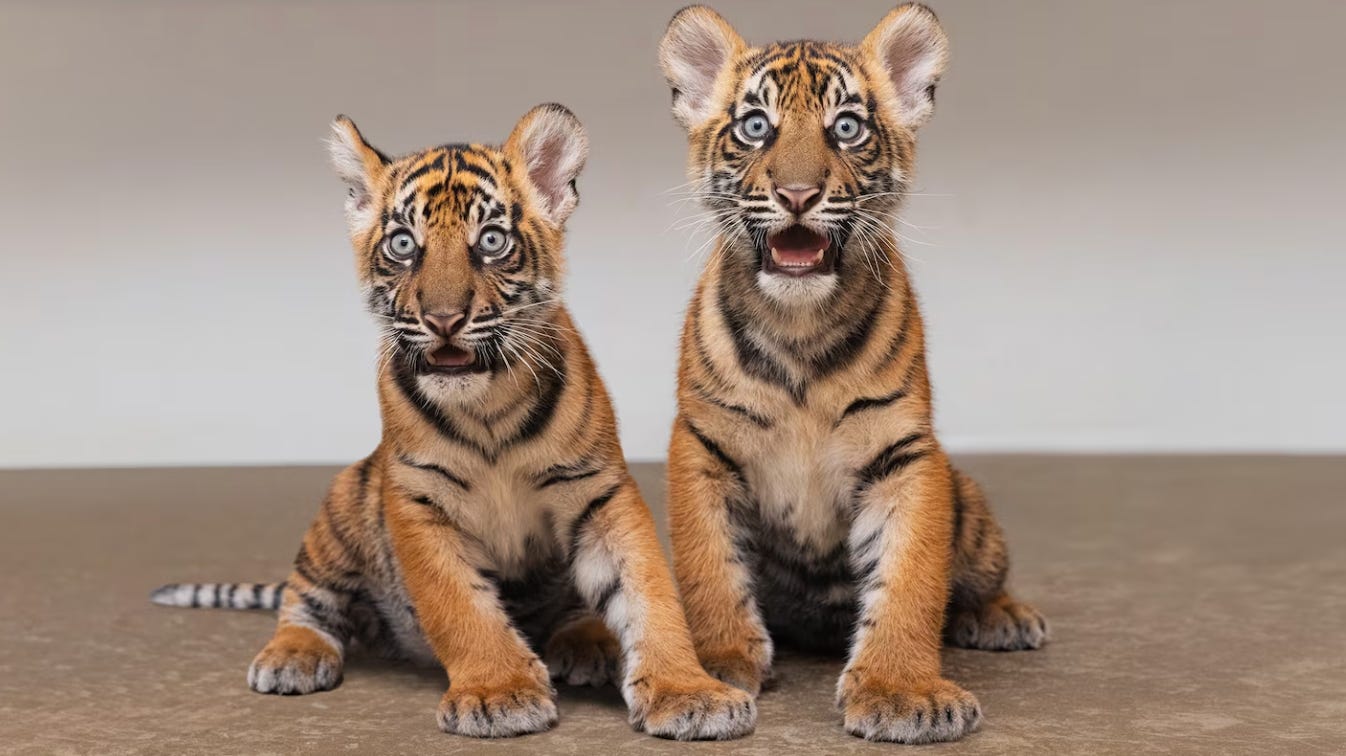
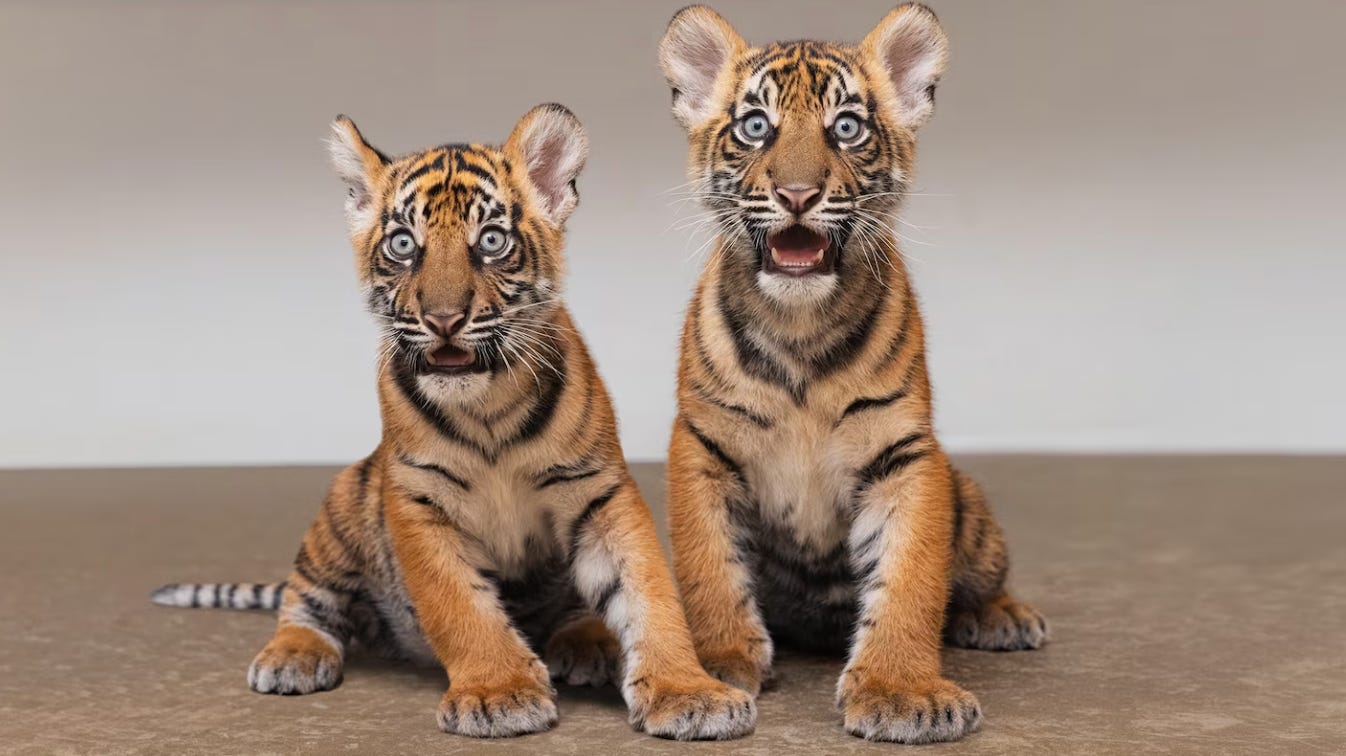
The Fort Worth Zoo is celebrating its first-ever Sumatran tiger cubs, a pair of sisters from a critically endangered species. Barani and Malu were born July 1 to first-time mom Ndari and dad Rakan, and at 13 weeks old they each weigh about 18 to 20 pounds, roughly the size of a large pumpkin. Barani, whose name means “brave,” is already a “spitfire” who starts play-fights with her sister, while Malu, meaning “reserved,” is more independent and enjoys her alone time. Native to Indonesia, Sumatran tigers are classified as critically endangered and can grow to more than 300 pounds and 8 feet long while running up to 40 miles per hour. The cubs will make their public debut in the coming weeks at the zoo’s “Predators of Asia and Africa” tiger habitat. “We’re hopeful that these cubs will inspire a new generation to learn about and care for their wild counterparts,” zoo chairman Ramona Bass said.
A 12-year-old in Phoenix collected 30,000 diapers for a local food bank in her fifth annual Diaper Drive. Sloan started the drive at age 7 after volunteering at Nourish Phoenix and noticing empty shelves where diapers should be, learning they were among the most requested items and always ran out first. This year she set a goal of 22,500 diapers, but donations kept coming until there was hardly room to walk in her house, filling an entire U-Haul truck that left food bank employees stunned. “If we have the ability to give someone something that they might not have or need, it’s really important to do that,” she told ABC 15. Her mom called her “just so special,” saying she “has such a big heart, loves helping and giving back.” The drive wrapped up at the end of August, and the diapers are now going to families who rely on Nourish Phoenix for food and clothing.
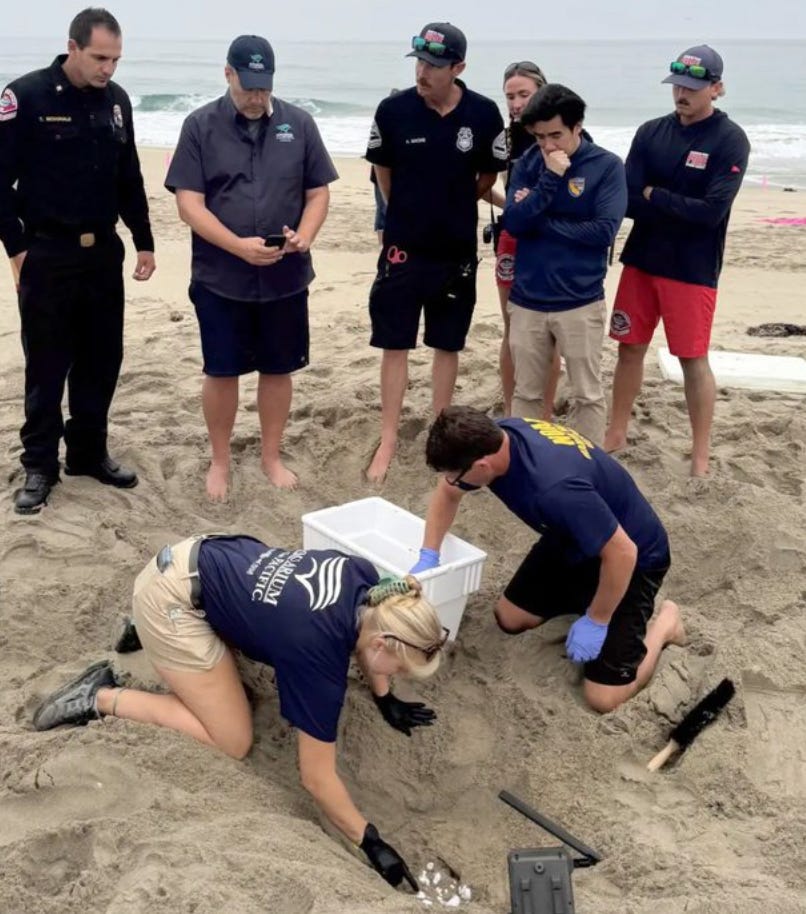
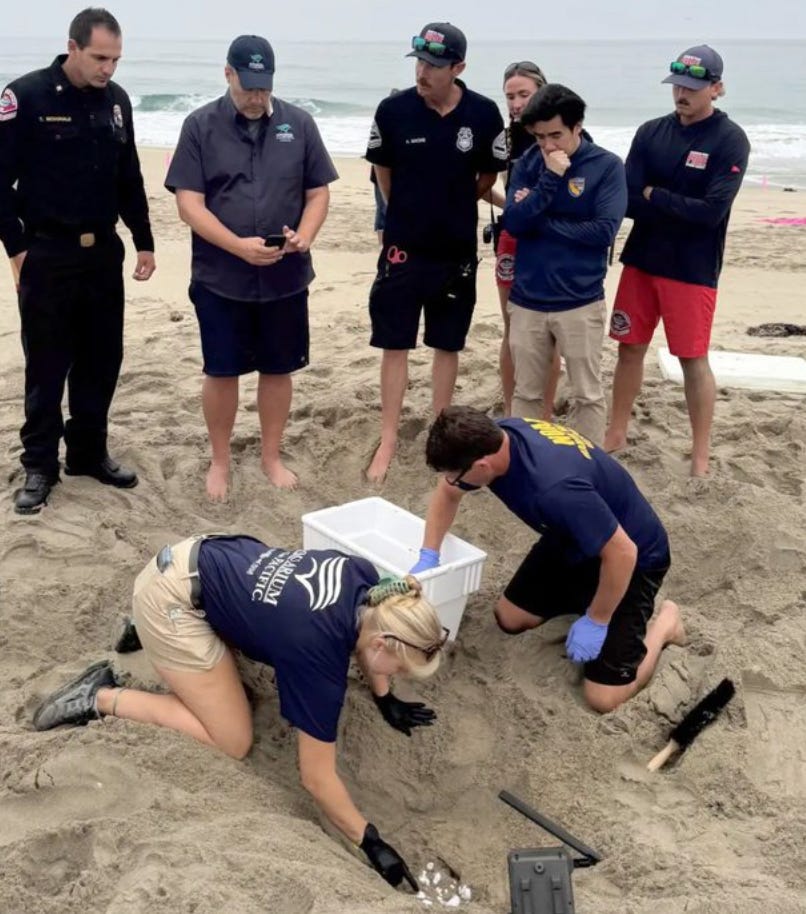
The first sea turtles ever recorded nesting on America’s West Coast laid their eggs on Southern California beaches, prompting the first turtle egg rescue in state history. An olive ridley sea turtle climbed onto Seal Beach in broad daylight to dig a nest and lay her eggs, and three days later another did the same eight miles north in Huntington Beach, stunning lifeguards and beachgoers. The species has large breeding colonies in Costa Rica, Mexico and Nicaragua but had never been seen nesting in California, with one veteran turtle scientist telling the LA Times, “I wasn’t expecting to see olive ridley sea turtles nesting in Orange County.” When extreme high tides and hurricanes Polo and Odalys threatened to destroy the nests, federal wildlife officials rushed to recover 204 eggs, packed them in sand-filled coolers and drove them to the Aquarium of the Pacific in Long Beach. “We had to make some quick decisions,” said Fish and Wildlife Service biologist Jonathan Snyder. “I think it’s the best one for species recovery.” It’s not yet clear whether the eggs will hatch, but scientists believe back-to-back marine heatwaves may have driven the turtles, considered “Vulnerable” by the IUCN, farther north than ever before.
A Kansas City coffee shop saw business nearly triple after a viral TikTok called it “demonic,” as locals rallied to its defense. Two young women posted a now-deleted review of Oddly Correct Coffee Roasters, saying “it was a little scary driving here” and “it felt demonic in there,” complaining about the “weird paintings all over the walls,” which were made by friends and local artists. The shop sits on Troost Avenue, long a racial and economic dividing line in Kansas City known as the “Troost Wall,” and local influencer CJ The Alchemist responded with a viral video saying, “Anytime somebody says that Troost Avenue is scary, it probably just means that they’re not used to seeing Black folks walking up and down the sidewalks.” He urged followers to visit, and over the following weekend the shop drew nearly 200% of its usual traffic, with lines stretching down the block. Co-owner Mike Schroeder said one of the women has reached out to apologize, while staff joked about leaning into being “demonic” for October. “This is where I live. This is my home, and it’s not scary,” Schroeder said of the people who showed up to support the shop.
A Baltimore woman who calls herself a “radical street librarian” is bringing free books to hundreds of kids aboard a magical trolley. Ms. Maze, known as Storybook Maze on social media, was inspired after children gathered around while she read to her nieces on her front stoop and told her they didn’t have any books at home. She quit her full-time library job to fight the city’s “book deserts,” first giving away books from her car trunk before launching a green-and-gold trolley that turns reading into an adventure, starting with a “Polar Express”-themed holiday run. The trolley now makes regular stops at football practices, parks and festivals, where 50 to 130 readers can board in a single day, and even rides around town like an ice cream truck, ringing a bell and reading to kids on their stoops. “Kids want to read so much,” she said, adding that when the trolley rolls through, “it’s the hottest thing on the block.” Funded through an online wish list and GoFundMe, her team is now installing another book vending machine and hopes to add more trolleys, with Ms. Maze saying, “The biggest way to help with their literacy is having abundant book access.”
Archaeologists in Paris may have finally found the original town that became the city, complete with scars from Julius Caesar’s conquest. Caesar wrote that the Celtic Parisii tribe built a settlement called Lutetia on an island in the Seine, which he besieged and burned in 52 BCE, but he never said exactly where, leaving its location debated for centuries. During excavations at the Hôtel-Dieu, the city’s oldest hospital, on the Île de la Cité, researchers uncovered a stone-and-wood wall typical of Gallic fortifications, along with a Gallic spearhead, charred seeds and a burned wooden building carbon-dated to between 200 BCE and 10 BCE. “What if we finally had material traces of the oppidum of Lutetia, as described in The Gallic War?” said heritage curator Dorothée Chaoui-Derieux. Paris Mayor Emmanuel Grégoire said, “It’s dizzying to find oneself here and to discover what is probably the origin of the city of Paris.” Because of a planned hospital expansion, the wall can’t stay on site, so researchers will make a casting for a future museum reconstruction.
A program in Borneo is paying villagers to photograph wildlife instead of hunting it, turning former hunters into protectors of endangered species. Through the KehatiKu program, run by Borneo Futures, more than 800 people in nine villages in Indonesia’s West Kalimantan province earn up to $200 a month by uploading photos and audio recordings of animals, with bonuses for rare sightings like orangutans. Their contributions have produced 378,000 confirmed observations, including Critically Endangered and Endangered species like the Bornean orangutan and Abbott’s gibbon. “Where previously they caught one bird and it was worth 50,000 rupiah, now they just need to take a photo,” the program’s Indonesia director told AFP, while a 72-year-old farmer named Imelda said, “we really, really want to protect them.” One farmer said the extra income is helping pay for his children’s college educations. Funded through 2028 with $300,000 in philanthropic money, the program is expanding to two more villages next month, and its managing director says there’s now evidence that local forests and wildlife are “valued more for conservation than exploitation.”
A former golf course on England’s coast has been transformed into a wetland nature reserve that’s already drawing rare birds. The National Trust bought the Lincolnshire course in 2020 and dug out a new wetland the size of about 45 football fields, now called National Trust Sandilands, that will never again see pesticides or public water. Even before the project was finished, avocets and oystercatchers nested and bred there, and little ringed plover chicks were spotted for a second straight year. “Many of the species we’ll see at Sandilands are endangered or rare and depend on places like this to rest, feed, and breed,” said area ranger Katie Scott. In Colorado, the CommonGround Golf Course has taken a greener approach too, swapping in native wildflowers and recycled wastewater, with 40 bird species recorded on its grounds in a single day. With golf courses covering 2.24 million acres in the US alone, an area larger than Delaware, changes like these could make a big difference for wildlife.
Scientists say Arabian Sea humpback whales are likely a distinct subspecies that has been evolving on its own for tens of thousands of years. A new study led by the Wildlife Conservation Society, drawing on more than 25 years of research in Oman and genetic samples from 2,285 whales, found the population is sharply different from the three recognized humpback subspecies in the North Atlantic, North Pacific and Southern Hemisphere. Unlike other humpbacks, these whales never migrate, staying off Oman year-round because monsoon-driven upwelling creates rich feeding grounds in tropical waters. Researchers found the lineages split off between 43,000 and 113,000 years ago, and even their songs share no overlap with nearby Indian Ocean humpbacks. The findings support recognizing them as a new subspecies, Megaptera novaeangliae indica, though the population also has the lowest genetic diversity of any studied. It’s small and vulnerable to fishing gear, ship strikes and climate change, and Oman says the findings are helping push new protections for their habitat.
Fifteen stolen Greek artifacts spanning thousands of years, some found at the Metropolitan Museum of Art, have been returned to Greece. The Manhattan District Attorney’s Office oversaw the seizure, including two bronze helmets and three belly guards from the late 7th century BCE, looted from a sanctuary in Crete in the 1960s and valued at more than $2 million, plus a terracotta jug from around 1700 BCE smuggled out through Switzerland and the UK. The oldest piece, a marble figurine of a woman, dates back about 4,700 years. Greek Culture Minister Lina Mendoni accepted the items at a ceremony in Manhattan, saying some will be reunited with artifacts from the same excavation at a museum in Crete. The Met cooperated with the investigation, one of several that has removed more than $95 million worth of art and antiquities from its collections over the years. The DA’s Antiquities Trafficking Unit has now recovered more than 6,400 cultural treasures valued at more than $490 million and returned over 6,150 of them to 39 countries.
Chinese engineers have achieved nuclear fusion using hydrogen-boron fuel, a cleaner alternative to the radioactive fuels most fusion efforts rely on. ENN Group, a state-backed energy company, used a spherical tokamak reactor and a novel combination of neutral beam injection and radio waves to trigger fusion reactions at a rate of more than 100 million per second. The hydrogen-boron reaction produces harmless helium and energy without releasing high-energy neutrons, avoiding the radiation and expense of the deuterium-tritium fuel typically used. A visiting delegation of scientists unanimously called it “a significant and valuable contribution” to the field. Private fusion companies including TAE Technologies in the US and Marvel Fusion in Germany are also experimenting with hydrogen-boron fuel. The company’s chief engineer said the next goal is getting the plasma to 100 million degrees Celsius “as soon as possible.”
Britain’s famous Sycamore Gap tree, illegally cut down in 2023, is regrowing with a ring of shoots already two to three feet tall. The roughly 150-year-old sycamore along Hadrian’s Wall in Northumberland was one of the most photographed trees in England before vandals felled it, but its clean cut left a chance for the stump to sprout again. The National Trust credits steps like reducing soil compaction around the roots and limiting human disturbance. “These flourishing shoots are really encouraging,” said Andrew Poad, the Trust’s general manager at Hadrian’s Wall, thanking visitors for helping protect it. Meanwhile, 49 saplings grown from the tree’s seeds have been distributed to communities across the UK. Thanks to its deep, established roots, hikers could be sitting in the shade of its branches again in as little as a decade.
Mining giant BHP won an award for more than 30 years of cleanup work at a closed copper mine in British Columbia. The Island Copper Mine on Vancouver Island operated from 1971 to 1995, employing up to 900 locals and helping turn Port Hardy into a town of 5,000. After it closed, BHP flooded the massive pit with seawater to create a layered lake where acidic runoff from waste rock could be neutralized deep below the surface, a novel approach at the time. Since 2001, the company has fertilized the lake’s surface every 7 to 10 days to trigger plankton blooms that absorb heavy metals and sink to the bottom. The award committee said BHP’s ongoing monitoring and upgrades have strengthened environmental protection and made the site more resilient to extreme weather and power outages. BC was the first province to require that mines plan and budget for reclamation before they’re approved.
Three wind turbines in Antarctica have saved about 122,000 gallons of diesel over 15 years powering America’s McMurdo Station and New Zealand’s Scott Base. Built by New Zealand’s Meridian Energy in 2008 and 2009, the turbines on Ross Island were bolted to Crater Hill with legs set in frozen “Antarctic cement” and designed without transmissions to survive fierce winds and temperatures of minus 30 degrees Celsius. They had to be small enough to ship in containers, since vessels only reach the island at the end of the Antarctic summer. Each turbine produces 330 kilowatts, with diesel generators filling in only on the rare days when the wind is weak. The wind farm has prevented an estimated 1,200 tons of carbon dioxide emissions and cut the cost of shipping fuel to the bottom of the world. The turbines will be replaced in 2030 with larger ones and battery storage under a US-New Zealand power-sharing agreement, and crews have already built the first new foundation.
The UK’s national museums, including the British Museum and National Gallery, will stay free for international visitors. The government had weighed charging foreign tourists after an independent review suggested following countries like New Zealand and Singapore, which charge international visitors while keeping entry free for residents. After months of consultations, the culture department concluded that charging overseas visitors could deter domestic visitors and wouldn’t benefit the sector equally. The 14 institutions draw tens of millions of visitors a year. Free admission has been in place since Tony Blair’s Labour government introduced it in 2001. London Mayor Sadiq Khan called it “great news,” saying it shows why London is “the culture capital of the world.”
An Arsenal fan who stormed out of his house after his team lost ended up saving a woman stuck chest-deep in mud. Alastair Cass, 40, left his home in Devon, England, in “frustration” after Arsenal lost 3-0 to Brighton, then heard cries for help coming from the valley behind his 150-acre property. He found a woman named Sallie trapped in a ditch, shivering, after four hours stuck in the mud, and raced back for rope and planks before calling for help. Fire crews, police, ambulances, a boat rescue team and helicopters took two hours to free her. “If it went differently I would have stayed and watched post-match interviews,” Cass said, crediting the loss for getting him outside. In a thank-you card, Sallie wrote, “Thanks to Arsenal for being rubbish at football!”
An ancient Christian church complex in Syria has reopened to visitors after 14 years, a war and an earthquake. Syria’s antiquities agency held a ceremony Oct. 2 to reopen the Saint Simeon complex near Aleppo, built in the 5th century to honor Saint Simeon Stylites, who famously lived atop a stone pillar for 37 years until his death in 459. The site, damaged in a 2016 airstrike and the 2023 earthquake, was restored by clearing landmines, reinforcing fragile structures and adding new pilgrimage routes. Part of a UNESCO World Heritage site, it was among the largest churches in the world until Hagia Sophia was completed in 537. At its center sits what’s left of Simeon’s pillar, chiseled down over centuries by pilgrims taking relics until only about a 3-meter stub remained. Syria’s government hopes reopening historic sites like this one will help rebuild international tourism.
Underwater umbrellas could help protect coral reefs from heat damage and even partly reverse bleaching, according to a new Florida study. Researchers from Nova Southeastern University installed 20 shades made of PVC pipe and nylon fabric over brain corals in the Florida Keys in the summer of 2024, cutting light by 60%. Even though heat stress that summer was the second-highest on record, the shaded corals lost less color than expected and “even recovered some of their color” after the shades went up, said lead author Dr. Karen Neely. The study was inspired by the 2023 bleaching event that “essentially wiped out branching corals” in Florida. Researchers found no dead coral and believe the shades could be even more effective if installed earlier in a heat event. The approach is hard to scale, but they say it could help save targeted corals during future heatwaves.
Chris Evans helped two inseparable shelter dogs find a home together after featuring them in a video. Greg, a short-haired chihuahua, and Carley, a shaggy golden retriever, were a bonded pair at the Animal Rescue League of Boston who had to be adopted together. Evans spent time with them for The Dodo’s “Dream Date” series, which pairs celebrities with adoptable dogs and has featured stars like Scarlett Johansson and Matt Damon. Along the way, he shared stories about his own home, including his 10-month-old daughter and her protector, his boxer-mix Dodger. “A couple of sweethearts, and I hope someone out there gives them their forever home,” Evans said in the video. The pair was soon adopted by a couple who now share their adventures on Instagram.
See you soon.
— Aaron


