

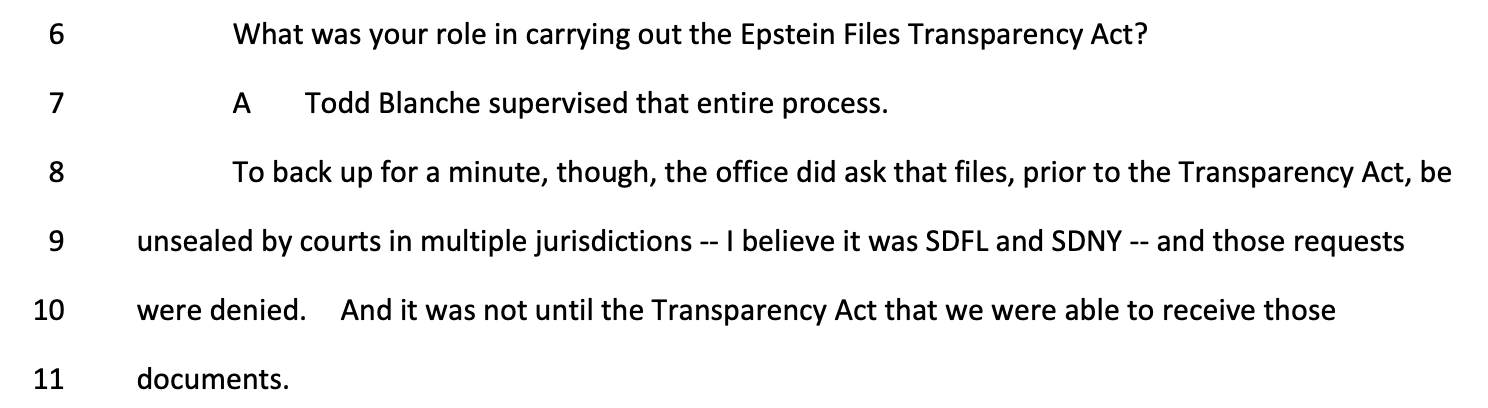
Good afternoon, everyone. There’s a lot of news to cover today. I just finished reviewing more than 100 pages of Pam Bondi’s testimony, where she appeared to place responsibility for the Epstein files controversy squarely on Todd Blanche while refusing to discuss her conversations with Donald Trump. Meanwhile, the Kennedy Center has begun removing Trump’s name following a federal court order. Trump is now talking about additional construction near the Lincoln Memorial, RFK Jr.’s cousin has resigned from the CIA in protest of the administration, and there are several other major developments breaking this afternoon.
I’ll be live with paid subscribers in about an hour to break it all down, answer questions, and discuss what’s happening behind the headlines.
Some of you have noticed that I look a little more tired than usual this week. You’re right. The pace of the news cycle has been relentless. But I love this work, and I’m not slowing down.
If you value independent journalism that isn’t afraid to ask difficult questions, challenge powerful people, and follow the facts wherever they lead, please consider becoming a subscriber today. Your support makes this reporting possible. It allows us to dig through the transcripts, read the filings, follow the money, and cover the stories that too many outlets miss or ignore.
This platform exists because of you. And every subscription helps keep it growing. See you shortly.
Here’s what you missed:
Newly released testimony shows former Attorney General Pam Bondi told lawmakers that Todd Blanche was “in charge” of the Justice Department’s handling and release of the Jeffrey Epstein files, including decisions about redactions and document disclosures. Bondi sought to distance herself from the controversial process, insisting that all non-privileged Epstein records had been released and directing many questions to Blanche and FBI Director Kash Patel. Democrats argue the testimony raises new questions for Blanche, who is now expected to face scrutiny during his attorney general confirmation process over both the Epstein files and his role in the administration’s controversial $1.8 billion “anti-weaponization” fund. Bondi also denied involvement in the transfer of Epstein associate Ghislaine Maxwell to a minimum-security prison and reiterated that she believes Maxwell should spend the rest of her life in prison.
Starting today, the John F. Kennedy Center for the Performing Arts is beginning the process of removing President Trump’s name from the institution after a federal judge ruled that the board lacked authority to rename it without congressional approval. Kennedy Center staff have been instructed to immediately update email signatures, letterhead, and official documents, while all signage and branding bearing Trump’s name must be changed back by June 12. The order stems from a lawsuit filed by Joyce Beatty, who successfully argued that the board overstepped its legal authority when it adopted the “Trump Kennedy Center” name last year. Center officials are also reviewing whether to proceed with a planned two-year closure for $257 million in renovations, following the court’s directive that the board reconsider the decision under proper procedures. Here was my interview with Senator Mark Kelly concerning the vote-a-rama:
Senate Republicans voted down two separate efforts to permanently eliminate President Trump’s proposed $1.8 billion “anti-weaponization” fund, despite concerns from some GOP members that it could be used to compensate Trump allies or even some January 6 participants. Democratic leader Chuck Schumer’s amendment failed 49–50, while a separate attempt by Republican Sen. Thom Tillis also fell short, leaving open the possibility that the fund could return in another form. The dispute has complicated Senate consideration of a $70 billion Republican immigration bill, with some GOP lawmakers refusing to support the legislation unless the fund is explicitly terminated. Although acting Attorney General Todd Blanche told lawmakers the administration is no longer pursuing the fund, Trump recently defended the proposal and declined to say whether it had been permanently abandoned.
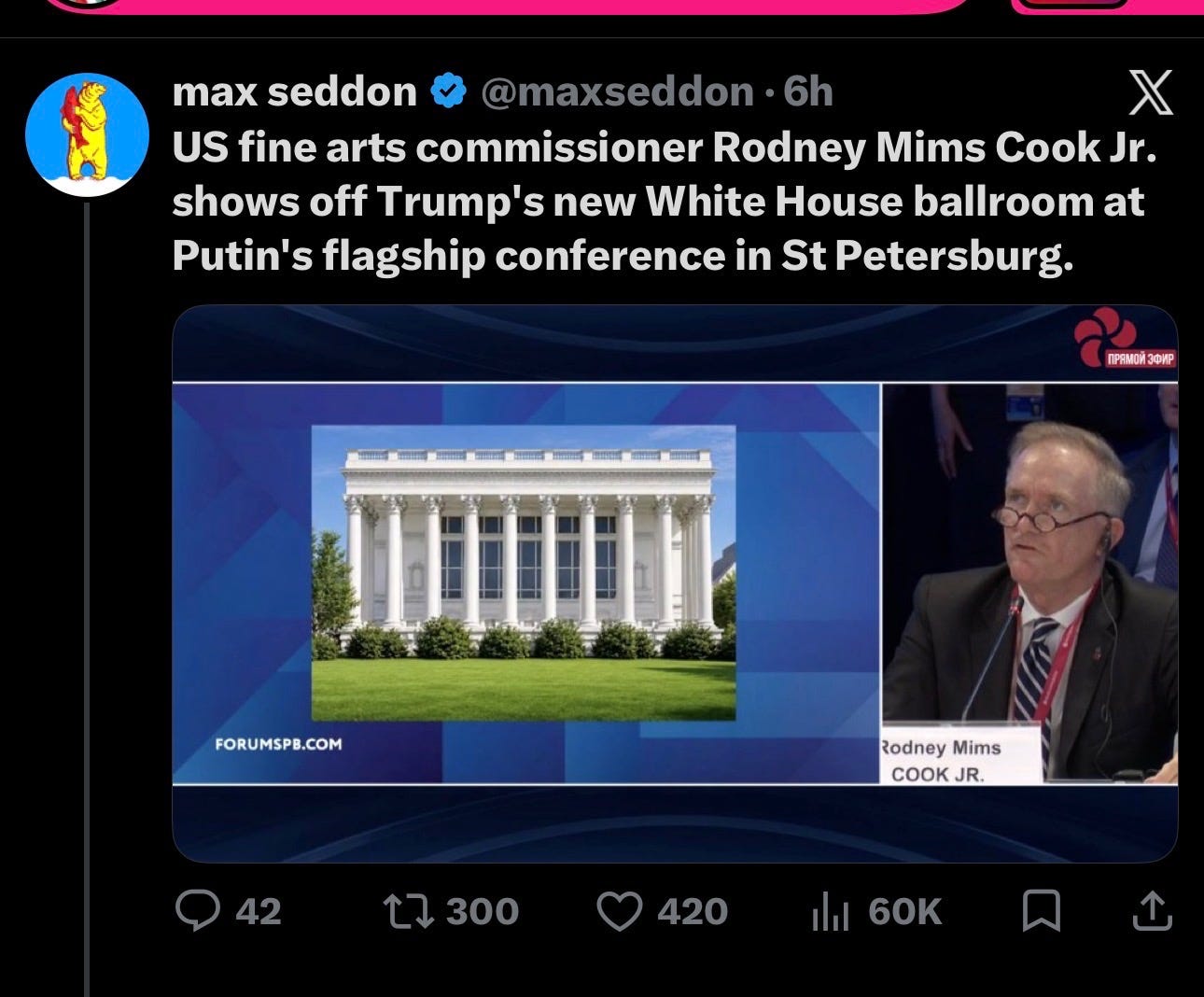
Russia’s St. Petersburg International Economic Forum, once a major gathering for Western leaders and investors, now features a smaller group of American attendees, including Steven Seagal, Candace Owens, and Rodney Mims Cook Jr., chairman of the U.S. Commission of Fine Arts. Cook’s visit drew attention because he is the first U.S. official-level attendee at the forum in years, though U.S. Secretary of State Marco Rubio said he was unaware of any official American delegation. The forum highlighted Russia’s growing focus on partnerships with countries such as Saudi Arabia and China, while discussions between Russian and American participants emphasized potential future business and cultural ties despite ongoing tensions over the war in Ukraine. Owens questioned continued U.S. support for Ukraine, Seagal advocated stronger U.S.-Russia relations, and the event underscored how Russia is using the forum to showcase international engagement despite Western isolation.
President Trump said plans are moving forward for a new pedestrian walkway near the Lincoln Memorial and claimed supporters want it named the “Trump Promenade.” Speaking about the project, Trump remarked, “We’re going to be doing a promenade at the Lincoln Memorial. They want to call it the Trump promenade.”
Amaryllis Fox Kennedy says she resigned from her intelligence roles in the Trump administration because she was concerned about what she described as inadequate oversight of intelligence agencies’ spending and the movement of cash and gold. She pointed to the recent arrest of a senior CIA official accused of hoarding millions of dollars in gold bars as evidence of broader problems within the intelligence community. Fox Kennedy denied reports that she left over disagreements about Trump’s Iran policy, instead arguing that her concern was the alleged politicization and lack of accountability within federal security agencies. The CIA disputed her claims, saying it properly informs congressional oversight committees about its resources and expenditures.
Texas barbecue restaurants are facing a crisis as beef prices soar, driven by inflation, drought, a historically small cattle herd, labor shortages, and concerns about the spread of the New World screwworm. Even some of the state's most famous barbecue joints are raising prices, cutting menu items, or struggling to stay open, while several longtime restaurants have already closed. Industry leaders warn that the financial pressure could permanently change Texas barbecue culture, threatening regional styles and small family-owned businesses. Many pitmasters say they see no relief in sight and fear more closures as meat costs continue to rise.
President Trump responded to reports that his likeness could appear on a proposed $250 bill by saying he views the idea as a compliment from supporters. Asked about the proposal, Trump said, “There is a group of people [who] really like the job we are doing. That is a great honor.” Federal law currently prohibits living individuals from appearing on U.S. currency, so any effort to place Trump on a $250 bill would require significant legal and legislative changes. The proposal has attracted attention largely as a symbolic gesture by some supporters rather than as an imminent change to U.S. currency.
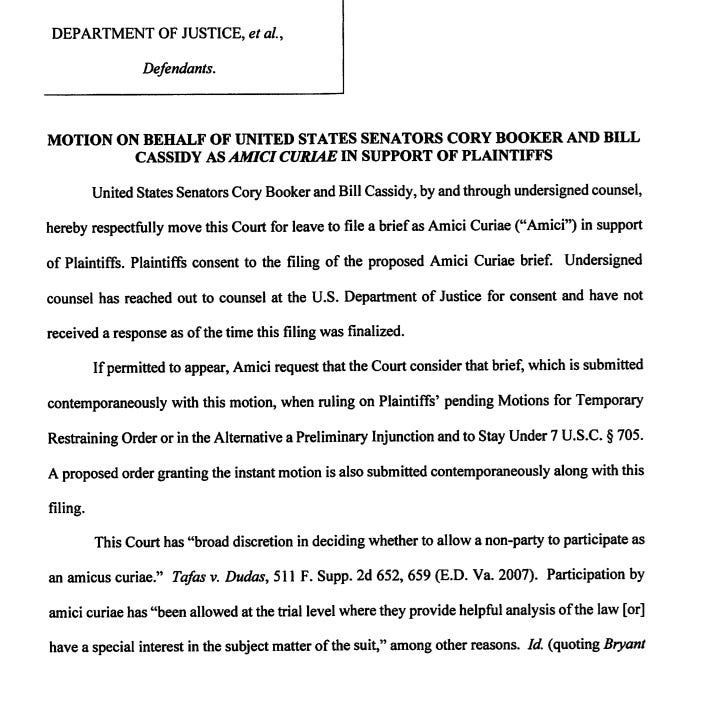
A bipartisan group led by Bill Cassidy and Cory Booker has filed a court brief urging a judge to block the Trump administration’s proposed $1.8 billion “anti-weaponization” fund. The senators argue that the fund would allow the executive branch to use government resources to reward political allies and punish perceived opponents, posing a threat to democratic institutions. In unusually stark language, they wrote that the case concerns whether “the machinery of democratic government may be turned, by design and with explicit intent, against the democratic foundations it exists to serve.” The filing represents another instance of Republicans publicly breaking with President Trump over one of his administration’s initiatives.
Hakeem Jeffries said Democrats would seek to recover money distributed through the Trump administration's proposed "anti-weaponization" fund if they regain control of Congress in 2027. Jeffries warned that recipients of payments from the fund could face future investigations and "clawbacks," arguing that taxpayer money should not be used for politically motivated compensation programs.
Former Trump national security adviser John Bolton has agreed to plead guilty to one count of retaining national security information, resolving a criminal case that initially included multiple classified-information charges. Prosecutors say the information was contained in an electronic diary entry that Bolton shared with two family members, not in leaked documents or disclosures to foreign governments. As part of the agreement, Bolton faces a possible sentence ranging from probation to prison and has agreed to pay $2.25 million in restitution. The plea brings an end to a high-profile case involving one of President Trump’s most prominent former aides and later critics.
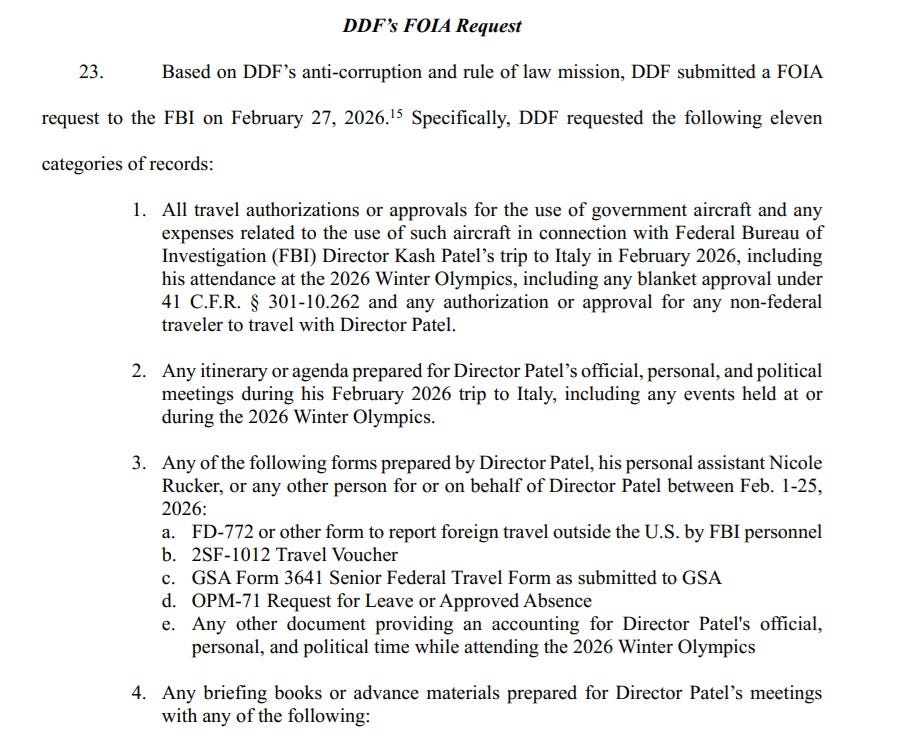
A watchdog group, Democracy Defenders Fund, has filed a lawsuit seeking records related to FBI Director Kash Patel’s taxpayer-funded trip to the Winter Olympics. The suit seeks details including travel costs, security expenses, communications, and other records to determine whether public funds were used appropriately during the trip. The filing notes that tickets for high-profile Olympic events, including the men’s hockey final, reportedly ranged from roughly $500 to $1,600, raising questions about the overall cost to taxpayers. The lawsuit is part of a broader effort to obtain transparency about official travel and government spending by senior Trump administration officials.
Investor and TV personality Kevin O'Leary has agreed to cut his proposed massive Utah AI data center project in half after facing pressure from state lawmakers and environmental groups. Even after the reduction, the development would remain larger than Manhattan and require enormous amounts of power, raising concerns about water use, energy demand, and potential impacts on the Great Salt Lake ecosystem. Utah officials had pushed for even deeper cuts and greater transparency about the project's environmental effects, while local activists continue to oppose the plan. O'Leary argues the data center would create jobs, strengthen U.S. AI and defense capabilities, and help the country compete with China.
St. Paul prosecutors have declined to bring state charges against dozens of anti-ICE protesters, including former CNN host Don Lemon, who interrupted a church service in Minnesota earlier this year. The demonstrators were protesting immigration enforcement and the death of a woman during an ICE operation, and many still face federal civil rights charges. City officials said the evidence did not meet the standard for state criminal charges and noted that the protest did not involve violence, property damage, or threats to public safety. Church leaders strongly criticized the decision, arguing that disrupting a religious service should not be protected simply because it was part of a protest.
A Department of Homeland Security inspector general report found serious problems at a Louisiana ICE detention center, including staff using a prohibited chokehold on one detainee and an officer stabbing another detainee’s hand with a pen during a use-of-force incident. Inspectors also documented unsanitary conditions, including leaking ceilings, falling insulation, and deficiencies in food service, record-keeping, and detainee privacy protections. The watchdog issued nine recommendations for improvement, while ICE said it is addressing the issues through additional training and corrective measures. The findings come as scrutiny of conditions inside ICE detention facilities intensifies amid record detention levels and growing political debate over immigration enforcement.
Immigration lawyers across the country say scammers are increasingly using AI-generated voices, deepfakes, fake websites, and cloned social media accounts to impersonate them and defraud immigrants seeking legal help. Victims are often promised impossible outcomes—such as instant citizenship, guaranteed residency, or canceled deportation proceedings—and are tricked into paying thousands of dollars for fraudulent services. Attorneys and advocacy groups warn that the consequences can be far worse than financial loss, as victims may miss court hearings, file invalid applications, or unknowingly receive deportation orders. Experts say the surge in scams is being fueled by fear surrounding immigration enforcement, long case backlogs, and the growing sophistication of AI-powered fraud.
A Florida mother is suing Campbell Soup Company and Walmart after claiming she discovered live worms or parasites in a can of SpaghettiOs that she and her daughter had already eaten. The lawsuit alleges that the contaminated product, purchased at a Walmart store in Okeechobee, Florida, caused both mother and child to suffer illnesses including parasitic infections, gastrointestinal symptoms, and ongoing medical complications. The family is seeking $75,000 in damages, arguing that Campbell’s and Walmart failed to maintain proper food safety standards and violated federal food safety laws. Both companies deny wrongdoing, with Walmart saying it is reviewing the complaint and Campbell’s stating it believes the allegations are without merit and will vigorously defend itself in court.
A rare strain of Lyme disease caused by the bacterium Borrelia mayonii has been identified in New York for the first time, according to a new CDC report. Previously found only in Minnesota and Wisconsin, the bacterium was detected in a resident of Herkimer County, New York, and in several ticks collected from the person’s property. While it causes Lyme disease similar to the more common strain, experts say it may be more likely to produce nausea, vomiting, widespread rashes, and neurological symptoms. Researchers believe the infection remains extremely rare, but its appearance highlights the expanding range of tick-borne diseases as climate conditions continue to favor tick populations across the Northeast.
See you soon.
— Aaron


