

Good evening everyone. I promised another update tonight, and the latest developments are below. But first, I want to address deeply concerning news we learned today.
The Corporation for Public Broadcasting, which helped fund NPR, PBS, and hundreds of local radio and television stations, is officially shutting down. This comes months after Congress passed spending cuts that stripped the organization of more than $1 billion in funding.
Media as we know it is fundamentally changing. Major corporate outlets are increasingly accommodating those in power, while critical journalism, local radio, and local television are being systematically defunded. This is not abstract. It is a direct threat to the First Amendment and to the public’s right to independent information.
That is exactly why I have committed to remaining independent. It has been nearly one year since I began doing this work full time, and I am profoundly grateful to everyone who made that possible. Your subscriptions are what allow this work to continue. They are what keep this platform independent at a moment when independent media is under direct attack. If you have not yet subscribed, I ask you to consider doing so today.
Looking ahead, this will be a major week. Congress returns to session tomorrow, and several critical issues are expected to come into focus, including the Epstein files, potential votes to override Donald Trump’s vetoes, and the recent U.S. strikes on Venezuela and the arrest of Nicolás Maduro. Tomorrow is also the five year anniversary of the January 6th insurrection. In addition, I expect new information on the Epstein files in particular, including possible disclosures about who is named in them.
This will be a fast-moving and consequential week. I will be with you every step of the way, providing updates as events unfold. More soon. Here is what you missed:
The U.S. House of Representatives is set to vote Thursday on overriding the first two vetoes of Donald Trump’s second term—Republican-backed bills with bipartisan support on Colorado water access and Miccosukee Tribe land protections—moves closely watched by Senate Majority Leader John Thune amid growing tensions between the White House and Congress.
Donald Trump told NBC News the U.S. may reimburse oil companies—or repay them through future revenue—for billions spent rebuilding Venezuela’s aging oil infrastructure to boost production and lower prices, though firms remain cautious due to sanctions, political instability, and past nationalizations under leaders like Nicolás Maduro, with major players such as Exxon Mobil, Chevron, and ConocoPhillips expressing skepticism.
The Trump administration is pressing Venezuela’s interim leader Delcy Rodriguez to take pro-U.S. steps—including cracking down on drug trafficking, expelling Iranian and Cuban operatives, halting oil sales to U.S. adversaries, and eventually paving the way for elections—or face further military action after the capture of Nicolás Maduro, according to officials cited by POLITICO, as President Donald Trump signals leverage through sanctions, force, and control over financial assets while insisting the operation was law enforcement, not regime change.
President Donald Trump said Venezuela will not hold new elections within 30 days following the capture of Nicolás Maduro, telling NBC News that the U.S. plans a longer-term engagement focused on stabilizing the country before any vote can occur.
Todd Blanche said the Trump administration acted within the law in arresting and removing Nicolás Maduro and his wife, rejecting claims of international law or United Nations charter violations and arguing the U.S. has strong evidence supporting narco-terrorism, drug trafficking, and weapons charges, in remarks to NBC News.
Following the arrest of Nicolás Maduro, the Trump administration plans to meet with top U.S. oil executives to discuss reviving Venezuela’s oil production, according to Reuters, though executives from Exxon Mobil, ConocoPhillips, and Chevron say no such talks have yet occurred, contradicting Trump’s claims.
Senate Judiciary Committee leaders Chuck Grassley and Dick Durbin issued a bipartisan protest after the Trump administration excluded them from a classified briefing on the arrest of Nicolás Maduro, arguing the committee has clear oversight jurisdiction over the Department of Justice, Federal Bureau of Investigation, and Drug Enforcement Administration involved in the operation.
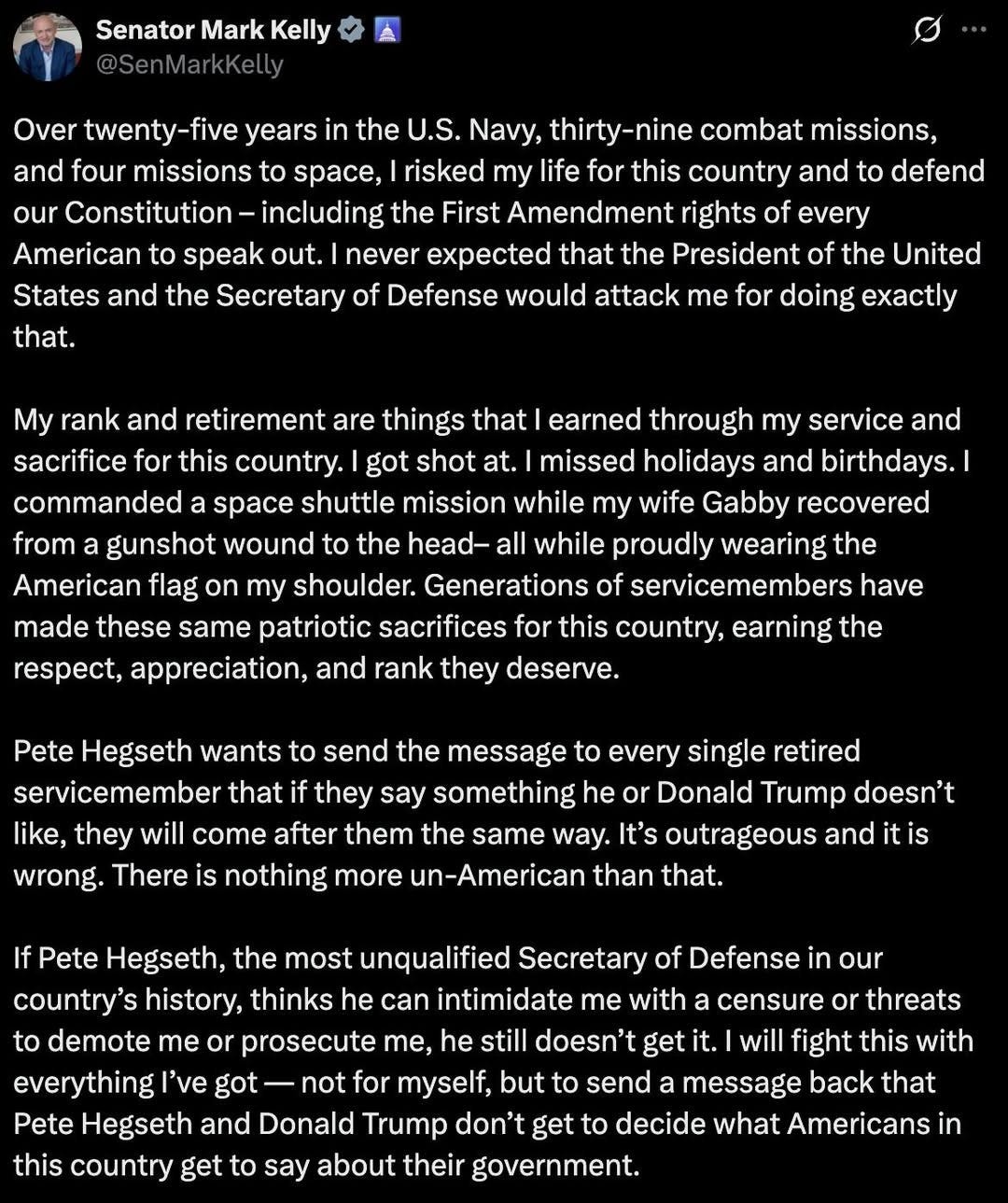
Sen. Mark Kelly said he will fight Defense Secretary Pete Hegseth’s move to demote his retired Navy rank and cut his pension, calling it an attempt by the Pentagon and President Donald Trump to intimidate service members after Kelly appeared in a video reminding troops they can refuse illegal orders.
Flu activity has surged to high or very high levels in 45 states, with doctor visits at their highest in nearly 30 years, more than 11 million illnesses, about 120,000 hospitalizations, and at least 5,000 deaths so far this season, according to Centers for Disease Control and Prevention, as the Department of Health and Human Services under Robert F. Kennedy Jr. pulls back recommendations for routine flu shots for children, per NBC News.
The Trump administration is deploying roughly 2,000 federal immigration and border agents to Minneapolis as part of an aggressive enforcement crackdown tied to a Minnesota welfare fraud scandal, escalating prior ICE operations that have disproportionately targeted the Somali community and drawn criticism from state officials and civil rights advocates, according to reporting by CNN and comments from officials under Donald Trump and the Department of Homeland Security.
Federal guidelines from the Health Resources and Services Administration now allow women ages 30 to 65 at average risk to use a self-administered HPV test instead of a Pap smear for cervical cancer screening, with private insurers required to cover the tests and follow-up care by 2027, reflecting evidence that HPV testing improves detection and may boost screening rates.
See you in the morning.
— Aaron


